

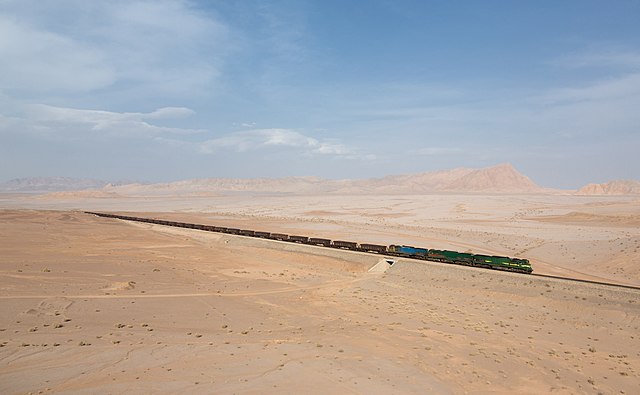
Iran is working on a comprehensive railway network development plan to provide landlocked countries in Central Asia with direct access to the Indian Ocean. This plan targets the construction of 3,200 kilometers of new railway lines to create nine main corridors across the country and achieve a total railway network of approximately 17,000 kilometers.
New Corridor Along Eastern Border
A key component of the plan involves the creation of a new railway corridor along Iran's eastern border in regions close to Pakistan and Afghanistan. This line will provide the shortest sea access to Central Asian countries such as Turkmenistan, Uzbekistan, Tajikistan, Kyrgyzstan, and Kazakhstan, enabling them to have direct access to the Indian Ocean.
Chabahar-Zahedan Railway Line
In this context, the Chabahar-Zahedan Railway Line project stands out. Starting from Iran's Chabahar Port and extending to Zahedan, this line connects to the country's railway network and provides maritime access to Central Asian countries. Construction of this 750-kilometer line is underway, with completion planned for 2024.
International North-South Transport Corridor (INSTC)
Iran's railway projects are also integrated with the International North-South Transport Corridor (INSTC). The INSTC is a 7,200-kilometer multimodal transport network between India, Iran, Azerbaijan, Russia, and Europe, aimed at faster and more cost-effective transportation of goods. Iran's new railway corridors strengthen the eastern branch of the INSTC, facilitating access for Central Asian countries to the Indian Ocean through this corridor.
Ashgabat Agreement and Regional Cooperation
Iran's railway projects are aligned with regional cooperation initiatives such as the Ashgabat Agreement. This agreement aims to create an international transport and transit corridor between Turkmenistan, Uzbekistan, Kazakhstan, Iran, Pakistan, India, and Oman, connecting Central Asia to the Persian Gulf. Iran's plans to expand its railway network enhance the effectiveness of this corridor, increasing trade volume in the region.
Kazakhstan-Turkmenistan-Iran Railway Connection
The Kazakhstan-Turkmenistan-Iran Railway Connection, completed in 2014, has enabled Central Asian countries to access the Persian Gulf through Iran. This 677-kilometer line extends from Uzen (Kazakhstan) through Beraket and Etrek (Turkmenistan) to Gorgan (Iran). Iran's new railway projects complement this existing line, further strengthening the region's transport network.
Five-Country Railway Corridor
Additionally, the proposed Five-Country Railway Corridor plans to connect China, Kyrgyzstan, Tajikistan, Afghanistan, and Iran. This 2,100-kilometer railway line will facilitate access for Central Asian countries to the Indian Ocean via Iran's Chabahar and Bandar Abbas ports. This project diversifies trade routes in the region, supporting economic development.
Conclusion and Expected Impact
Iran's plans to expand its railway network facilitate the integration of landlocked Central Asian countries into global trade networks. These projects increase trade volume in the region, promoting economic growth and strengthening cooperation among countries. Furthermore, the establishment of alternative trade routes positively influences geopolitical balance in the region.
Key Notes:
Iran plans to construct 3,200 kilometers of new railway lines, creating a total railway network of approximately 17,000 kilometers. railfreight.com
The Chabahar-Zahedan Railway Line stands out as a strategic project that will facilitate Central Asian countries' access to the Indian Ocean.
We will be happy to receive your feedback.
We wish you happy reading in advance.

