

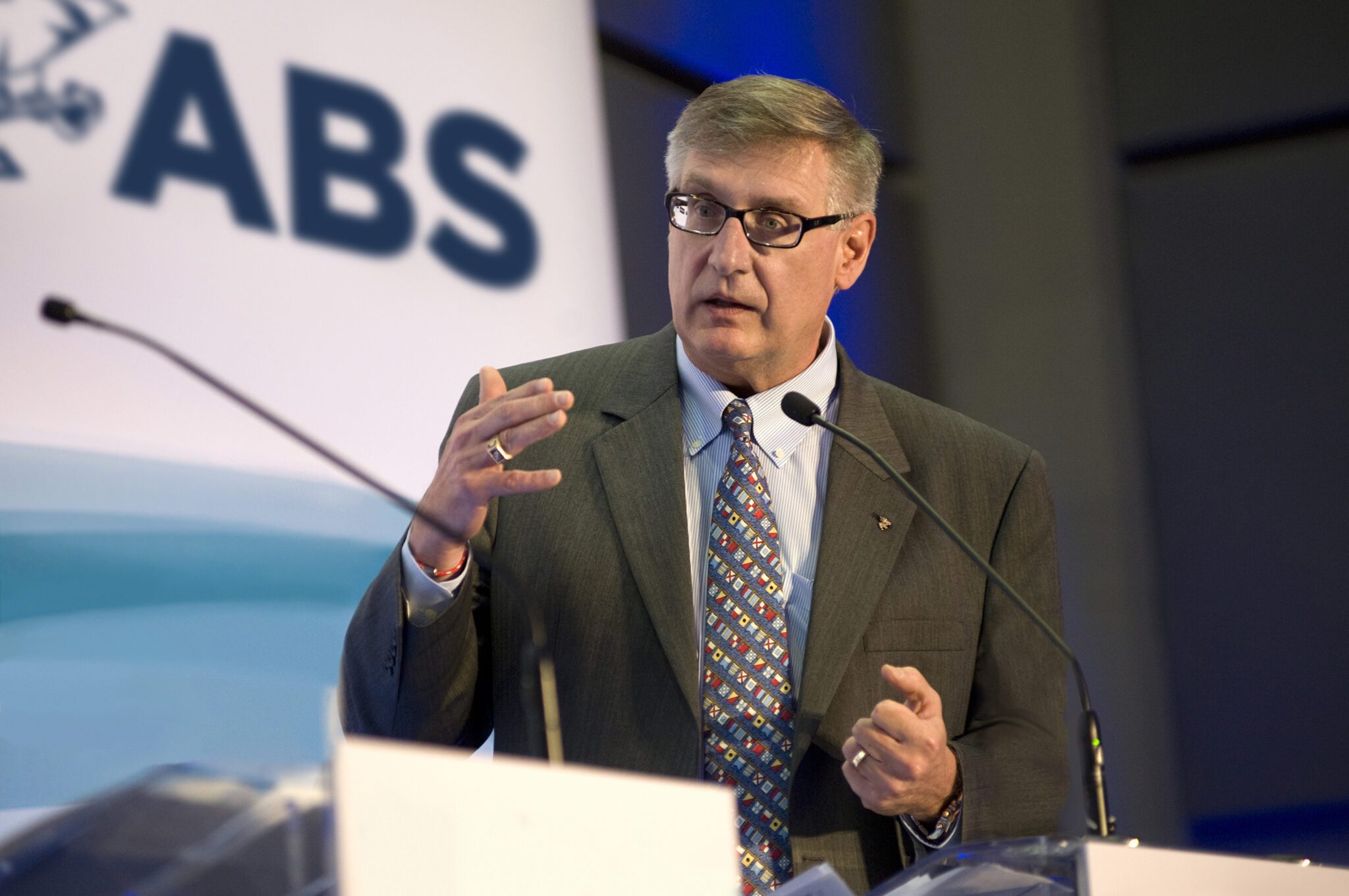
American Bureau of Shipping (ABS) President and CEO Christopher J. Wiernicki highlighted the critical role of maritime shipping in the U.S. sustainable transport future at a Sustainable Freight Transportation Workshop held at the White House.
\nWiernicki emphasized that sustainability programs in the transport sector typically focus on specific modes of transport, but what truly matters is a holistic systems approach that encompasses all transportation modes from the point of origin to the point of destination.
\nAddressing the advantages of maritime shipping, Wiernicki noted that this mode of transport produces lower emissions per ton-mile compared to others, is cost-effective, and has the capacity to carry large-scale cargoes.
\nHe also stated that maritime shipping demonstrates less vulnerability to infrastructure-damaging events such as natural disasters.
\nHowever, he drew attention to the necessity of close cooperation with other transport modes, given that maritime shipping is slower and has limited delivery points.
\nABS addresses the sustainability of cargo transportation from a broad perspective, aiming to reduce the carbon footprint of cargoes throughout maritime shipping and all intermodal systems.
\nIn this context, the U.S. Maritime Administration's Office of Environment and Innovation has tasked ABS with establishing and operating the U.S. Maritime Innovation Center under a five-year cooperation agreement.
\nAuthorized by Congress, this center will conduct comprehensive research, development, and training programs to support the use of clean energy in U.S. vessels.
\nWiernicki stated that the center will play a central role in developing sustainable U.S. transportation systems, serving as an important resource in industry leadership, the formation of cargo-focused collaborative working groups, and the implementation of freight mode plans for maritime shipping.
\nThe Sustainable Freight Transportation Workshop was held with the participation of institutions such as the U.S. Department of Energy, the Environmental Protection Agency, the Department of Transportation, and the Joint Office of Energy and Transportation, as well as representatives from industry, environmental organizations, and government.
\nThe workshop brought together representatives from the maritime, rail, and trucking transportation sectors, state and federal government officials, infrastructure providers, ports, and environmental and labor organizations.
\nKey Points:
\n- \n
ABS President and CEO Christopher J. Wiernicki highlighted the critical role of maritime shipping in the U.S. sustainable transport future.
\n Maritime shipping produces lower emissions per ton-mile compared to other transport modes and has the capacity to carry large-scale cargoes.
\n ABS adopts a comprehensive approach to enhance the sustainability of cargo transportation.
\n The U.S. Maritime Administration has tasked ABS with establishing and operating the U.S. Maritime Innovation Center.
\n The Sustainable Freight Transportation Workshop brought together representatives from various sectors and government levels.
\n
---
\n\n-------------------
\n\nYour feedback would make us happy.
\nWishing you happy reading.

