

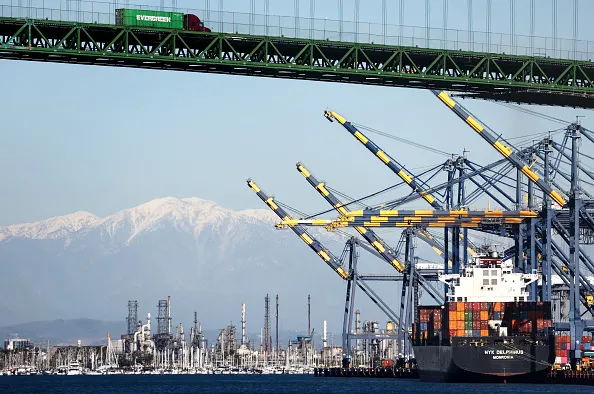
The Port of Los Angeles recorded its best month of the year in April 2026 with nearly 891,000 twenty-foot equivalent units — the most volumes processed since August 2025, Executive Director Gene Seroka said during a May 12 media briefing. Cargo flows remain steady at the port, with spring and summer merchandise already arriving. The next wave of imports will be back-to-school products and then early holiday inventory. Meanwhile, U.S. manufacturing has remained steady, with the port reporting a consistent flow of parts and components.
Seroka noted that while consumers are still buying at near record paces, they are bargain hunting — one of the few indicators as to how the ocean shipping market will shake out in the weeks and months ahead. However, while cargo remains steady, numbers will still be skewed compared to last year, which saw a wave of tariff announcements from the Trump administration. "Comparing this summer time to last, I think you've got elevated numbers for a variety of reasons on the policy side that we saw yet it's been really steady so far this year compared to the five year average," Seroka said. "We're looking pretty good, that 2% uptick compared to all the ups and downs we've witnessed over recent times."
While Transpacific trade is overall stable despite the Iran war, the conflict still casts a shadow over global trade. Specifically, the Strait of Hormuz remains closed, which has disrupted the ocean shipping market. The waterway, which typically handles more than 100 ships a day, currently only has a "handful" moving through, Seroka said. Seroka described the strait as a "critical global trade artery," noting that the waterway transports about 20% of global energy, impacting oil and fuel costs. However, the closure also impacts fertilizers, aluminum, plastic and resin materials for everyday goods.
"So, the ripple effect is being felt not only in fuel markets but manufacturing inputs and airline operations," Seroka said. He further added that in the last week alone, about 2,600 flights in Asia were either canceled or delayed due to fuel costs. Even if the war ends, it will still take months to unwind the backlog of ships and eventually get vessels and cargo back into a typical schedule, Seroka said. "What industry needs is a sustained, proven peace agreement, something that holds over time, even then, reopening the strait is just the start or the first step," he said.
Regardless, Seroka said that he doesn't anticipate any rough spots looming, noting that while on a recent trip to three large cities in China, he didn't see any canceled purchase orders at factories. "It's just a matter of that narrow planning horizon or the short planning horizon and buy in what you speculate the American consumer is going to be doing 90 to 120 days in advance of those cargo containers coming in here," he said.
Key Takeaways:
1. Port of Los Angeles achieved its best month of 2026 in April with 891,000 TEU, marking the highest volume processed since August 2025.
2. Executive Director Gene Seroka reported Transpacific trade remains stable despite the Iran war, showing a 2% uptick compared to the five-year average.
3. The Strait of Hormuz closure disrupts 20% of global energy and creates ripple effects in manufacturing inputs and airline operations.
4. About 2,600 flights in Asia were canceled or delayed last week due to fuel costs; unwinding the ship backlog will take months even after the war ends.
5. American consumers continue buying at near-record paces while bargain hunting; next import wave includes back-to-school products and early holiday inventory.
[820399]

