

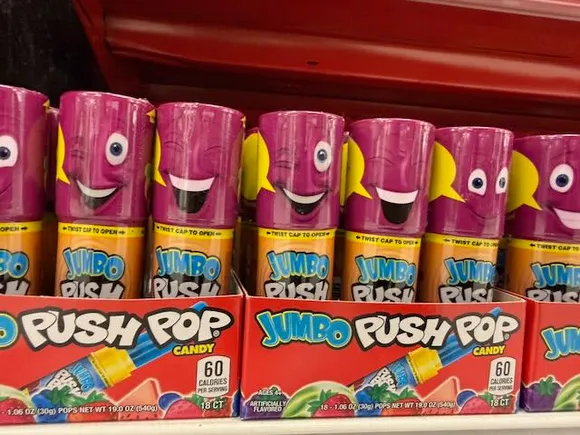
Bazooka Candy Brands fundamentally revised its supplier strategy in 2025 following tariff-driven price increases on sweets imported from China and other Asian countries, coupled with weakened demand for those products. The company abandoned its traditional volume-for-price playbook with contract manufacturers in a region accounting for 80% of U.S. sales, adopting a collaborative approach to manage what it called a "perfect storm" alongside its suppliers.
Erika Nava, VP of Strategic Supply and Product Development, told the April 28 Institute for Supply Management World 2026 conference that the company approached suppliers with the message "it's not your fault, it's not my fault—we're both victims of this." Bazooka's strategy centered on negotiating with vendors to share the tariff-induced pain. Some suppliers accepted splitting tariff costs evenly, while others with smaller margins required Bazooka to absorb a greater share. In those situations, the company requested to review supplier cost structures, and some suppliers provided this information, giving Bazooka valuable leverage in future negotiations.
The company also discontinued certain SKUs that were no longer cost-effective for either party. Nava emphasized that Bazooka sought a temporary agreement both sides could accept, where falling tariffs would benefit both proportionately, while increases would trigger renegotiation. Since then, Bazooka has transformed supplier relationships from a price-versus-volume model to partnerships. This transformation includes plans to refund the portion of tariffs that suppliers paid under President Donald Trump's International Emergency Economic Powers Act orders, later deemed illegal by the U.S. Supreme Court.
Nava outlined four key lessons: First, learn suppliers' decision-making processes, capabilities and current activities that may prove useful in the future, updating this information at least twice yearly. Second, establish yearly supplier KPIs, continuous improvement goals and growth-innovation plans, conducting structured quarterly business reviews with most strategic vendors. Third, implement monthly or quarterly value stream mapping to identify cost-saving opportunities by mapping material and information flows across the supply chain. Fourth, acknowledge suppliers who go above and beyond by sending thank-you emails to their executive teams.
Nava stressed that supplier collaboration during crisis periods proves critical for both parties, noting this approach determines whether suppliers answer calls during future crises or go silent. The company aims to transform supplier relationships into long-term strategic partnerships based on lessons learned from this experience.
Key Takeaways:
1. Bazooka Candy Brands developed new strategic partnership model with Asian suppliers accounting for 80% of U.S. sales following tariff increases.
2. The company replaced volume-for-price model with collaborative approach sharing tariff costs fairly, gaining access to supplier cost structures in some cases.
3. Bazooka discontinued unprofitable SKUs to boost operational efficiency for both company and suppliers.
4. Company plans to refund portion of tariffs deemed illegal by Supreme Court that suppliers paid, maintaining partnership model post-crisis.
5. VP of Strategic Supply Erika Nava implemented structured collaboration tools including supplier KPIs, quarterly business reviews and value stream mapping.
[819500]

