

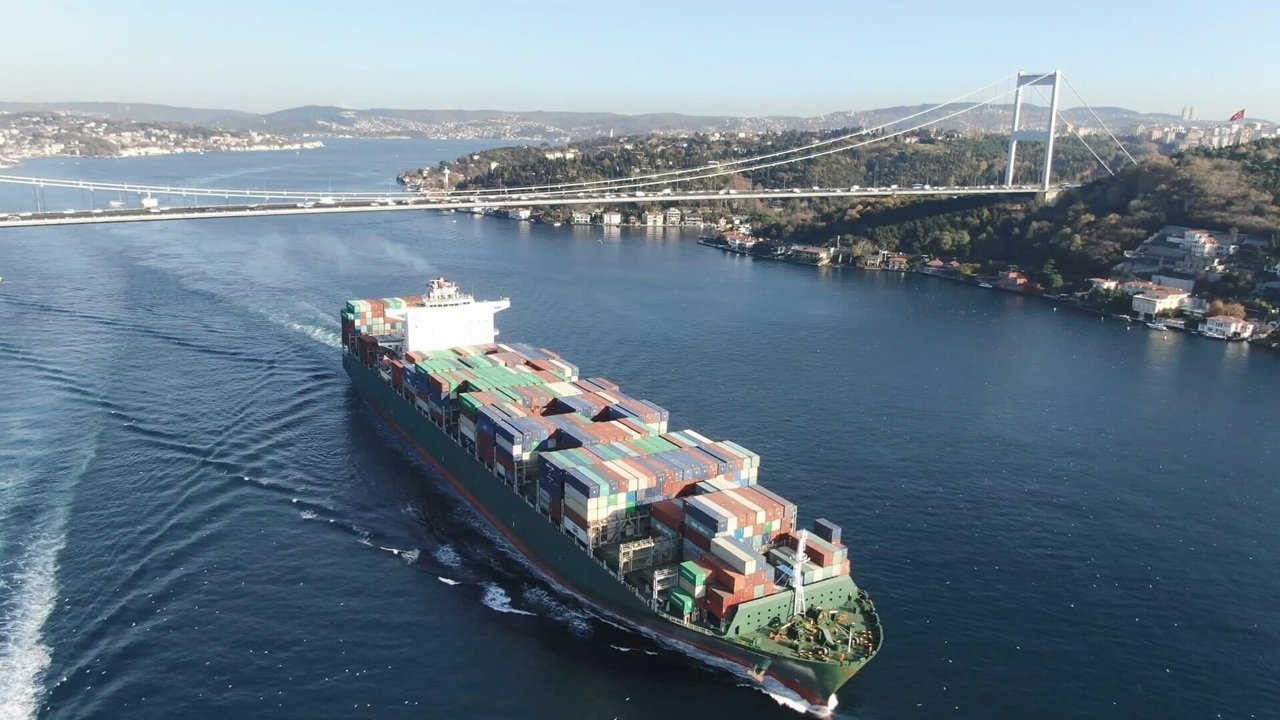
The Istanbul Strait recorded heavy maritime traffic in the first quarter of 2026. According to data released by Türkiye's Ministry of Transport and Infrastructure, a total of 9,195 vessels transited the strait between January and March, with general cargo and bulk carriers dominating a waterway used by an average of 102 ships per day.
The Q1 breakdown showed 3,277 general cargo ships, 1,833 bulk carriers, 984 container ships, 451 chemical tankers, 207 LPG tankers, 77 passenger ships and 53 Ro-Ro vessels, with the balance comprising naval ships, tugs and miscellaneous types. 5,792 transits used pilotage services, while the most common ship size band was 100-150 metres; no vessels exceeding 300 metres transited the strait during the quarter.
Combined cargo carried during the three months reached 135,182,851 gross tons. January was the busiest month, while March also remained heavy. In Q1 2025, 9,351 vessels had crossed the strait; the decline to 9,195 this year represents a marginal year-on-year fall.
Operating under the Turkish Straits regime, the Istanbul Strait remains one of the most critical chokepoints in global maritime transport, channelling transit cargo flows between the Black Sea basin and the Mediterranean. Heavy general cargo and bulk activity reflects continued shipments of grain, coal, iron ore and fertilisers. Container vessels accounted for roughly 11 percent of total transits, underscoring the basin's dependency on this passage as a transit corridor.

