

Oil tanker M/T EUREKA hijacked off Yemen's Shabwa coast, vessel diverted toward Somalia via Gulf of Aden
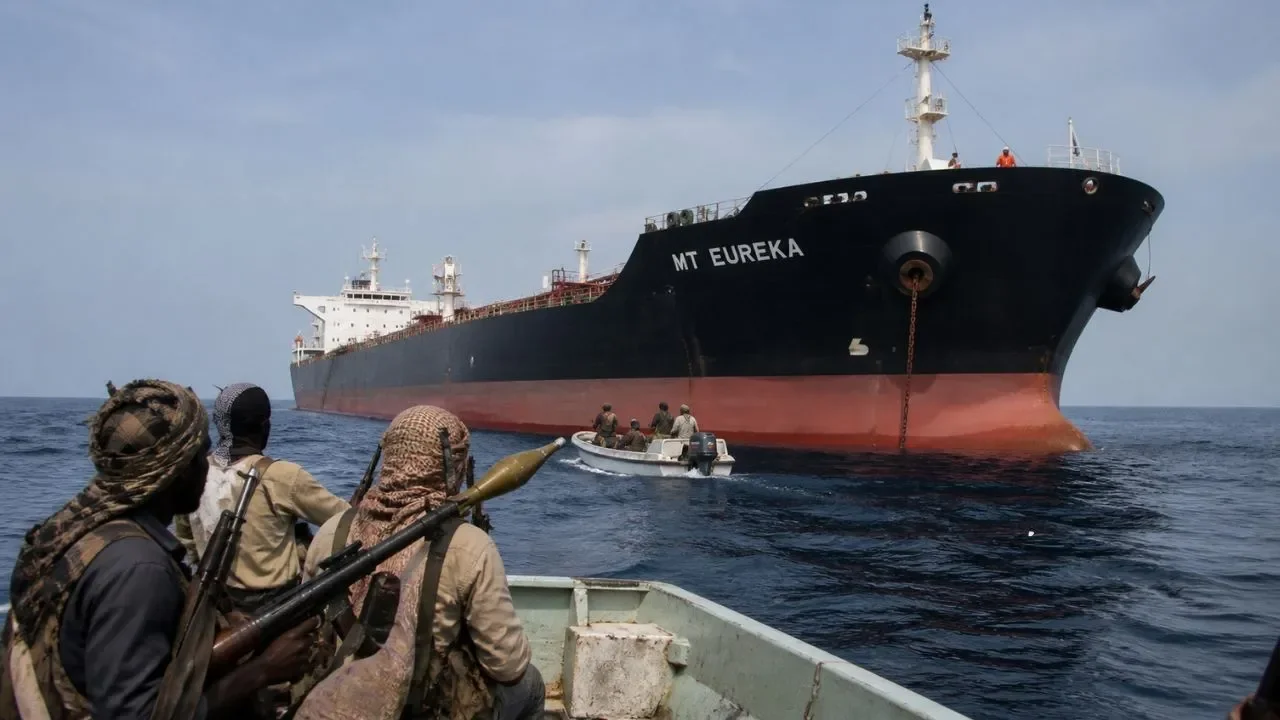
Yemen's Coast Guard announced on 2 May 2026 that the oil tanker M/T EUREKA was hijacked by unidentified armed attackers off the country's Shabwa coast. According to the statement, the attackers boarded the vessel, seized control, detained the crew and began navigating the ship toward Somali waters via the Gulf of Aden. The Coast Guard said the vessel's position has been tracked and that operations to secure the crew and recover the ship are ongoing; the flag, ownership and cargo origin of the tanker were not disclosed.
The incident is the latest in a series of recent security escalations in the region. The United Kingdom Maritime Trade Operations (UKMTO) agency reported on the same day that a small boat escorted by a fishing vessel approached a bulk carrier roughly 84 miles southwest of Mukalla Port in Hadramaut, issuing a precautionary advisory to vessels in the area. The Gulf of Aden and Somali Basin remain in a high-risk band following the 1 May "credible threat" warning issued by the Joint Maritime Information Center (JMIC), which had confirmed two commercial vessels hijacked within hours the prior week.
Industry analysts note that the ongoing Iran crisis around the Strait of Hormuz has pulled U.S. and allied naval assets toward the Persian Gulf, opening operational space for piracy and hijacking activity in the Gulf of Aden and Somali Basin. While the area was primarily associated with Houthi attacks in recent months, reports now point to a return of mothership-style pirate operations; the attackers' identity in the M/T EUREKA case has not yet been confirmed, but the chosen route and the diversion of the crew toward Somalia mirror classic Somali piracy tactics.
The case carries a clear risk premium for global oil flows. The Gulf of Aden is a key corridor for tanker traffic feeding the Suez Canal and the Asia-Europe artery; every hijacking event in the region directly affects war-risk insurance premiums and the exposure of P&I clubs. The earlier wave of Red Sea attacks had already pushed some shipowners onto the Cape of Good Hope route, lifting freight rates and transit times. A repeat pattern would force shippers and charterers to reprice contingency routings and revisit the security clauses in charterparties.
Turkish stakeholders are also watching closely. Turkish shipowners and ship management firms have tightened their use of privately contracted armed security personnel (PCASP), convoy participation and Best Management Practices (BMP) on Gulf of Aden transits. From an insurance standpoint, identifying the real beneficiary and cargo of the hijacked tanker may also trigger further investigations under the sanctions regime — particularly given suspicions around Iran-linked cargoes — a sensitivity heightened by OFAC's 1 May advisory on Strait of Hormuz "toll" payments.
Key Takeaways:
1. Oil tanker M/T EUREKA was hijacked off Yemen's Shabwa coast on 2 May 2026 by unidentified armed attackers.
2. Yemen's Coast Guard reported the vessel is being navigated toward Somali waters via the Gulf of Aden, with the crew detained.
3. UKMTO disclosed a separate same-day approach on a bulk carrier 84 miles southwest of Mukalla Port in Hadramaut.
4. With Hormuz drawing naval assets toward the Persian Gulf, piracy risk in the Gulf of Aden and Somali Basin is rising again.
5. The incident has direct implications for war-risk insurance premiums, P&I exposure and the Suez vs. Cape of Good Hope routing decision.

