

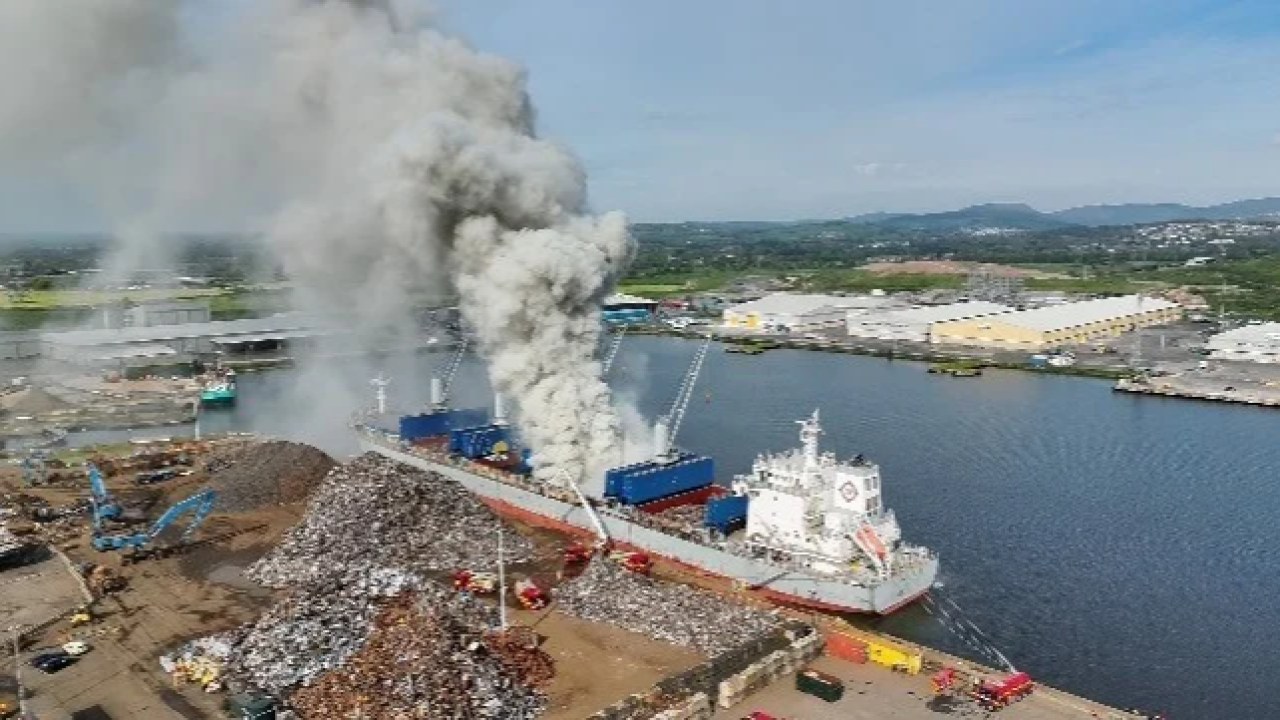
A fire broke out in the early hours of Sunday on board the bulk carrier Nord Houston, berthed at the recycling terminal of Newport Port. According to South Wales Fire and Rescue Service, the response involved five fire engines, two ladder appliances and specialist crews, with fireboats supporting from the water. Authorities said there was no danger to surrounding businesses or residential areas and that no one was injured.
Crews contained and extinguished the blaze the same day after intensive work. An overnight watch was maintained against the risk of re-ignition. Port operator ABP said the vessel owner and terminal operator have agreed on the discharge of the fire-affected cargo, with fire crews on site monitoring the unloading operation throughout.
Experts note that scrap metal cargoes pose significant risk in maritime transport because of the contaminants they contain. Lithium-ion batteries in particular can release intense heat when damaged and trigger thermal-runaway fires. Mixed scrap moved without proper classification and segregation on board is becoming a growing compliance issue for shipowners and port operators.
Oxidation processes in steel scrap can also generate heat; fine metal cuttings and turnings can self-ignite at elevated temperatures. The Newport incident highlights again how the rising share of electrical waste in global scrap flows requires new safety protocols across the logistics chain. Newport Port is expected to remain under tight oversight throughout the discharge operation.
Key Takeaways:
1. A fire broke out early Sunday on the bulk carrier Nord Houston, berthed at the recycling terminal of Newport Port.
2. Five fire engines, ladder appliances and fireboats extinguished the blaze the same day, with no injuries reported.
3. Port operator ABP said the vessel owner and terminal operator agreed on the discharge of the fire-affected cargo.
4. Scrap metal cargoes carry significant thermal-runaway and self-ignition risks from lithium-ion batteries and oxidizing steel.
5. The incident reinforces calls to tighten classification and segregation protocols for scrap metal shipments.

