

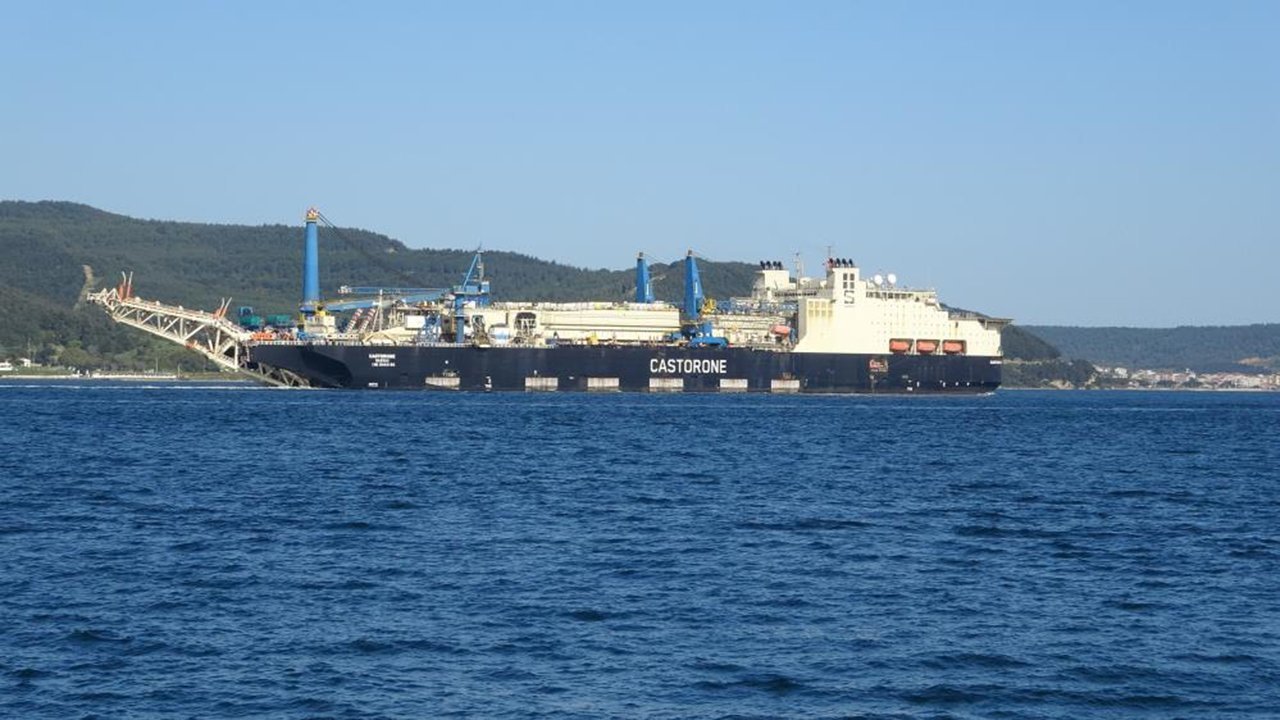
The 325-metre-long, 39-metre-wide, 102,032 GT deepwater pipe-laying vessel Castorone, Bahamas-flagged and sailing from Spain to Romania, entered the Çanakkale Strait from the Sea of Islands at around 07:00.
The ship reached the waters off Çanakkale at around 09:10. After passing the Kilitbahir Castle and the "Dur Yolcu" ridge inscription on the mountain at Kilitbahir village, the vessel rounded Nara Burnu — the strait's most difficult point to manoeuvre — and headed toward the Sea of Marmara.
Tugs Kurtarma-16, Kurtarma-17, Kurtarma-20 and Kurtarma-22 escorted the vessel during the strait passage. The strait was closed to single-direction transit traffic for the duration. Çanakkale Strait traffic returned to normal once the ship reached the Sea of Marmara.
Castorone is one of the world's largest deepwater pipe-laying vessels and a member of Italian oil-and-gas engineering group Saipem's fleet; due to the difficulty of manoeuvring through the straits it crosses, it requires dedicated pilots, tug escorts and route planning. The transit highlights the operational capacity of special cargo passage, strait traffic coordination and pilotage services in the Turkish straits.
Key Takeaways:
1. The 325-metre Castorone deepwater pipe-laying vessel transited the Çanakkale Strait.
2. The Bahamas-flagged ship sails from Spain to Romania; 102,032 GT.
3. Tugs Kurtarma-16, 17, 20 and 22 escorted the vessel.
4. The strait was closed to single-direction transit traffic during the passage.
5. The Saipem-fleet vessel highlights the special-cargo transit capacity of the Turkish straits.

