

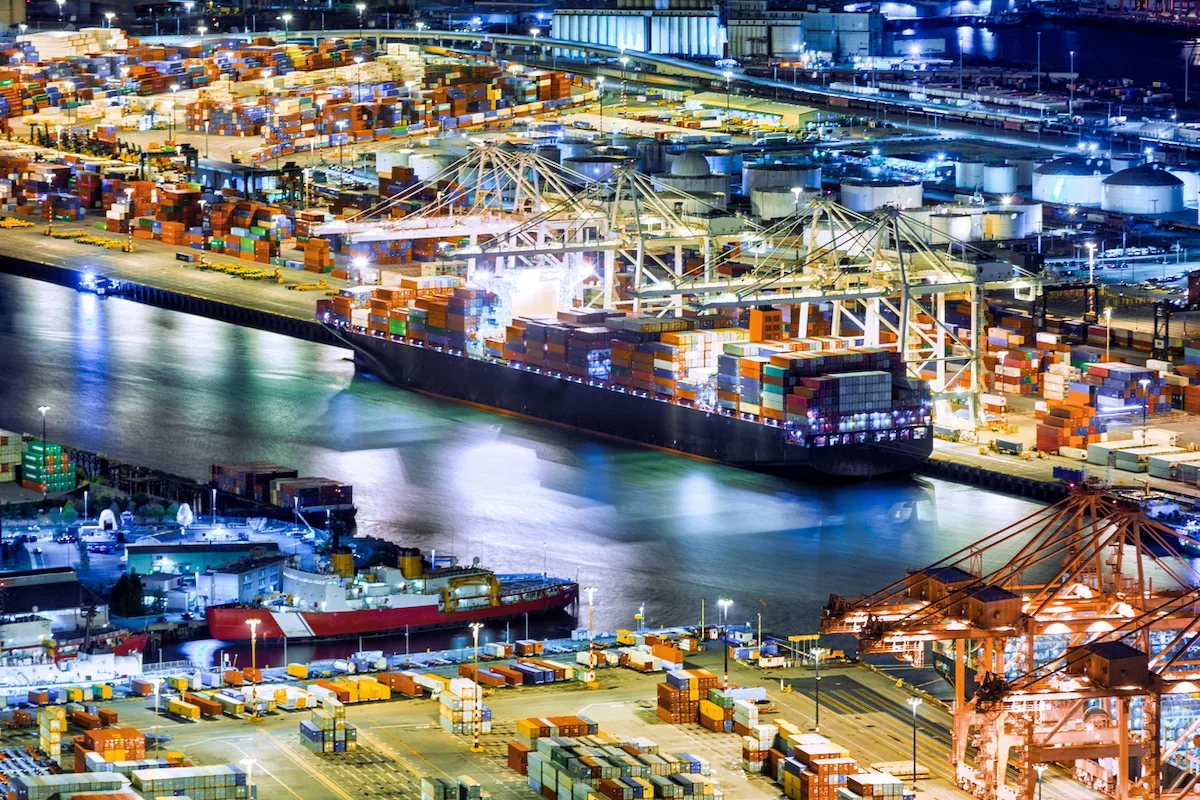
U.S. ports expect no major disruptions as a government shutdown takes effect with 750,000 federal workers expected to be placed on furlough, despite the prolonged closure. Beginning October 1 without congressional approval of a new spending plan for the fiscal year, this marks the first U.S. government shutdown since President Trump's first term in 2018-2019. Nevertheless, the Port of Seattle stated in a press release on September 30 that it plans to remain "fully open and operational" in the event of a shutdown—while also calling on Congress to find a bipartisan solution. Port of Long Beach CEO Mario Cordero similarly said, "We will monitor the situation as it develops and will maintain close communication with federal agencies, labor, and all critical industry partners that are part of the supply chain." From a supply chain perspective, the Port of Long Beach (PoLB) is the second-largest container port in the U.S. globally—handling 8-9 million TEU annually—and together with the Port of Los Angeles forms the San Pedro Bay Port Complex. Mario Cordero is PoLB CEO—previously serving as a commissioner of the FMC (Federal Maritime Commission). Steven Neuhaus is chair of the PoLB Harbor Commission. The Port of Seattle operates under the Northwest Seaport Alliance (NWSA) together with the Port of Tacoma. Stephen Metruck is Executive Director of the Port of Seattle.
From a supply chain perspective, the Port of Los Angeles, Port of Houston, and Port of Tacoma all echoed similar sentiments to SupplyChainBrain, expecting normal operations ahead. The Port of Oakland also noted that marine terminals will remain open "while private operators continue importing and exporting cargo." A spokesperson for the Port Authority of New York and New Jersey (PANYNJ) clarified that as a fully self-funded entity, "a government shutdown will not affect our ability to operate our facilities." Several ports also noted that federal workers have been designated as "essential workers" and historically have not been impacted by government shutdowns. Gene Seroka is Executive Director of the Port of Los Angeles. Charlie Jenkins is Executive Director of Port Houston. Bethann Rooney is PANYNJ Port Director. Kristin Decas is Executive Director of the Port of Oakland—previously serving for many years at the Port of Hueneme.
From a supply chain perspective, federal agencies within the U.S. port complex include U.S. Customs and Border Protection (CBP), U.S. Coast Guard (USCG), FDA, USDA, EPA, Transportation Security Administration (TSA), Maritime Administration (MARAD), FMC (Federal Maritime Commission), and Army Corps of Engineers (USACE; channel deepening; maintenance)—the principal federal agencies. CBP officers, USCG personnel, TSA inspectors, FDA inspectors, and USDA APHIS inspectors fall into the "essential worker" category—required to work without pay—with compensation retroactively provided after the shutdown ends. HMT (Harbor Maintenance Tax), HMTF (Harbor Maintenance Trust Fund), Customs duties, and MPF (Merchandise Processing Fee) are the principal U.S. port and customs revenue sources. Section 321 de minimis (shipments under $800 duty-free; to be eliminated in 2026) and Type 86 (de minimis electronic filing) are the primary e-commerce categories. OSRA-22 (Ocean Shipping Reform Act of 2022) is legislation that strengthens the FMC's port and carrier enforcement authorities—critical for detention and demurrage fee reviews.
From a supply chain perspective, the U.S. port ecosystem includes AAPA (American Association of Port Authorities), Pacific Merchant Shipping Association (PMSA), National Association of Waterfront Employers (NAWE), Pacific Maritime Association (PMA; West Coast), and United States Maritime Alliance (USMX; East/Gulf Coast) as the principal industry organizations. ILWU (International Longshore and Warehouse Union; West Coast, 22,000+ members) and ILA (International Longshoremen's Association; East/Gulf Coast, 65,000+ members) are the primary port labor unions. Harold Daggett is ILA President. Bobby Olvera Jr. is ILWU President. The USMX-ILA Master Contract went on strike in October 2024 and was renegotiated with a tentative agreement, followed by a new six-year contract signed in January 2025—with automation as the principal point of contention. Major U.S. container ports include Port of Los Angeles (PoLA), Port of Long Beach (PoLB), Port of New York and New Jersey (PANYNJ), Port of Savannah Georgia (GPA), Port of Houston, Port of Norfolk Virginia (Port of Virginia), Port of Charleston SC, Port of Seattle-Tacoma (NWSA), Port of Oakland, Port of Miami (PortMiami), Port Everglades, Port of Baltimore, Port of Philadelphia (PhilaPort), Port of Jacksonville (JAXPORT), Port of New Orleans, and Port of Mobile Alabama—comprising the principal port network. In conclusion, the U.S. ports' resilience to shutdown is a concrete indicator of the mixed federal/local financing structures and the essential worker category's role in preserving national logistics continuity.
Key Points:
1. 750,000 federal workers are expected to be placed on furlough.
2. This is the first U.S. government shutdown since 2018-2019.
3. Major U.S. ports (Seattle, LA, Long Beach, Houston, Tacoma, Oakland, PANYNJ) expect normal operations.
4. PANYNJ is a fully self-funded entity.
5. Federal port workers fall into the essential worker category.

