

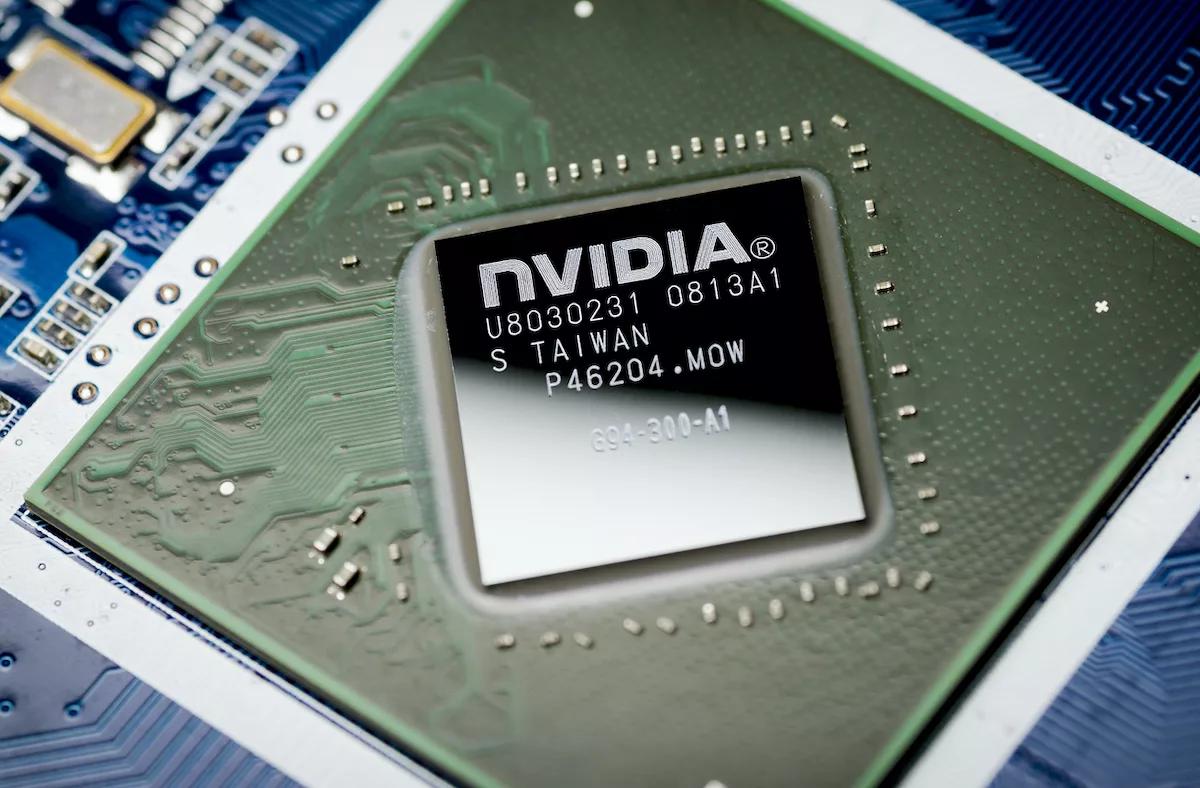
China exports of advanced semiconductor chips under export licensing arrangements involving a 15% government cut will constitute an export tax unlikely to generate significant revenues and may potentially harm U.S. efforts to narrow the trade deficit, according to Oxford Economics. The economic consulting firm characterizes the fee recently accepted by chip makers Nvidia and AMD as a "surprising move." "Although the parties involved appear to deliberately avoid characterizing this arrangement as an export tax, it is one," the firm stated in its August 26 report. "Furthermore, U.S. Treasury Secretary Bessent has also raised the idea of expanding export taxes to other industries." Oxford Economics estimates that the tax on U.S. semiconductor exports to China could generate a maximum of approximately $1.5 billion in revenue—an insignificant amount in the context of the U.S. budget deficit exceeding $2 trillion—according to lead economist Adam Slater.
From a supply chain perspective, NVIDIA Corporation, based in Santa Clara, California, is the world's largest designer of GPU and AI chips—with Jensen Huang as Founder, President & CEO—commanding a market capitalization exceeding $3.5 trillion. NVIDIA produces flagship AI accelerator chips including H100, H200, B100, B200, and GB200, while manufacturing restricted variants for China such as H20, L20, and L2. Advanced Micro Devices Inc. (AMD), also based in Santa Clara, California, manufactures x86 CPUs, GPUs, and AI accelerators—with Lisa Su serving as Chair & CEO. AMD's principal AI accelerators include the MI300X, MI325X, MI350, and MI400. Scott Bessent serves as U.S. Treasury Secretary, assuming office during the Trump 2.0 administration, and is founder of Key Square Group. Oxford Economics, based in Oxford, England, is a global economic forecasting and consulting firm with Adam Slater as Lead Economist. Adrian Cooper serves as Oxford Economics CEO.
From a supply chain perspective, the global semiconductor industry reached a market size of $627 billion in 2024 and is expected to reach $1 trillion by 2030. TSMC (Taiwan Semiconductor Manufacturing Company, based in Hsinchu, Taiwan) is the world's largest foundry—with C.C. Wei as Chairman & CEO—commanding over 60% of the global foundry share. Major foundries also include Samsung Foundry, Intel Foundry, GlobalFoundries, UMC, SMIC (China), Hua Hong, PSMC, VIS, Tower Semiconductor (Intel), X-Fab, and others. ASML, based in Veldhoven, Netherlands, is the sole global provider of EUV (Extreme Ultraviolet) lithography equipment—with Christophe Fouquet as President & CEO. Major semiconductor manufacturing equipment suppliers include Applied Materials, Lam Research, KLA Corporation, Tokyo Electron, Screen Holdings, Hitachi High-Tech, Canon, and Nikon. Leading EDA (Electronic Design Automation) software providers include Synopsys, Cadence Design Systems, and Siemens EDA (Mentor Graphics).
From a supply chain perspective, U.S.-China technology export controls are administered by the BIS (Bureau of Industry and Security) within the Commerce Department, which oversees semiconductor export licensing. Primary U.S. export control tools include the Entity List, the SDN List (Specially Designated Nationals), and the Foreign Direct Product Rule (FDPR). Major Chinese companies on the Entity List include Huawei, SMIC, YMTC, CXMT, HiSilicon, Phytium, Sugon, Inspur, Megvii, SenseTime, iFlytek, DJI, Hikvision, and Dahua. Key Biden-era semiconductor export control measures include the October 2022 export controls, October 2023 update, and December 2024 expansion. Under Trump 2.0, sales of NVIDIA H20 and AMD MI308 chips to China are being permitted—but in exchange for the 15% export revenue cut. The CHIPS and Science Act, signed by Biden in 2022, provided $280 billion in semiconductor manufacturing and R&D incentives. Ultimately, the NVIDIA-AMD 15% export revenue cut arrangement represents an unprecedented mechanism in U.S. trade policy—functioning more as a geopolitical maneuver than a meaningful financial contribution, according to Oxford Economics' analysis.
Key Takeaways:
1. Nvidia and AMD are accepting a 15% government cut on chip sales to China.
2. Oxford Economics emphasizes that the arrangement constitutes an export tax.
3. Expected annual revenue is a maximum of $1.5 billion.
4. The U.S. budget deficit exceeds $2 trillion.
5. Treasury Secretary Bessent has proposed extending export taxes to other industries.

