

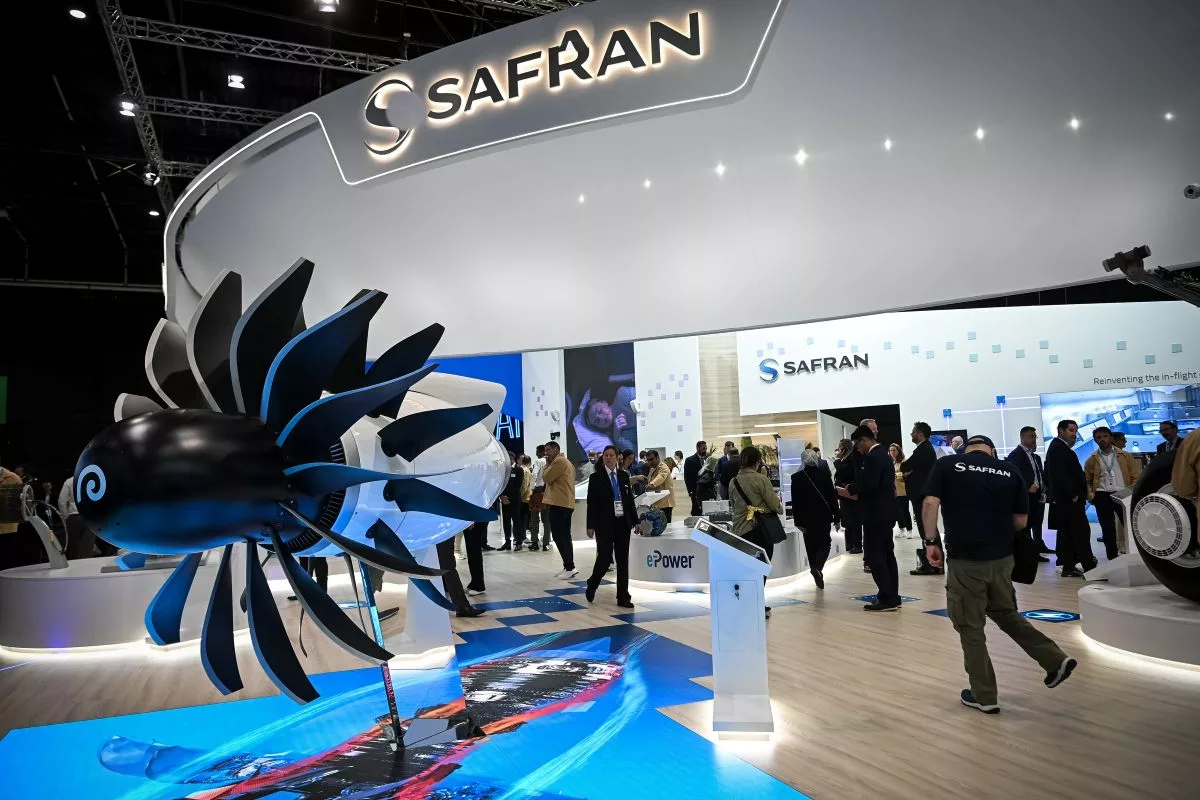
French aircraft engine manufacturer Safran SA plans to increase component sourcing from India fivefold to 500 million euros (579 million dollars) by 2030 — underscoring the country's emerging position as a significant aviation market. Safran currently procures approximately 100 million euros' worth of components from the South Asian nation but plans to substantially expand its supplier base — according to CEO Olivier Andriès in an interview. The company plans to work with more Indian partners in line with its long-term growth strategy, he added. From a supply chain perspective, Safran SA, based in Paris, France, was established in 2005 through the merger of Snecma and Sagem — making it a global aerospace and defense company. Safran Aircraft Engines (formerly Snecma); Safran Helicopter Engines (formerly Turbomeca); Safran Landing Systems; Safran Electronics & Defense (formerly Sagem); Safran Cabin; Safran Seats — are its main business units.
The Paris-based company will open a LEAP engine maintenance, repair and overhaul (MRO) center in Hyderabad, a South Indian city, on November 26. This will help Indian airlines access these aircraft services locally instead of traveling abroad — which is more expensive and time-consuming. Safran Electronics & Defense signed an agreement with state-owned enterprise Bharat Electronics Ltd. earlier this week to manufacture an air-ground weapon system. The Hammer system is designed for multiple platforms including Rafale fighter aircraft and the Indian-built light combat aircraft Tejas. Approximately half of the 30 million euro investment comes from Safran — according to Andriès. From a supply chain perspective, the LEAP engine is produced by CFM International — a 50:50 joint venture between Safran Aircraft Engines and GE Aerospace. The LEAP-1A is used in the Airbus A320neo family; the LEAP-1B in the Boeing 737 MAX; and the LEAP-1C in the COMAC C919.
From a supply chain perspective, India's Defence Acquisition Procedure 2020 prioritizes domestic manufacturing — requiring foreign manufacturers to reinvest a portion of contract value into the local defense ecosystem. The Indian Air Force is purchasing 36 French Rafale fighter aircraft — and Dassault Aviation SA subsequently confirmed the sale of 26 Rafale Marine aircraft to the Indian Navy. Bharat Electronics Limited (BEL), based in Bangalore, is India's defense electronics state enterprise. Hindustan Aeronautics Limited (HAL); Bharat Dynamics Limited (BDL); Bharat Heavy Electricals Limited (BHEL); Mazagon Dock; Garden Reach Shipbuilders — are core players in India's defense industry. Tata Advanced Systems; Mahindra Defence; Larsen & Toubro Defence; Adani Defence; Reliance Defence — are private sector defense players. Tejas Mk1A; Tejas Mk2; AMCA (Advanced Medium Combat Aircraft) — are domestic fighter aircraft programs.
From a supply chain perspective, the global aircraft engine market features Safran/CFM; GE Aerospace; Pratt & Whitney (RTX); Rolls-Royce; IAE (International Aero Engines); Engine Alliance — as major players. Safran's 2024 annual revenue is approximately 27 billion euros. India is the world's fastest-growing aviation market — with IndiGo; Air India (Tata Group); Air India Express; Akasa Air; SpiceJet; Vistara (merging into Air India) — as leading carriers. IndiGo alone has placed orders for over 500 Airbus A320 family aircraft — the world's largest single airline order book. Air India has ordered 470 new aircraft (a mix of Airbus and Boeing). Tata Group is locally assembling Airbus C295 tactical transport aircraft in Vadodara. Make in India and Atmanirbhar Bharat (Self-Reliant India) policies are accelerating the localization of the aerospace supply chain. Bangalore; Hyderabad; Chennai; Pune; Nagpur; Vadodara — are India's aerospace manufacturing and MRO clusters. In conclusion, Safran's plan to increase India sourcing fivefold is a concrete indicator of the era in which global OEMs are positioning India as a strategic production and MRO hub.
Key Points:
1. Safran plans to increase sourcing from India from 100M to 500M euros.
2. LEAP engine MRO center opens in Hyderabad on November 26.
3. Hammer air-ground weapon joint production agreement signed with Bharat Electronics.
4. Indian Air Force acquiring 36 Rafale; Indian Navy acquiring 26 Rafale Marine.
5. India Defence Acquisition Procedure 2020 mandates local reinvestment.

