

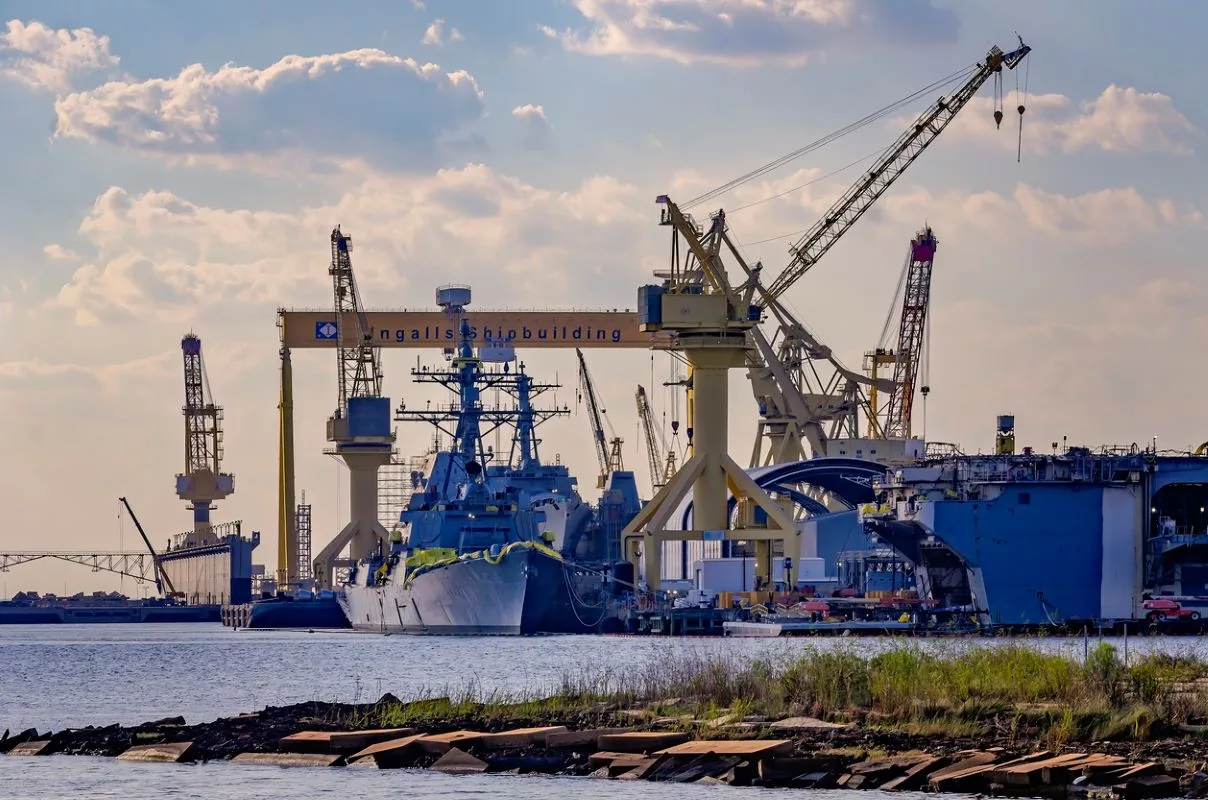
SupplyChainBrain reports; Helen Atkinson (Managing Editor, SupplyChainBrain); analyst insight; America; was great at building commercial oceangoing ships. Can it be great again? The current administration appears willing to try to find out. President Biden first floated the idea of pushing back against China's dominance in shipbuilding. Now President Trump threatens to fine ships built in China up to 1.5 million dollars to enter U.S. ports. Additionally, in the first two years of a plan put forth by the Office of the U.S. Trade Representative (USTR), 1 percent of U.S. exports will be carried on U.S.-built ships — rising to 15 percent over 7 years. Pictured is the guided missile destroyer Ted Stevens (DDG 128) at Ingalls Shipbuilding in Pascagoula, Mississippi.
From a supply chain perspective, the historical peak of the U.S. shipbuilding industry occurred during World War II — the Liberty Ships and Victory Ships programs (Henry J. Kaiser); producing over 2,700 commercial ships annually in 1944. Today, U.S. commercial shipbuilding lags far behind China, South Korea, and Japan — accounting for approximately 0.1 percent of global new construction orders (on a CGT basis). In 2024, China captured over 50 percent of global new construction orders, South Korea 30 percent, Japan 15 percent, and Europe and other countries the remainder, constituting the primary structure. Major commercial and military shipbuilding firms in the U.S. include HII (Huntington Ingalls Industries; Chris Kastner CEO; Newport News and Pascagoula), General Dynamics (NASSCO, Bath Iron Works, Electric Boat; Phebe Novakovic CEO), Bollinger Shipyards (Ben Bordelon CEO), Eastern Shipbuilding Group, Fincantieri Marinette Marine, VT Halter Marine, Marinette Marine, Vigor Industrial, Conrad Shipyard, representing the core ecosystem players.
From a supply chain perspective, the major Chinese shipbuilding firms are China State Shipbuilding Corporation (CSSC), Jiangnan Shipyard, Hudong-Zhonghua Shipbuilding, Dalian Shipbuilding Industry, Shanghai Waigaoqiao Shipbuilding, representing the primary Chinese players — with CSSC capturing approximately 25-30 percent of global CGT. South Korea's major firms include HD Hyundai Heavy Industries (HHI; Chung Ki-sun Vice Chairman), Samsung Heavy Industries (SHI), Hanwha Ocean (formerly Daewoo Shipbuilding), representing the primary South Korean players. Japan's major firms include Imabari Shipbuilding, Japan Marine United (JMU), Mitsui E&S, Tsuneishi, representing the primary Japanese players. Hanwha Ocean acquired Philly Shipyard in 2024 — marking the first major South Korean shipbuilding firm presence in the U.S. U.S. federal authorities include U.S. Maritime Administration (MARAD; U.S. Department of Transportation), Office of the U.S. Trade Representative (USTR; Jamieson Greer), U.S. Navy NAVSEA (Naval Sea Systems Command), U.S. Coast Guard, representing the primary federal maritime authorities.
From a supply chain perspective, the Jones Act (1920 Merchant Marine Act) mandates that vessels built in the U.S., flagged under the U.S., crewed by U.S. citizens, and owned by U.S. interests be used in trade between U.S. ports — representing the primary protective legislation for U.S. shipbuilding. The Cargo Preference Act (1954) mandates that a portion of U.S. government cargo be carried on U.S.-flagged vessels. The Maritime Security Program (MSP), National Defense Reserve Fleet (NDRF), represent the primary U.S. maritime security programs. The USTR Section 301 investigation (into Chinese shipbuilding, maritime, and logistics sectors) was initiated by the Biden administration in 2024 and expanded by the Trump administration — with the fee for U.S. port entry by Chinese-built vessels reaching up to 1.5 million dollars. The reaction from the U.S. transportation and shipping sector includes NRF, U.S. Chamber of Commerce, World Shipping Council (Joe Kramek CEO), representing the primary opposition groups — asserting that the fees will ultimately be passed on to consumers. SCA (Shipbuilders Council of America), American Maritime Partnership (AMP), represent the primary domestic shipbuilding advocacy groups. In conclusion, Atkinson's analysis of U.S. shipbuilding suggests that global maritime shipping geography is undergoing fundamental redesign — for supply chain managers, Chinese-built vessel fees and alternative East Asian supply sources appear to represent a primary strategic priority.
Key Takeaways:
1. Helen Atkinson (SCB); efforts to revive U.S. shipbuilding are underway.
2. Trump; threatens a 1.5 million dollar fee for Chinese-built ships entering U.S. ports.
3. USTR plan; 1 percent of U.S. exports carried on U.S.-built ships.
4. China, South Korea, Japan; dominating global shipbuilding.
5. Jones Act, HII, General Dynamics; primary U.S. protective legislation and players.

