

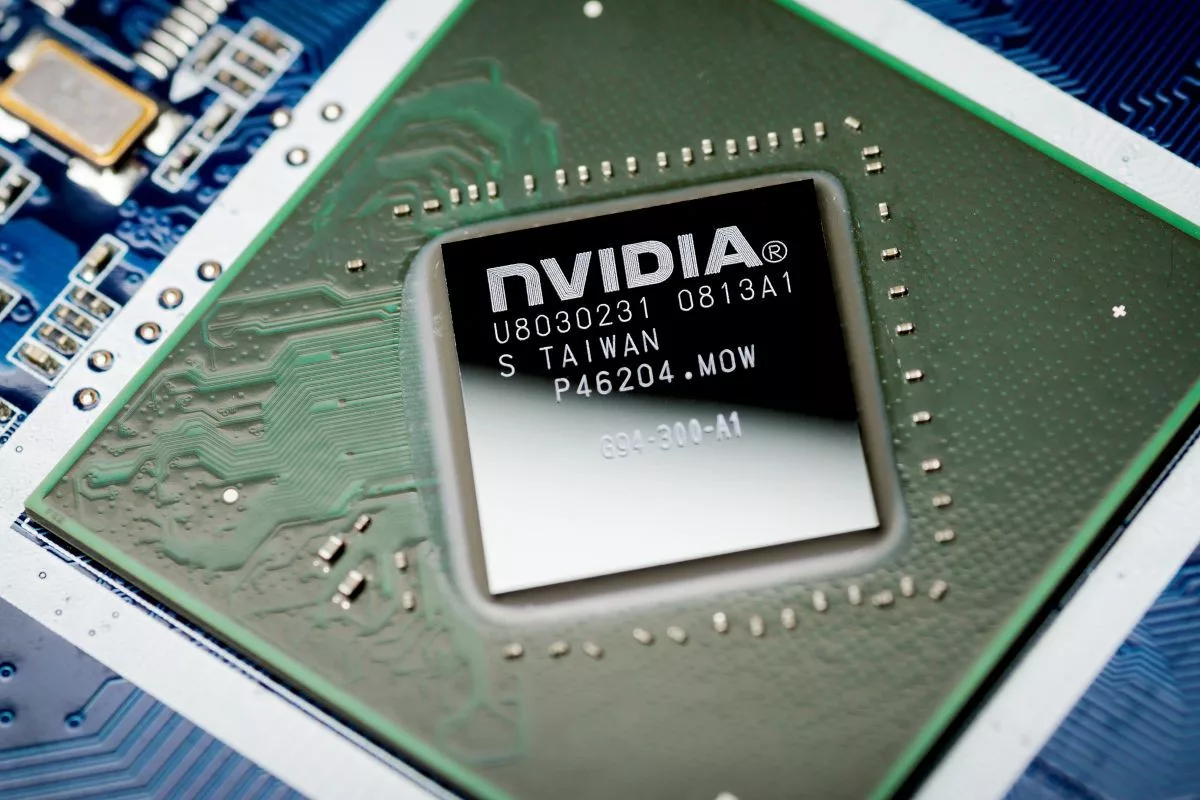
Nvidia CEO Jensen Huang said the chipmaker will begin shipping a new AI chip in the coming months this year — a processor that delivers more compute power than its predecessors while consuming less electricity. The New York Times reports that the chip, known as Vera Rubin, has been in development for three years and is designed to meet AI demands faster and more cost-effectively than its predecessors. From a supply chain perspective, Nvidia is based in Santa Clara, California and was founded in 1993 by Jensen Huang, Chris Malachowsky, and Curtis Priem. In the GPU market, it competes against AMD, Intel, Imagination Technologies, ARM Mali, and Qualcomm Adreno. In the data center AI accelerator market, it holds over 80% share as of 2026.
Huang will make the announcement on January 5 at CES, his annual keynote conference in Las Vegas, adding another announcement about Nvidia's work on autonomous vehicles in partnership with Mercedes-Benz. Huang said the automotive manufacturer will begin shipping cars equipped with Nvidia's self-driving technology, which is comparable to Tesla's Autopilot. From a supply chain perspective, Nvidia DRIVE, Thor, and Hyperion platforms are used by BMW, Volvo, Polestar, Lucid, Rivian, NIO, XPeng, Li Auto, Zeekr, and JLR. Mobileye (Intel spinoff), Qualcomm Snapdragon Ride, Tesla FSD, and Nvidia DRIVE are the primary competitors in the ADAS/AD space.
Other buyers of the new Rubin chips include Microsoft and Amazon, fulfilling a promise Huang made when he first introduced the chip at the company's annual conference in San Jose, California in March 2025. The Times notes that if the new chips deliver on their promises, they could enable companies to develop AI at lower cost and begin to at least ease the rising power demands of data centers being built around the world. From a supply chain perspective, Nvidia's roadmap includes generations of Hopper (H100, H200), Blackwell (B100, B200, GB200 NVL72), Rubin (2026), Rubin Ultra (2027), and Feynman (2028). TSMC's 4N/3N/2N processes, CoWoS (Chip-on-Wafer-on-Substrate) advanced packaging, and HBM3e/HBM4 (SK Hynix, Micron, Samsung) form the technical foundation of Nvidia's supply chain.
U.S.-based Nvidia has emerged as one of the leading providers of critical AI technology, placing its supply chain under government scrutiny. In December, President Donald Trump said the chipmaker would be permitted to sell H200 AI chips to an approved short list of buyers in China, provided it turns over 25% of the revenue from such sales to the U.S. government. From a supply chain perspective, BIS (Bureau of Industry and Security) EAR (Export Administration Regulations) advanced computing export controls have restricted exports of A100, H100, H800, and A800 to China since 2022. The AI Diffusion Rule divides countries into three tiers. Trump's revenue-sharing arrangement represents a new interpretation of the U.S. export control regime. Vera Rubin is named in honor of the renowned U.S. astronomer Vera Rubin. In conclusion, Nvidia's Rubin chip promises to shape a new era of AI compute economics.
Key Points:
1. Nvidia will begin shipping the Vera Rubin AI chip this year.
2. Jensen Huang will make the announcement at CES Las Vegas on January 5.
3. Mercedes-Benz autonomous vehicle partnership is an additional announcement.
4. Microsoft and Amazon emerge as Rubin buyers.
5. Trump permits H200 China sales in exchange for 25% revenue share.

