

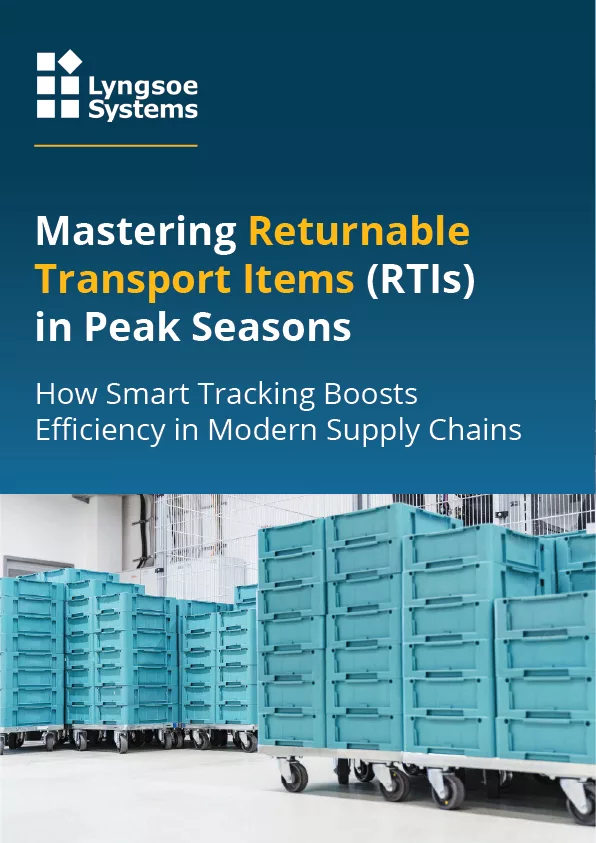
Returnable Transport Items (RTI) losses of 10-15% and the absence of real-time visibility represent critical bottlenecks in peak-season supply chains. RFID and BLE tracking deliver end-to-end asset visibility, reduce costs, improve efficiency, and strengthen operational agility. What creates bottlenecks in peak-season supply chains? Increasingly, the answer is not labour or transport capacity—it is the lack of visibility and control over RTIs. Pallets, roll cages, totes, and reusable containers form the backbone of high-volume logistics, and when they go missing or fall out of balance, operations slow or halt entirely. From a supply chain perspective, RTI represents critical infrastructure in FMCG, retail, postal & parcel, automotive parts, and healthcare sectors. Pool pallet providers such as EUR-pallet (800x1200mm), UK pallet (1000x1200mm), CHEP, and LPR (La Palette Rouge) operate hundreds of millions of pallets at global scale.
Peak periods magnify these challenges. While many organizations experience annual RTI losses of 10-15%, manual tracking methods cannot keep pace with demand. This drives higher costs when they matter most, increased dwell times, and declining service performance. How can supply chains regain control? RFID and Bluetooth Low Energy (BLE) technologies—supported by platforms such as Lyngsoe Systems' real-time supply chain visibility solutions—deliver end-to-end tracking between warehouses, distribution centres, and customer locations. By assigning a digital identity to each asset, companies gain a single source of truth that improves planning, forecasting, and operational responsiveness. From a supply chain perspective, UHF RFID (EPCglobal Gen2) offers passive read capability at 5-10 metres, while BLE (Bluetooth 5.x) can track actively at ranges of 30-100 metres. Impinj, Zebra Technologies, Honeywell, and Alien Technology are leading players in the RFID reader and tag market. Tive, Roambee, Wiliot, Hanshow, and Sensitech position themselves in BLE and cellular tracking.
At a large-scale logistics company managing more than 100,000 reusable assets across more than 100 locations, real-time tracking delivers measurable results: significantly reduced losses, lower manual workload through automated data capture, and better-balanced asset distribution during peak demand. From a supply chain perspective, reducing shrinkage rates improves asset turnover and generates working capital savings. EU PPWR (Packaging and Packaging Waste Regulation) and Extended Producer Responsibility (EPR) regulations accelerate the shift towards reusable packaging systems. Schoeller Allibert, ORBIS (Menasha Corporation), and SSI Schaefer position themselves as manufacturers in the plastic crate, foldable container, and bulk container categories.
In conclusion, when raw data is transformed into action, RTIs shift from a source of friction to a strategic asset. From a supply chain perspective, Lyngsoe Systems is expanding from RFID-based postal & parcel sorting systems with references from Royal Mail, USPS, Deutsche Post DHL, and UPS into the RTI tracking domain. Geofencing and dwell time analysis automatically measure how long assets remain at each location and enable cycle time optimization. API-based integration with WMS, TMS, and ERP systems enables real-time synchronization of inventory accuracy. Edge gateways filter and pre-process raw data from RFID readers at warehouses and distribution centres before sending it to the cloud. Ultimately, Lyngsoe's case study clearly demonstrates that RTI visibility directly impacts peak-season performance and overall supply chain agility.
Key Takeaways:
1. RTI annual losses typically fall in the 10-15% range.
2. Manual tracking cannot keep pace with demand in peak seasons.
3. RFID and BLE provide end-to-end asset visibility.
4. Lyngsoe Systems is expanding from postal/parcel origins into the RTI domain.
5. The 100K+ asset case demonstrates reduced losses and balanced distribution.

