

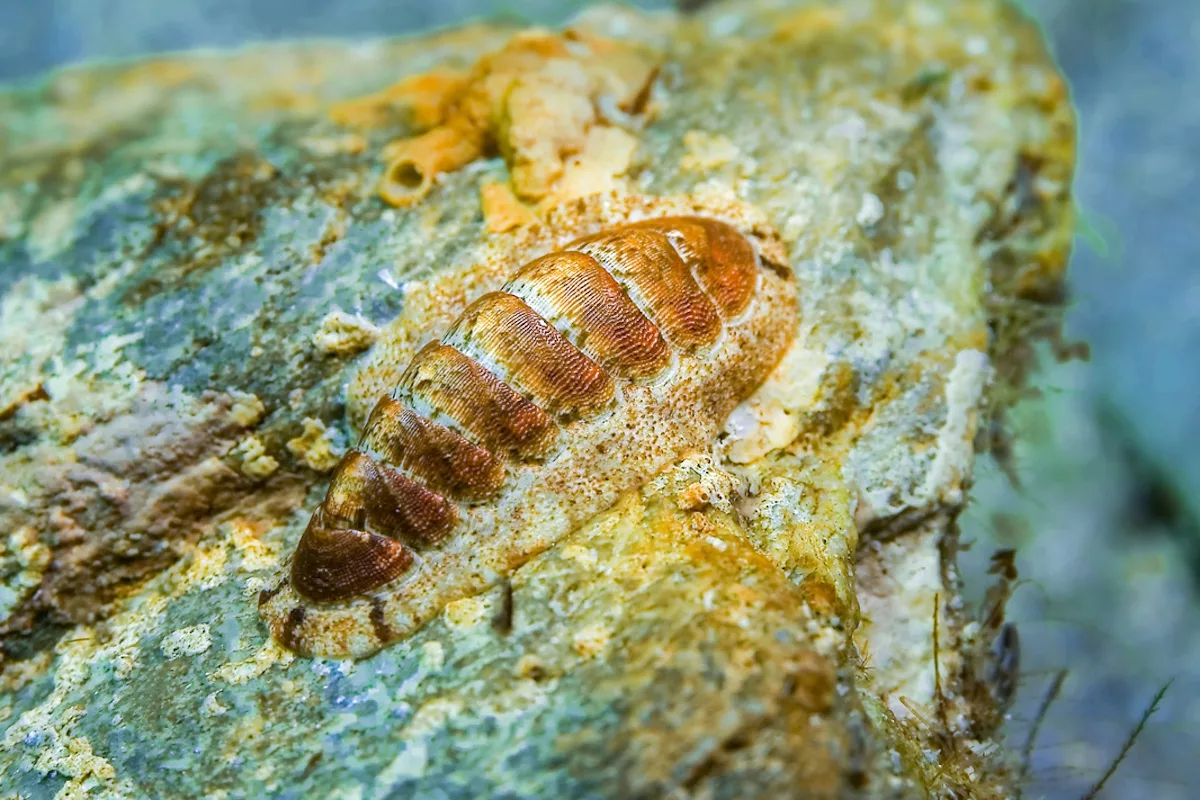
SupplyChainBrain; in the race to make advanced technologies cheaper, cleaner, and more efficient, scientists have turned to an unlikely teacher: a tiny marine mollusk. Researchers at UC Irvine, working with partners in Japan, are discovering how chitons (small sea creatures living in intertidal zones worldwide) build their ultra-hard teeth layer by layer. This insight is now directing efforts to develop cleaner, more precise methods for synthesizing critical materials that power everything from fuel cells to next-generation electronics. "Chitons grow new teeth every few days—superior teeth made from materials used in industrial cutting tools, grinding media, dental implants, surgical implants, and protective coatings—yet made at room temperature and nanoscale precision," says David Kisailus, a materials and engineering professor at UC Irvine and director of the school's Biomimetic and Nanostructured Materials Laboratory. "We can learn a great deal from these biological designs and processes."
From a supply chain perspective, biomimetics is an engineering design discipline that mimics biological systems in nature—popularized by Janine Benyus's 1997 book "Biomimicry: Innovation Inspired by Nature." Velcro (imitating burdock plant), Shinkansen bullet train (imitating kingfisher beak), Eastgate Centre Harare (termite nest ventilation), Speedo Fastskin (shark skin), Lotusan paint (lotus effect), Mercedes-Benz Bionic (boxfish hydrodynamics), and Whalepower turbines (humpback whale flipper) are primary examples of biomimetic applications. UC Irvine (University of California Irvine) is based in Irvine, California; Howard Gillman is Chancellor. Henry Samueli School of Engineering is UC Irvine's engineering school—Magnus Egerstedt is Dean. David Kisailus previously served at UC Riverside before joining UC Irvine—a pioneer in the field of biomimetic materials science.
From a supply chain perspective, the global battery industry has primary application areas in EV (Electric Vehicle), grid storage (BESS), and consumer electronics. CATL (Contemporary Amperex Technology Co. Limited; Ningde, China) is the world's largest battery manufacturer—Robin Zeng is Founder & Chairman—commanding more than 35% of the global EV battery share. BYD (Build Your Dreams; Shenzhen, China) is the second largest—Wang Chuanfu is Chairman. LG Energy Solution (Seoul, South Korea), Samsung SDI, SK On, Panasonic Energy (Tesla partner), Northvolt (Sweden; bankrupt), EVE Energy, Gotion High-Tech, SVOLT, CALB, Farasis Energy, Verkor (France), ACC (Stellantis; Mercedes; TotalEnergies), PowerCo (VW), Envision AESC, Ultium Cells (GM-LG), BlueOval SK (Ford-SK), and Toyota Battery Manufacturing are primary EV battery manufacturers.
From a supply chain perspective, battery chemistries and technologies include NMC (Nickel Manganese Cobalt), NCA (Nickel Cobalt Aluminum), LFP (Lithium Iron Phosphate), LMFP (Lithium Manganese Iron Phosphate), solid-state battery (SSB), lithium-sulfur, sodium-ion, silicon anode, lithium metal anode, and dry electrode as primary battery technologies. QuantumScape, Solid Power, Factorial Energy, SES AI, Sila Nanotechnologies, Group14, Amprius Technologies, StoreDot, Enovix, Natron Energy, Form Energy (long-duration storage), and ESS Inc. and Eos Energy are primary next-generation battery startups. Argonne National Laboratory, Oak Ridge National Laboratory, SLAC National Accelerator Laboratory, Lawrence Berkeley National Laboratory, and NREL (National Renewable Energy Laboratory) are primary U.S. battery research laboratories. Battery 500 Consortium, DOE Joint Center for Energy Storage Research (JCESR), European Battery Alliance, and Faraday Institution are primary battery research consortia. Ultimately, the biomimetic study of chiton teeth enables material synthesis at room temperature and nanoscale precision—potentially representing a new manufacturing paradigm for the global battery industry.
Key Points:
1. UC Irvine and Japan partners' research on chiton tooth synthesis is being published.
2. David Kisailus is a pioneer in the field of biomimetic materials science.
3. Chiton teeth are made at room temperature and nanoscale precision.
4. Findings are driving fuel cell, next-generation electronics, and battery materials.
5. Biomimetics is a design discipline inspired by nature.

