

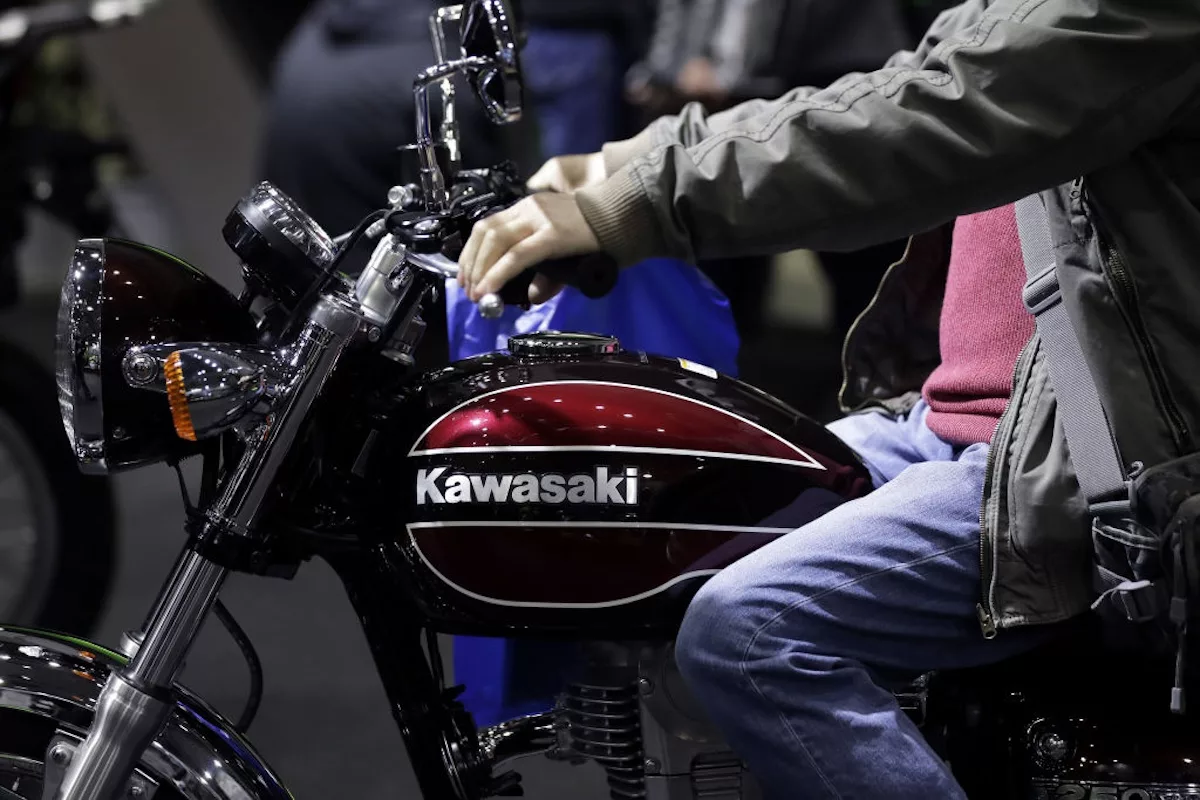
Kawasaki Heavy Industries Ltd. says it will be forced to raise prices on its high-end motorcycles to offset the impact of U.S. tariffs. The company's motorcycles rely on motors and other components shipped from Japan — making them subject to President Donald Trump's import duties — according to CEO Yoshinori Kanehana in an interview with Bloomberg TV on December 1. The tariffs could also affect the company's plans to hire approximately 4,000 workers in Nebraska, he said. Passing the cost of tariffs on to customers means roughly a 17 percent price increase, Kanehana added. From a supply chain perspective, Kawasaki Heavy Industries, a Tokyo, Japan-based conglomerate founded by Shozo Kawasaki in 1896, is a globally diversified industrial company. Beyond motorcycles, the Kawasaki Group operates in aerospace, maritime, rail, energy, robotics, and healthcare sectors.
Despite the potential drag on sales, Kanehana noted that the price increases will largely affect larger, more expensive models. "The wealthy will buy them," he said. Kawasaki Heavy is widely known for its popular motorcycles, but its business spans from marine frigate engines to metro rail cars. The aerospace division is a bright spot — helping boost second-quarter earnings. The company manufactures fuselages for Boeing Co.'s 787 and 737 passenger aircraft. From a supply chain perspective, Kawasaki's motorcycle division produces UTVs (Utility Task Vehicles), ATVs (All-Terrain Vehicles), Jet Skis, and rail cars for the U.S. market at its facility in Lincoln, Nebraska. Honda, Yamaha, Suzuki, and Kawasaki are Japan's "Big Four" producers in the global motorcycle market. Harley-Davidson, BMW Motorrad, Triumph, Ducati, KTM (Pierer Mobility), Royal Enfield (Eicher Motors), Bajaj Auto, Hero MotoCorp, and TVS are other leading players in the global motorcycle market.
From a supply chain perspective, Trump 2.0 tariff policy is set to cause significant disruption in global trade beginning February 2025 — with the International Emergency Economic Powers Act (IEEPA), Section 232, and Section 301 as principal legal tools. Japan initially faced a 24 percent reciprocal tariff, later reduced to 15 percent through negotiations. Auto and auto parts under Section 232 face a 25 percent tariff. Toyota, Honda, Nissan, Mazda, Subaru, Mitsubishi, Suzuki, Daihatsu, Isuzu, and Hino are the principal players in Japan's automotive exports to the U.S. Kawasaki Heavy estimates net tariff impact of 90 billion yen (approximately 580 million dollars) for the first half of the current fiscal year — reported in consolidated financial results. Mitsubishi Heavy Industries, IHI Corporation, and Kawasaki Heavy Industries are Japan's three largest heavy industrial conglomerates — significant structural component suppliers in the Boeing and Airbus supply chain.
From a supply chain perspective, the global motorcycle market, with annual sales volume around 60 million units, has emerging markets — particularly India, China, Indonesia, Vietnam, Thailand, and the Philippines — as principal growth drivers. Large displacement motorcycles (600cc+) such as the Kawasaki Ninja, Kawasaki Z, Kawasaki Versys, Kawasaki Vulcan, and Kawasaki H2 are primary product lines. The U.S. motorcycle market sees approximately 500,000 new unit sales annually, with Harley-Davidson, Honda, Yamaha, Kawasaki, and Indian Motorcycle (Polaris) as principal players. EV motorcycles — Zero Motorcycles, LiveWire (a Harley-Davidson spinoff), Energica, Damon, and Verge — are leading brands in the emerging electric motorcycle segment. The Boeing 787 Dreamliner features global work-sharing, with Mitsubishi Heavy Industries producing wings, Kawasaki Heavy Industries the mid-fuselage, Subaru Corporation the wing center-carry-through panel, Spirit AeroSystems Section 41 (nose), and Vought Aircraft the aft fuselage. In conclusion, Kawasaki's 17 percent price increase signal stands as concrete evidence of the direct and visible impact of Trump's tariffs on global product pricing.
Key Points:
1. Kawasaki is planning a 17 percent price increase to offset tariffs.
2. CEO Yoshinori Kanehana disclosed this to Bloomberg TV on December 1.
3. Nebraska's 4,000 hiring plan could be affected by tariffs.
4. Kawasaki also manufactures Boeing 787/737 fuselages.
5. H1 current fiscal year net tariff impact estimated at 90 billion yen (~580 million dollars).

