

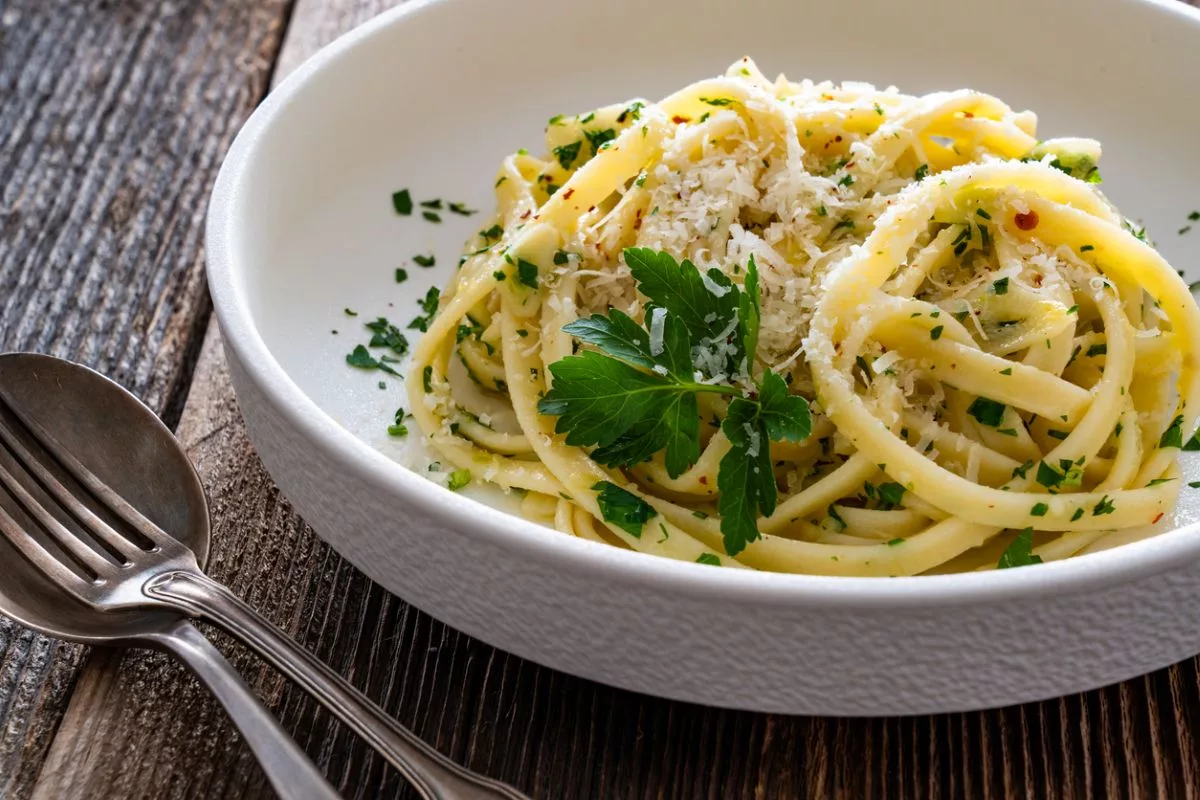
President Donald Trump has threatened Italian pasta companies with tariffs as high as 92 percent, but a review by the U.S. Department of Commerce has found that the duties will ultimately be reduced to lower levels. The Italian government stated in a January 1 announcement that the U.S. Department of Commerce is reviewing and lowering the proposed tariffs. According to Guardian, additional tariffs being added on top of the existing 15 percent customs duty range between 2 and 4 percent. The U.S. government is facing 13 producers, including Barilla, La Molisana, and Pastificio Lucio Garofalo, with allegations of selling at unfairly low prices. From a supply chain perspective, antidumping duty (AD) is administered by the U.S. Department of Commerce International Trade Administration (ITA), and injury is determined by the U.S. International Trade Commission (USITC). Pasta products under HTSUS heading 1902 are classified in the nonalcoholic pasta category.
From a supply chain perspective, Barilla, originating from Parma, Italy, is the world's largest pasta producer, founded by Pietro Barilla in 1877. It owns brands including Mulino Bianco, Voiello, Pavesi, Wasa, Harrys, and Filiz Makarna (Türkiye). La Molisana, originating from Campobasso, Molise, was founded in 1912. Pastificio Lucio Garofalo, originating from Gragnano, Naples, produces Pasta di Gragnano with PGI (Protected Geographical Indication) status. Other leading Italian pasta producers include De Cecco, Granoro, Rummo, Divella, Voiello (Barilla), and Antico Pastificio Morelli. On the U.S. side, Mueller's, Ronzoni, Creamette, San Giorgio, American Italian Pasta Company (AIPC), Riviana Foods, and Dakota Growers Pasta are the leading domestic producers. Antidumping margin calculations express the difference between normal value and export price as a percentage and are calculated using the weighted-average method.
From a supply chain perspective, the U.S. tariff history on Italian pasta is a long process. The first AD order was issued in 1996 and regularly undergoes sunset review. Section 301 (Trump-era China tariffs), Section 232 (national security), Section 201 (safeguard), and IEEPA (emergency) are the main mechanisms of U.S. trade defense tools. In the Trump 2.0 regime, reciprocal tariffs apply a 15 percent baseline tariff toward the EU. Italy is the leading pasta exporter in the EU—producing 3.4 million tons annually and accounting for over 25 percent of the global market. The U.S. is one of Italy's largest pasta export markets—approximately 660 million dollars annually. EU CAP (Common Agricultural Policy) subsidies provide Italian producers with access to cheap inputs (durum wheat)—which forms the basis of the U.S. dumping allegation.
From a supply chain perspective, durum wheat is the primary raw material for pasta production. Canada (Saskatchewan), the U.S. (North Dakota, Montana), Italy, Türkiye, Mexico, and Kazakhstan are the leading global durum wheat producers. Italian producers blend Canadian Western Amber Durum (CWAD) with local production. FOB (Free on Board), CIF (Cost Insurance Freight), and DDP (Delivered Duty Paid) are the main commercial terms under Incoterms 2020 for pasta exports. Genoa, La Spezia, Naples, and Venice are the main exit ports for Italian exports. On the U.S. side, New York/New Jersey, Norfolk, Charleston, Savannah, Houston, Long Beach, and Oakland are the main destination ports. Retail price elasticity is low in the pasta category—consumers tend to absorb 4-15 percent price increases and maintain brand loyalty. As a result, the U.S. DoC's Italian pasta tariff revision clearly demonstrates that trade defense processes can be managed with technical precision and that diplomatic dialogue can play a softening role.
Key Points:
1. Trump threatens 92 percent tariffs on Italian pasta companies.
2. U.S. DoC review reduces additional tariffs to the 2-4 percent level.
3. Italian government makes announcement on January 1.
4. 13 producers, including Barilla, La Molisana, and Pastificio Lucio Garofalo, face allegations.
5. Additional 2-4 percent added on top of existing 15 percent tariff.

