

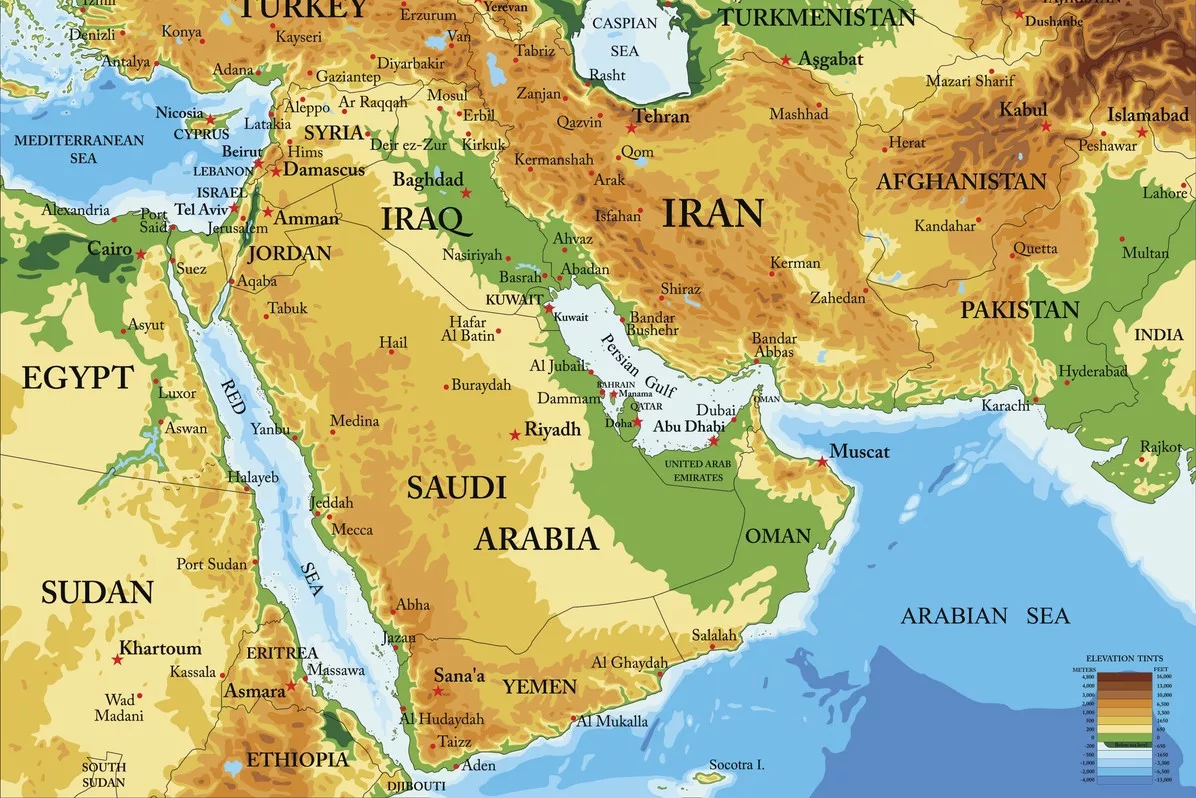
Houthi rocket strikes have ignited a fire aboard a Netherlands-flagged cargo vessel in the Gulf of Aden — with the insurgent group continuing to escalate attacks against commercial shipping transiting the region. The Houthis struck the cargo ship Minervagracht on September 29 — with no casualties reported. The attack comes a week after a failed strike on the same vessel, according to French military officials who spoke to the Associated Press. The ship is operated by Amsterdam-based carrier Spliethoff — which has declined to comment to the AP on why its vessels have been targeted twice by the insurgent group. While the Houthis provided no official justification for the attack, the strike suggests the vessel appears on a list of Israeli-linked targets. Late last month, the Houthis vowed to expand their attacks against commercial vessels in the Red Sea to include any ship operating at Israeli ports, regardless of nationality. Weeks before that announcement, the group attacked two Greek-owned vessels — killing four crew members and capturing 11 others in the second strike. Prior to that, as part of a ceasefire that has since collapsed following escalation of Israel's war in Gaza, the group had not attacked a commercial vessel in the Red Sea since December 2024. From a supply chain perspective, the Spliethoff Group is Amsterdam, Netherlands-based, founded in 1921 — and ranks among global leaders in specialized project cargo, multipurpose and heavy-lift shipping — operating a fleet of 100+ vessels. Spliethoff operates major brands including BigLift Shipping, Sevenstar Yacht Transport, Wijnne Barends, Bore, and Transfennica. The Minervagracht is part of Spliethoff's Mineralengracht class multipurpose vessels.
From a supply chain perspective, the Houthi maritime attack crisis represents the longest-running and most consequential unconventional maritime threat globally — beginning in November 2023. The Houthi movement, officially known as Ansar Allah, is the armed wing of a Yemeni Shi'a Zaydi faction — based in the Saada region — with close ties to Iran. Abdul-Malik al-Houthi is the movement's leader. Mahdi al-Mashat is a key figure in the Houthi-controlled government in Sanaa. The Bab el-Mandeb Strait links the Red Sea with the Gulf of Aden — one of the four most strategically critical maritime chokepoints globally — through which 6-7 million barrels of oil per day and 12 percent of global container traffic transit. The Suez Canal, at the northern end of the Red Sea, carries 12-15 percent of global commerce — but Houthi attacks have forced major global container carriers to redirect to the Cape of Good Hope route (South Africa) — extending voyage times by 10-14 days and increasing operational costs by more than 30 percent.
From a supply chain perspective, international maritime protection operations launched in response to Houthi attacks include Operation Prosperity Guardian (OPG; U.S.-led since December 2023, including UK, Bahrain, Canada, Denmark, France, Germany, Greece, Italy, Netherlands, New Zealand, Norway, Seychelles, Singapore, Spain, Sri Lanka); Operation Aspides (EU-led since February 2024, EUNAVFOR); and the Combined Maritime Forces (CMF, Bahrain-based, CTF-153) as key multinational maritime protection efforts. Active U.S. Navy vessels include USS Eisenhower, USS Carney, USS Mason, and USS Gravely — equipped with key defense systems including the Aegis Combat System, SM-2, SM-6, ESSM, and Phalanx CIWS. UKMTO (United Kingdom Maritime Trade Operations) and EUMSC-HOA (EU Naval Force Operation Atalanta) serve as primary monitoring and coordination centers. BMP5 (Best Management Practices version 5) is the anti-piracy and anti-attack guidance for commercial vessels. The JWC (Joint War Committee, Lloyd's of London) has classified Red Sea, Gulf of Aden, and Yemeni waters as a listed area — significantly raising insurance premiums.
From a supply chain perspective, the Cape of Good Hope routing effects impact major global carriers including Maersk, MSC (Mediterranean Shipping Company), CMA CGM, Hapag-Lloyd, Evergreen Marine, Yang Ming, HMM, ONE (Ocean Network Express), OOCL, COSCO, ZIM, Wan Hai Lines, and PIL (Pacific International Lines). These carriers have rerouted most Asia-Europe routes via the Cape of Good Hope since December 2023. Key freight rate indicators include the SCFI (Shanghai Containerized Freight Index), WCI (Drewry World Container Index), FBX (Freightos Baltic Index), and the Baltic Dry Index (BDI). The Suez Canal Authority (SCA, Egypt) has lost more than 50 percent of its revenues during 2024-2025 — representing a significant impact on Egypt's budget. Osama Rabie is Suez Canal Authority Chairman. As a spillover effect of Cape rerouting, South African and Mozambican port throughput volumes, under the African Continental Free Trade Area (AfCFTA), have reached record levels. In sum, the Spliethoff Minervagracht attack represents a clear indicator of the Houthi threat's expanding Israeli-linked targeting and the structural entrenchment of Cape rerouting.
Key Notes:
1. Houthi rocket struck Spliethoff Minervagracht on September 29.
2. Same vessel subjected to failed attack one week prior.
3. No casualties; French military confirms to AP.
4. Houthis vowed in July to target all Israeli-linked vessels.
5. Two Greek ship attack, 4 crew deaths, 11 captured occurred previously.

