

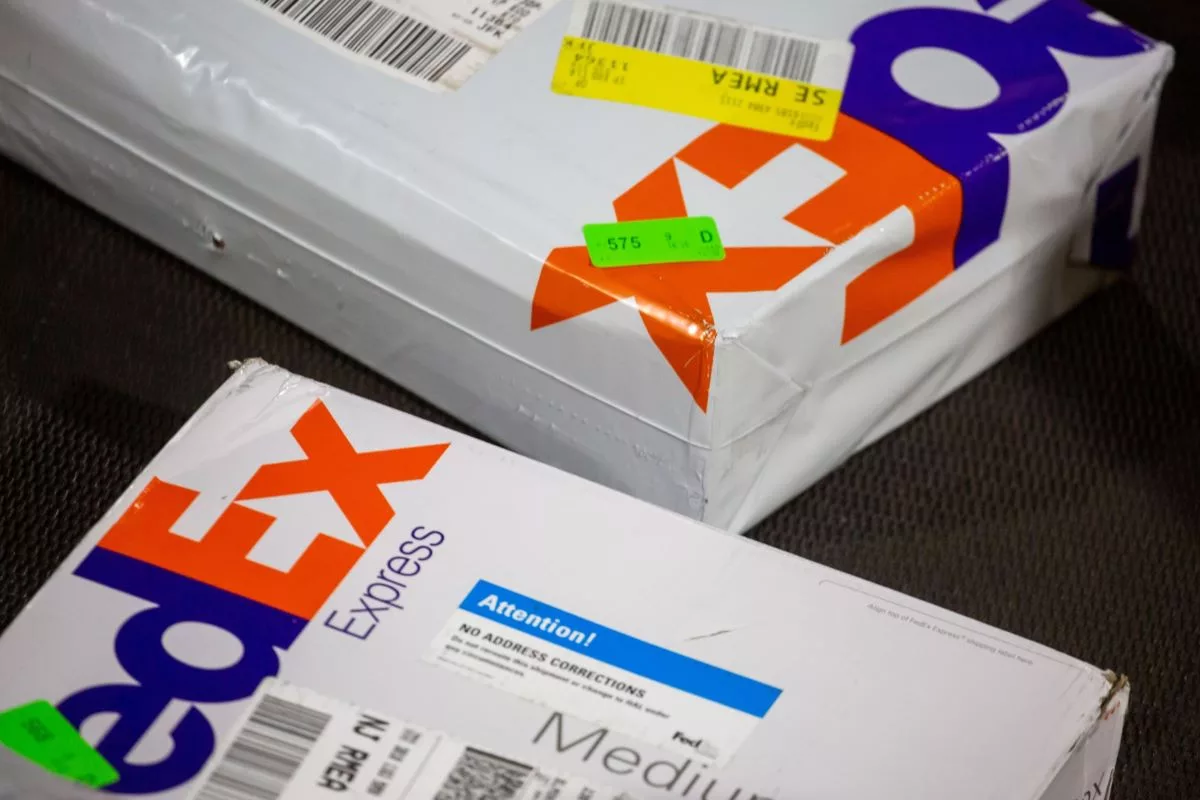
SupplyChainBrain reports; Bloomberg News report; analyst insight; as the earnings season winds down; U.S. corporate financial outlook is only worsening as President Donald Trump's policies increase unpredictability. FedEx Corp. and Nike Inc.—two giant companies with a broad view of the global economy—serve as the latest warning signs that tariff confusion, currency swings, inflation, and other macroeconomic forces are making it harder to come to business decisions, plan for the future, and communicate financial expectations to investors. Nike is signaling further revenue decline—stating that Trump's China and Mexico tariffs will contribute to a sharp decline in profitability. Nike imports 18% of the products it supplies to the U.S. from China.
\nFrom a supply chain perspective, NIKE Inc. is based in Beaverton, Oregon, U.S.; Elliott Hill is CEO (replacing John Donahoe in October 2024); founded in 1964 by Phil Knight and Bill Bowerman; supplies shoes, apparel, and sporting equipment globally. Nike's primary supply chain countries are Vietnam (~50% footwear; 26% apparel—primary supply region), Indonesia (~27% footwear), China (~18% footwear; 5% apparel), Türkiye, Sri Lanka, Bangladesh, and India, serving as major supply sources. Nike's primary contract manufacturers are Pou Chen (Taiwan), Feng Tay (Taiwan), and Eclat Textile, serving as key manufacturing partners. Nike's primary competitors are Adidas (CEO Björn Gulden; Herzogenaurach, Germany), Puma, New Balance (private; CEO Joe Preston), Asics, Under Armour (Kevin Plank), Lululemon (CEO Calvin McDonald), On (Olivier Bernhard; partnership with Roger Federer), Hoka (owned by Deckers Brands), and Skechers (Robert Greenberg), serving as key ecosystem players.
\nFrom a supply chain perspective, FedEx Corporation is based in Memphis, Tennessee, U.S.; Raj Subramaniam is CEO; founded in 1971 by Frederick W. Smith; provides express parcel delivery, ground transportation, and logistics globally—FedEx Express, FedEx Ground, FedEx Freight, and FedEx Logistics serve as primary business lines. FedEx's 2024 primary strategic initiatives are the One FedEx unified organization (consolidating FedEx Express and FedEx Ground), FedEx Freight's independent IPO plan by 2026, and the DRIVE program—targeting 4 billion dollars in cost reductions—serving as key initiatives. FedEx's 2025 fiscal year earnings decline warnings include tariff uncertainty, e-commerce volume declines, postal contract (USPS) expiration, and suspension of the FedEx International Connect Plus service (China economy packages), representing primary challenges. UPS (CEO Carol Tomé; Atlanta), DHL Express, Amazon Logistics, and USPS (Postmaster General Louis DeJoy) serve as primary FedEx competitors.
\nFrom a supply chain perspective, the primary U.S. macroeconomic indicators—for assessing tariff impacts—are (1) BLS CPI (Consumer Price Index), (2) BLS PPI (Producer Price Index), (3) BEA GDP, (4) BEA Personal Consumption Expenditures (PCE), (5) U.S. Census Bureau consumer spending, (6) Federal Reserve Beige Book, (7) ISM Manufacturing PMI, (8) ISM Services PMI, (9) Conference Board Consumer Confidence Index, and (10) U Mich Consumer Sentiment Index, serving as primary tracking indicators. U.S. retail and apparel-specific indicators include NRF Retail Monitor, Mastercard SpendingPulse, and Adobe Digital Economy Index, serving as primary tracking sources. Primary U.S. apparel and footwear advocacy groups—opposed to tariffs—are the American Apparel and Footwear Association (AAFA; CEO Steve Lamar), Footwear Distributors and Retailers of America (FDRA; CEO Matt Priest), and National Retail Federation (NRF), serving as primary U.S. advocacy groups. In conclusion, Bloomberg's Nike/FedEx warning report indicates that global economic leading indicators are fundamentally being restructured—tariff scenario planning and currency hedging appear to be emerging as primary strategic priorities for supply chain managers.
\nKey Takeaways:
\n1. Bloomberg News; Nike and FedEx are economic red flag signals.
\n2. Nike warns that China tariffs will lead to a sharp decline in profitability.
\n3. Nike imports 18% of its U.S.-bound products from China.
\n4. FedEx has the One FedEx consolidation and DRIVE 4 billion dollar cost target.
\n5. AAFA, FDRA, and NRF are primary U.S. advocacy groups.
[41410]

