

Delta Air Lines Inc. says it is experiencing a $200 million profit impact in the fourth quarter of 2025 due to flight reductions during the U.S. government shutdown—though it emphasizes that passenger demand remains healthy heading into 2026. The Atlanta, Georgia-based carrier shared this figure during an investor conference on December 3. The Trump administration has implemented temporary flight disruptions across 40 major airports during the longest U.S. government shutdown—driven by shortages of air traffic controllers and security personnel. From a supply chain perspective, Delta Air Lines is one of the three largest U.S. carriers—alongside American Airlines and United Airlines—making it a leading player in the global airline market. Delta's 2024 annual revenue was approximately $61 billion. Atlanta Hartsfield-Jackson (ATL) is Delta's primary hub and the world's busiest passenger airport. Detroit (DTW), Minneapolis-St. Paul (MSP), Salt Lake City (SLC), JFK, LaGuardia, LAX, Boston Logan, and Seattle-Tacoma are other major Delta hubs and focus cities.
Delta CEO Ed Bastian says the carrier has been forced to cancel over 2,000 flights in November—and adds that holiday reservations have also slowed during this period. Delta's stock price has declined 7.7% year-to-date—underperforming the S&P 500 index's 16% gain. From a supply chain perspective, the FAA (Federal Aviation Administration) is the U.S. airspace regulator positioned under the U.S. Department of Transportation, with Sean Duffy as the current Transportation Secretary. NATCA (National Air Traffic Controllers Association) is the union representing air traffic controllers. The TSA (Transportation Security Administration) is responsible for airport security screening. The U.S. operates with approximately 14,000 air traffic controllers globally, though the FAA has long acknowledged a shortage of 3,000+ controllers. During government shutdowns, personnel in this "essential workers" category are forced to work without pay—yet sick leave usage and resignations increase.
From a supply chain perspective, the U.S. commercial airline industry transports approximately 850 million passengers annually and generates $250 billion in revenue globally. American Airlines Group, Delta Air Lines, United Airlines Holdings, Southwest Airlines, Alaska Airlines Group (including Hawaiian Airlines), JetBlue Airways, Spirit Airlines (Chapter 11), Frontier Group Holdings, Allegiant Travel, and Sun Country Airlines are the major U.S. commercial carriers. FedEx Express, UPS Airlines, Atlas Air, ATSG, and Kalitta Air are the leading cargo airlines. The Boeing 737 MAX, Airbus A320neo family, Boeing 787 Dreamliner, Airbus A350, and Boeing 777 are the primary platforms in commercial aviation. Delta's fleet includes Airbus A220, A319, A320, A321, A330, A350, Boeing 717, 737, 757, and 767 variants. The SkyTeam alliance—comprising Air France-KLM, Korean Air, Delta, China Eastern, Saudia, ITA Airways, and Aeromexico—forms Delta's global network partnerships.
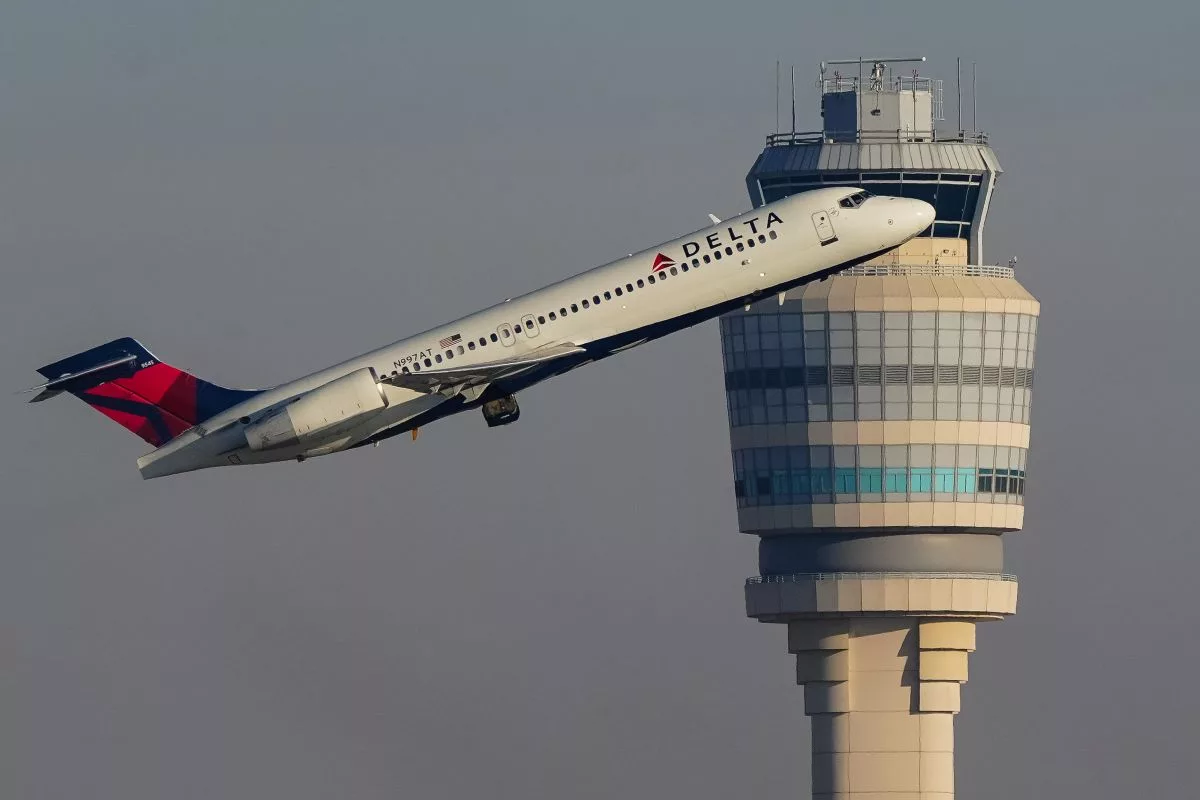
From a supply chain perspective, a U.S. government shutdown occurs when the federal budget fails to pass, resulting in distinctions between essential and non-essential personnel, and causing many public services to halt. Historically, the longest shutdowns lasted 35 days (2018-2019), 16 days (2013), and 21 days (1995-1996). The FAA, TSA, CBP (Customs and Border Protection), and Coast Guard operate in the "essential" category—but without pay. Airline economics metrics include load factor, RASM (Revenue per Available Seat Mile), CASM (Cost per Available Seat Mile), yield, and ASM (Available Seat Miles). Sabre, Amadeus, and Travelport are the leading global GDS (Global Distribution Systems) providers—forming the backbone of airline reservation systems. Expedia Group, Booking Holdings, Trip.com, Ctrip, and OTA (Online Travel Agency) operators are major players. Photographer Elijah Nouvelage from Bloomberg captured an image of a Delta aircraft taking off at ATL. Ultimately, Delta's $200 million shutdown loss estimate clearly demonstrates the airline industry's operational vulnerability to political uncertainty.
Key Takeaways:
1. Delta Air Lines estimates a $200 million shutdown impact in Q4 2025.
2. The Trump administration has cut flights at 40 airports during the longest shutdown.
3. Ed Bastian reports 2,000+ cancellations in November and holiday booking slowdowns.
4. Delta stock is down 7.7% while the S&P 500 is up 16%.
5. Passenger demand is emphasized as remaining healthy heading into 2026.

