

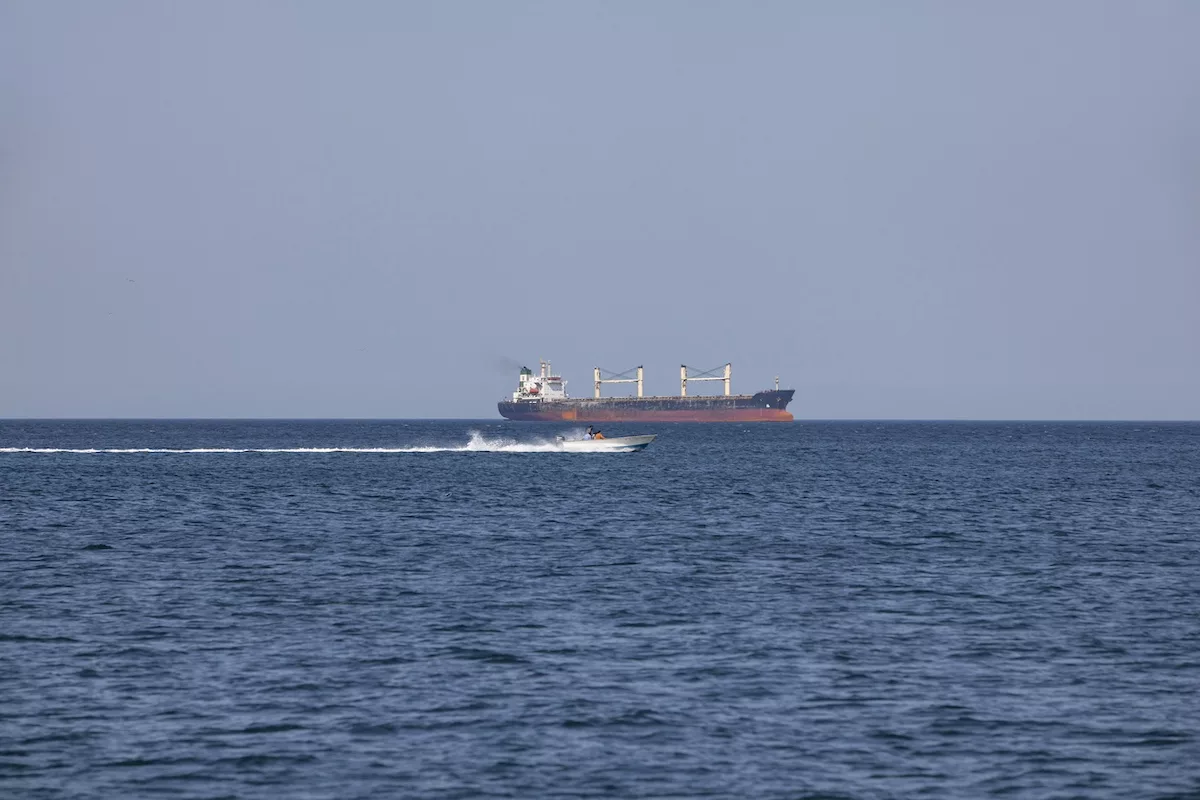
U.K. Maritime Trade Operations (UKMTO) reported on April 6 that it received a report of a container ship being struck by a missile in the Persian Gulf approximately 25 nautical miles south of Iran's Kish Island. During the incident, the container vessel was struck by an unidentified projectile, resulting in damage above the waterline. UKMTO stated that the crew is safe and an inventory is being conducted; no environmental impact has been reported, and authorities are conducting an investigation. From a supply chain perspective, every security incident in the corridor approaching the Strait of Hormuz necessitates reassessment of the Joint War Committee (JWC)'s high-risk zone designation scope and requires a repricing of marine war risk premiums.
UKMTO's Dubai office was established to coordinate with commercial traffic and exchange information to support the U.K.'s Royal Navy in combating Somali piracy in the Arabian Sea. The office serves as the primary communication point for commercial vessels to establish contact and liaison with military forces in the Arabian Sea, Red Sea, and Persian Gulf. From a supply chain perspective, UKMTO's role serves as a key reference that ship operators consult in Watchkeeping and Voyage Risk Assessment processes. BIMCO War Risks provisions and Joint Hull Committee reports are reflected in routing decisions based on UKMTO alerts.
Since the outbreak of the Iran conflict, the direct targeting of container ships in the Persian Gulf has accelerated liner market decisions on port omission and service suspension by major line services. The southern corridor of Kish Island is one of the main approach routes to Hormuz, and every incident there affects the security of calls at Bandar Abbas, Jebel Ali, and Doha ports. From a supply chain perspective, the contingency lead time factored in by BCOs can extend for weeks following a single missile incident and puts safety stock calculations back on the agenda. On the chartering side, extra war risk premium (EWRP) rates can temporarily rise two or threefold following such incidents.
The absence of reported environmental impact is viewed favorably in terms of the structural damage resilience of container ships; however, the overall risk profile regarding crew safety does not change materially. The restructuring of STCW-based training programs for high-risk corridors is moving onto the agenda of flag states and classification societies. From a supply chain perspective, the direct targeting of container ships demonstrates that the liner sector is now fully embedded in the operational risk equation beyond the tanker-focused threat perception. Route updates from Maersk, MSC, CMA CGM, and Hapag-Lloyd for Persian Gulf services are being rapidly disseminated in parallel with UKMTO alerts. In sum, the Kish Island incident becomes yet another concrete manifestation of the ripple effects of the Iran conflict on global supply chain security.
Key Points:
1. Container ship struck by missile 25 nautical miles south of Kish Island.
2. Damage above the waterline; crew is safe.
3. No environmental impact reported; authorities conducting investigation.
4. UKMTO is the Royal Navy's Dubai-based office.
5. Container sector is directly targeted, beyond the tanker-focused threat perception.
We would be delighted to hear your feedback.

