

Israel-U.S. tensions with Iran are affecting shipping, with focus largely on oil and LNG tanker traffic; however, analysts warn container shipping faces significant impact well beyond the region. From a supply-chain perspective, the rerouting of Persian Gulf-connected main line services is redrawing the port rotation schemas on Asia-Middle East, Asia-North Europe, and Asia-Mediterranean routes. 2M, OCEAN Alliance, and Premier Alliance are simultaneously deploying blank sailing, port omission, and port substitution strategies, measures that are introducing gradual tightening in the capacity-rate balance.
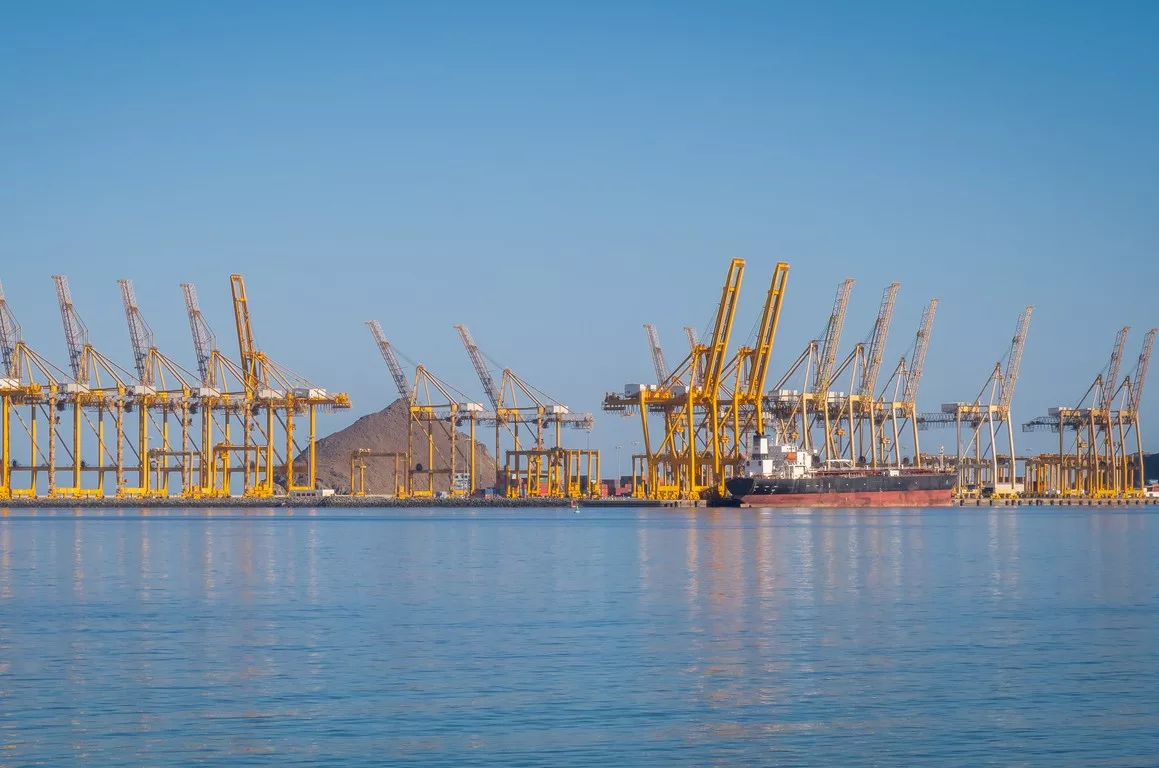
\nJudah Levine, Head of Research at online freight marketplace Freightos, noted in a March 17 statement that container carriers initially suspended all services to the Persian Gulf. Now, however, lines including CMA CGM and Maersk are accepting new bookings by redirecting volume to accessible alternative ports in the region—including ports in Oman, UAE, and Saudi Arabia—with containers continuing via landbridge. Levine noted that carriers are also heavily relying on ports in India and deploying new shuttle services to transport containers to accessible Middle East ports. However, some hubs, such as Fujairah in the UAE (pictured), are now being directly targeted by Iran. From a supply-chain perspective, this secondary targeting exposes the fragility of regional hub strategies and is pushing BCOs toward preferring direct call options on Asia-Europe routes.
\nCongestion is mounting at these alternative ports and in India; the Port of Colombo in Sri Lanka is refusing to accept Gulf-bound volumes due to existing congestion. Meanwhile, carriers are entering into tension with customers over rising rates. Karin Ström, VP at supply and procurement advisory Proxima, is calling on shippers to "push back firmly and ensure pricing reflects actual risk, not opportunism." In a March 10 statement, Ström noted that ocean freight rates are rising primarily on China origins—a situation partially linked to China's recent role as a major buyer of Iranian oil. With Iran restricted in whom it can sell to, China is benefiting from heavily discounted volumes; any disruption in these flows or elevated risk is now feeding into Chinese export pricing and capacity dynamics.
\nFreightos notes that carriers are announcing global flat-rate emergency fuel surcharges of hundreds of dollars per FEU to take effect early next week. However, these are not unprecedented fuel adjustments; the market is being hit with an impact that is "expensive, but not destructive," though rates could likely be pushed back toward 2024 levels. Meanwhile, Ström reports that some carriers are attempting to apply "war surcharges" on routes with no direct exposure. Levine from Freightos states, "there is some skepticism that market dynamics will see these increases succeed fully," and notes that beneficial cargo owners engaged in annual ocean contract negotiations are pushing back against carrier fees related to Iran war disruptions that do not directly affect these shippers' volumes. As a result, the Iran war is triggering a multiple shock wave in which landbridge, India shuttle, BAF/EBS surcharges, and war surcharge headings are being simultaneously reintroduced.
\nKey Points:
\n1. CMA CGM and Maersk are redirecting to ports in Oman, UAE, and Saudi Arabia.
\n2. Shuttle services via India are being deployed; Fujairah is being targeted.
\n3. Colombo is refusing Gulf cargo due to existing congestion.
\n4. Hundreds of dollars in emergency fuel surcharges per FEU are being announced.
\n5. BCOs are resisting war surcharge on routes with no direct exposure.
We would be delighted to receive your feedback.
\n[43673]

