

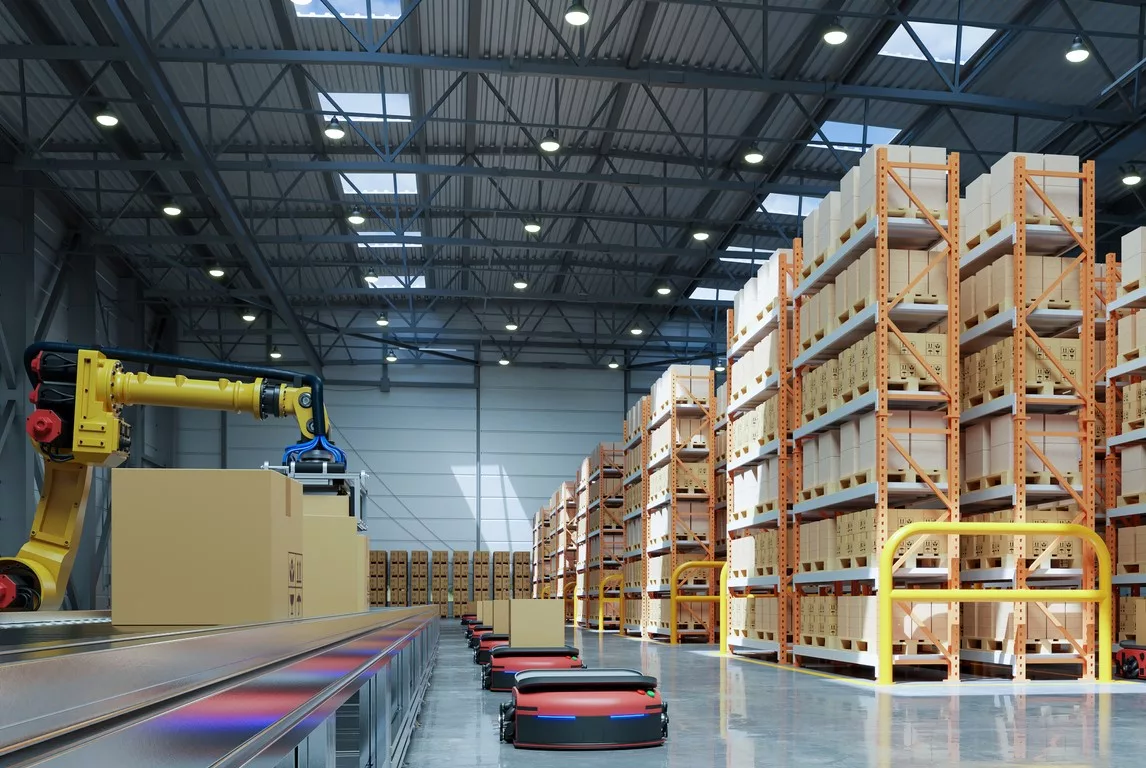
Globally, the number of distribution facilities that do not require human labor is growing steadily, with all putaway, picking, packaging, and shipping preparation tasks performed by machines. Beyond the current model where a person waits at the loading dock to take over transport, there is no need for lighting, breaks and lunch, climate control, or sick leave. For this reason, such facilities in the industry are called lights-out warehouses. From a supply chain perspective, this structure permanently pulls down wage and energy costs on OPEX and substantially increases peak season capacity flexibility. On the other hand, the high initial capital investment (CAPEX) makes it critical to determine which facilities and which SKU profiles will go dark first.
Warehouses drawing momentum from advances in robotics and artificial intelligence are following the trend in many factories and demonstrating steady progress toward full automation. However, conventional wisdom suggests that unmanned scenarios will remain limited to a small number of facilities and product types in the foreseeable future. Industry experts point out that a working ecosystem in which people and robots work efficiently side by side, with physical handling routines transferring entirely to machines' responsibility, will be dominant. Nevertheless, the leaps that AI has made in recent years are accelerating forecasts regarding the horizon of the dark warehouse. From a supply chain perspective, this dual-speed evolution is reshaping automation investment roadmaps for 3PL providers, omnichannel retailers, and major e-commerce players.
One area where lights-out operations are already taking effective hold: night shifts. According to Jan Zizka, founder and chief executive officer of Brightpick, automatic pickers at a number of facilities are eliminating the need for night personnel. The company's robots can pick and buffer orders without human intervention, and orders collected overnight are kept ready for packing and shipping at the start of the next manned shift. Brightpick robots are controlled by AI and equipped with mobile arms featuring 3D vision and force-sensing grippers to pick individual items from shelves and totes. The company states that each robot possesses the capability "to see, think and act with human-like responsiveness and adaptability." Zizka notes that the technology shows particularly high suitability for pharmaceuticals, small electronics, and grocery products, and accuracy can reach up to 99% if labeling is clear.
The deployment of robots in the warehouse is not limited to night work alone; automation has created a profound impact on daily operations in recent years. An average distribution facility houses a wide range of product sizes, package weights, and floor layouts, and this diversity has historically stood out as a critical barrier to full automation. With AI, emerging advances in route optimization, product recognition, and grasp planning signal that this barrier is softening. From a supply chain perspective, hybrid architectures where AS/RS, AMR, goods-to-person, and piece-picking robots work integrated together represent concrete examples of gradual transition toward lights-out. Ultimately, the progress of warehouse automation maintains its pace at a crossroads where labor cost pressure, e-commerce speed expectations, and AI capacity are converging.
Key Highlights:
1. Lights-out warehouses are gradually gaining prevalence on a global scale.
2. Brightpick robots are automating night shifts.
3. 3D vision with force-sensing grippers enable single-item picking.
4. Accuracy rates can reach up to 99%.
5. Pharma, small electronics, and grocery are the categories most suited for automation.
Your feedback would make us happy.

