

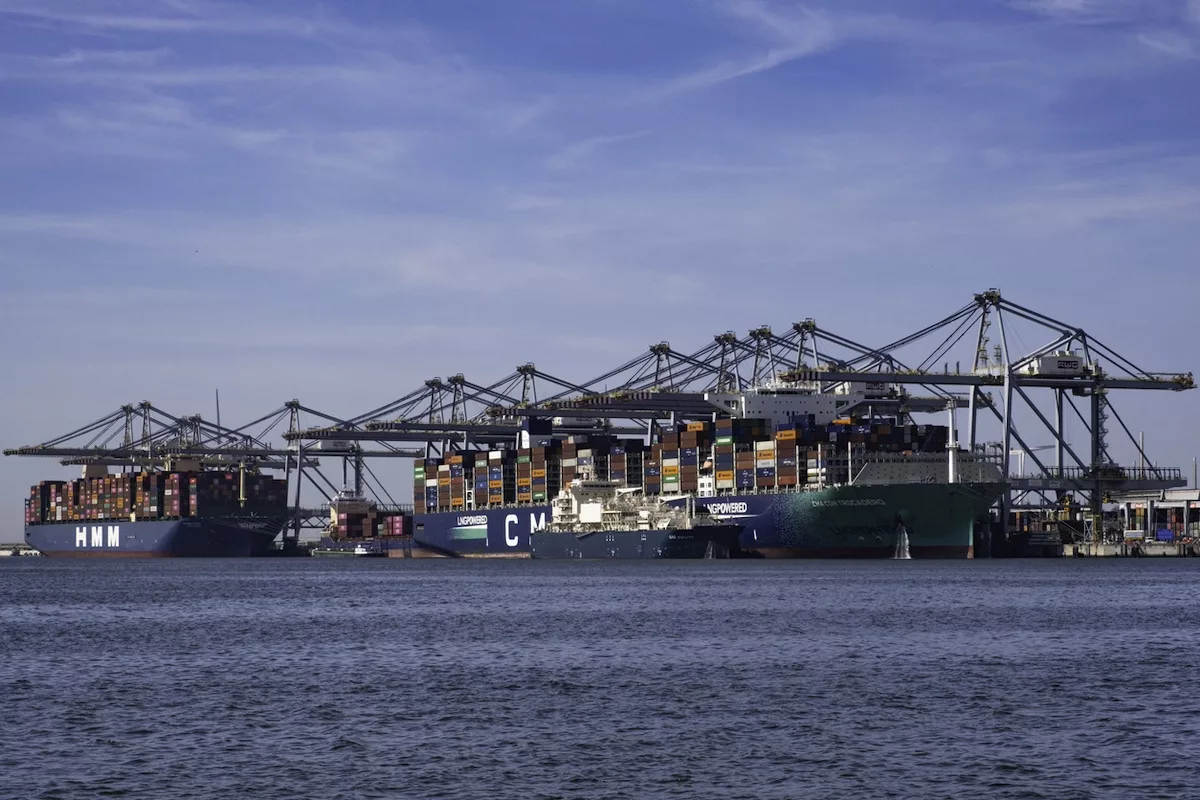
Rotterdam Port's terminal operations have been temporarily disrupted following an incident in which seven empty containers fell from an ultra-large container vessel onto an LNG bunker vessel. The incident has reignited questions regarding the safety of LNG bunkering operations at one of Europe's largest container ports and at the center of the alternative fuel transition. According to details shared by the port, on February 6, five containers from Hapag-Lloyd's Bangkok Express fell onto the aft deck of the LNG bunker vessel K. Lotus, while two containers fell into the sea. From a supply chain perspective, this incident has prompted a reassessment of the operational risk profile of the contact points between container shipping and LNG supply.
The accident forced port management to close the Prinses Amaliahaven terminal for two hours during recovery efforts. The incident occurred during a routine bunkering operation being conducted from K. Lotus to Bangkok Express. It has been reported that the containers struck the accommodation section of K. Lotus, not its LNG compartment, and no injuries have been reported. This detail underscores the critical importance of LNG tank equipment and related safety barriers in hazardous cargo vessel safety. Operations in the remainder of the port maintained their flow outside of the closure period; however, the two-hour shutdown has caused cascading delays for shipowners with tightly scheduled freight windows.
In a statement to SupplyChainBrain, a port spokesman stated that "The safety procedures surrounding LNG bunkering are very strict and extensive," emphasizing that these types of bunker vessels are additionally protected against potential incidents through multi-layered safety measures. In this context, Rotterdam continues to maintain its position as one of the leading centers for global LNG bunkering services. The reason for the container stack collapse remains unclear; however, the Dutch Safety Board, Human Environment and Transport Inspectorate, and Port of Rotterdam Authority are investigating the incident. The activation of multiple oversight mechanisms indicates that findings may influence international standards regarding both container lashing equipment and bunkering procedures.
Bangkok Express departed the Port of Rotterdam following the incident. K. Lotus remains anchored in the port for repairs to damage sustained to its mooring system. The incident has brought back into focus questions regarding container stack design, the frequency of inspection of twistlock and lashing components, and the sterilization of surrounding areas during LNG bunkering operations. From a supply chain perspective, Hapag-Lloyd's service schedule consists primarily of Asia-Europe mainline services; consequently, any delays resulting from vessel rotations also affect return cargo planning. Ultimately, this incident at Rotterdam contributes to a period in which port safety architecture during the alternative fuel transition is being redesigned with tighter oversight mechanisms.
Key Points:
1. Seven empty containers fell from Bangkok Express; five struck K. Lotus, two fell into the sea.
2. Prinses Amaliahaven terminal was closed for two hours.
3. Containers struck the accommodation section, not the LNG compartment.
4. Three agencies, including the Dutch Safety Board, are investigating.
5. K. Lotus remains in port for mooring system repairs.

