

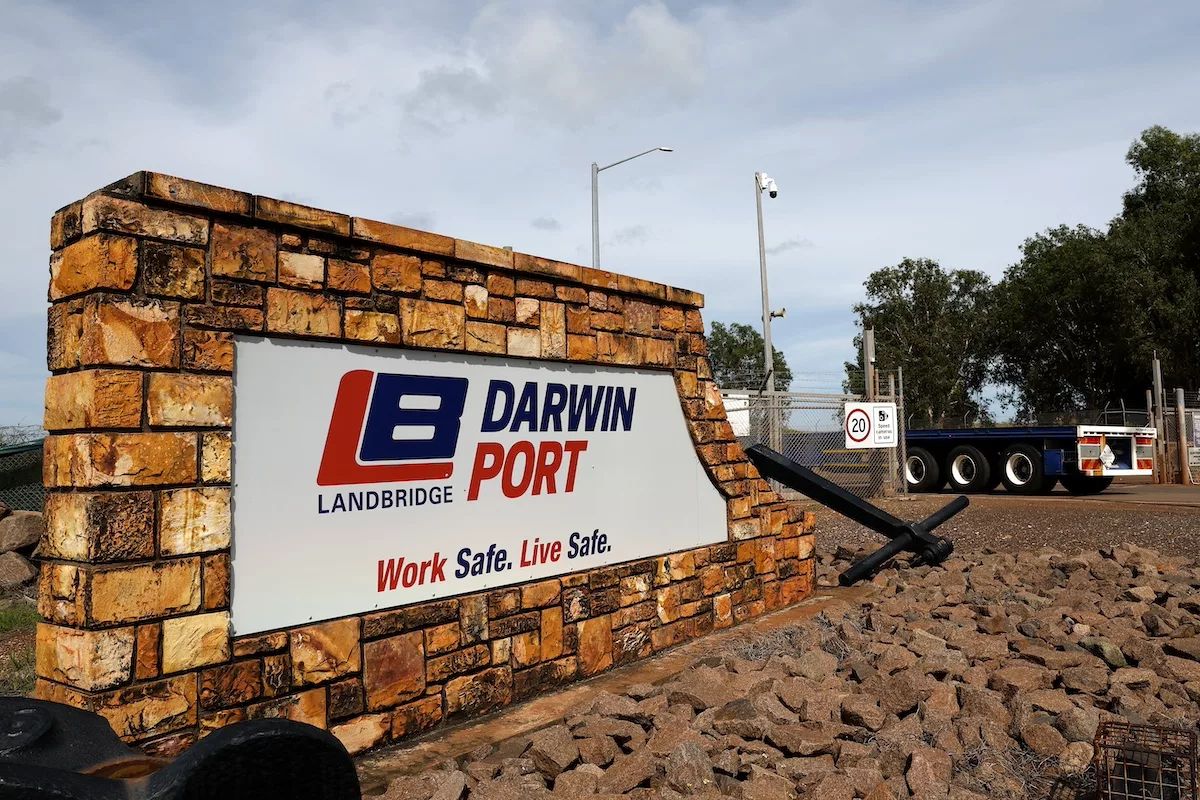
Beijing is monitoring Canberra's handling of Darwin port's status, which is leased to a Chinese firm and which the Labor government has committed to returning to local control, "very closely" and will take action if necessary, China's ambassador to Australia said. Speaking to reporters in Canberra on January 28, Ambassador Xiao Qian emphasized that if the port is repurchased through forced sale, Beijing has an "obligation to protect the legitimate rights of Chinese companies overseas." The remarks coincide with a period of renewed hardening in Asia-Pacific port diplomacy, with Australia's strategic port assets re-emerging as a point of contention in a climate where overall trade relations between the two countries are being repaired.
Darwin port was allocated to Chinese company Landbridge Group in 2015 under a 99-year lease term; however, Prime Minister Anthony Albanese explicitly committed ahead of the previous election to reclaiming control of the strategic asset. Since the Albanese government took office in 2022, relations between the two countries have improved markedly; nevertheless, the Darwin port lease dispute remains an enduring line of tension awaiting resolution. Landbridge's position at the port in Northern Territory carries special weight both commercially and militarily. From a supply chain perspective, this long-term lease agreement has prompted a rethink of the fine line between global-scale port management and national security.
The port is Australia's northernmost maritime facility and is positioned just south of Indonesia and generally Southeast Asia. It is also located near military facilities hosting U.S. Marines rotations deployed to Northern Territory; this situation raised concerns among many parties, including then-U.S. President Barack Obama, when the port lease was announced in 2015. Since Albanese committed to returning the port to Australian control, public interest has increased, particularly following the May election victory; however, no visible progress has been made on the port's status. If Beijing determines that unfair treatment of Chinese firms is at play, a forced sale is expected to trigger significant pushback.
Ambassador Xiao Qian stated in the press conference that "We'll see when it's time for us to say something, do something, to reflect the Chinese government's position" and while emphasizing Beijing's resolve, added that it expects the matter to be handled in a "properly managed" manner. China is Australia's largest trade partner; in this context, Beijing has previously expressed clear discomfort with the pressure the Trump administration has been applying over ports controlled by a Hong Kong-based conglomerate near the Panama Canal. Discussions regarding the sale of ports in Panama remain ongoing; this parallel case demonstrates that Darwin is no longer merely a bilateral port dispute and has become part of a broader framework in which global strategic port portfolios are being restructured.
Key Points:
1. Beijing is monitoring the Darwin port issue "very closely."
2. Landbridge secured a 99-year lease for Darwin port in 2015.
3. The Albanese government is committed to returning the port to local control.
4. The port is located near facilities hosting U.S. Marines rotations.
5. China stands out as Australia's largest trade partner.
We would be pleased to receive your feedback.
Wishing you happy reading in advance.

