

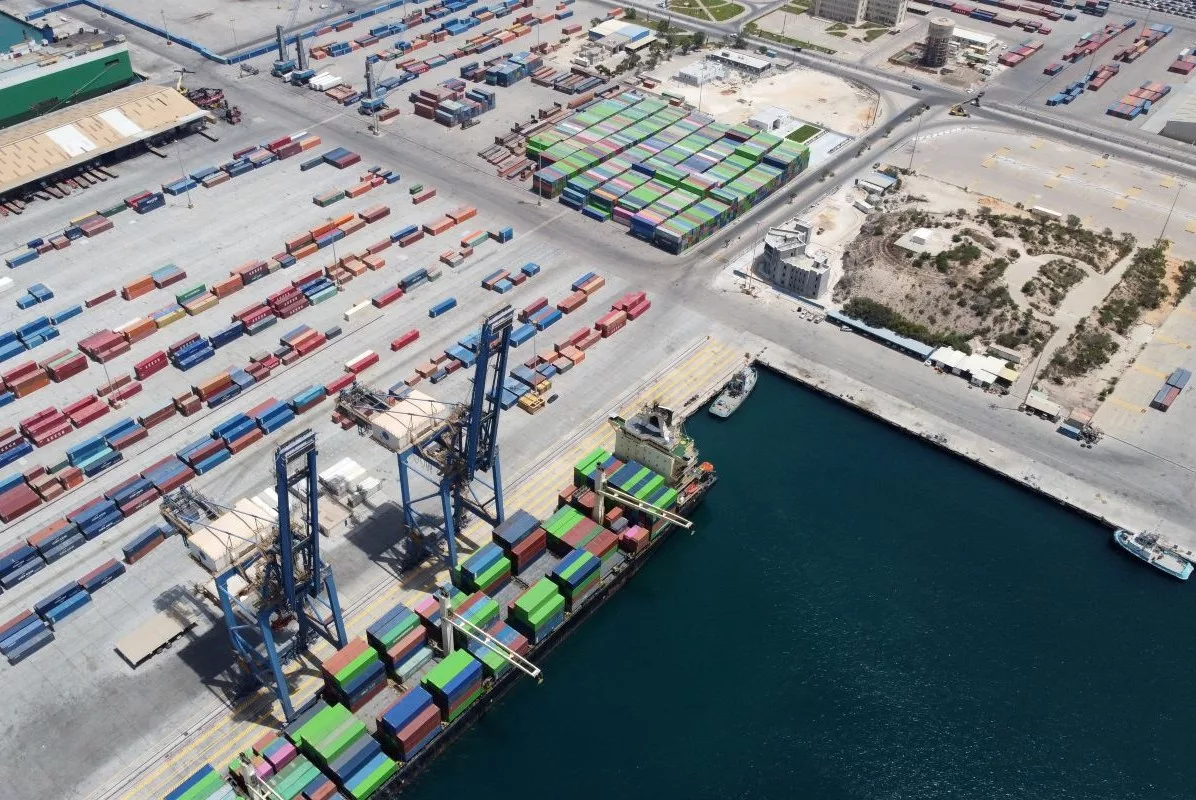
Libya has signed a partnership agreement to expand and develop the Misrata Free Zone port terminal located on the Mediterranean, bringing together Qatari, Italian, and Swiss companies, according to the OPEC member nation's announcement. This multinational structure represents a strategic move to reposition the largest free zone on North Africa's coast. The agreement was announced during a period when the Tripoli-based government is simultaneously advancing political stability and economic diplomacy. The capacity expansion in Misrata establishes a trajectory that integrates Libya's non-oil trade growth potential more tightly with the broader Mediterranean container network.
According to information disclosed by the Tripoli-based government, the agreement aims to attract $2.7 billion in investment, with projections of approximately $600 million in annual operating revenue and 8,400 jobs created. The expansion is structured around the goal of increasing the terminal's annual capacity to 4 million containers. This capacity level will position Misrata in the upper tier of ports that balance transshipment loads on Mediterranean mainline shipping routes. The terminal expansion also provides a strong foundation for corridor plans with road and rail extensions between sub-Saharan Africa and Europe.
The government disclosed that Geneva-based MSC is also playing a role in the project, emphasizing that implementation is based on foreign direct investment and does not impose additional burden on Libya's state budget. MSC's position in global mainline shipping operations provides a critical advantage for the project in terms of service procurement, feeder connections, and cargo attraction potential. The Misrata Free Zone, established in 2000, hosts the country's largest commercial port, which manages 60 percent of non-oil trade. This share transforms into an indicator that impacts not only the port's scale, but also the strategic vision of establishing a revenue backbone for Libya separate from oil income.
Libya's Prime Minister Abdul Hamid Dbeibah participated in the agreement signing ceremony alongside his Qatari counterpart Sheikh Mohammed bin Abdulrahman Al-Thani and Italian Deputy Prime Minister Antonio Tajani. High-level political representation underscores that the agreement constitutes a strategic interstate framework beyond being merely a commercial port investment. From a supply chain perspective, the capacity increase in Misrata will alter the transshipment balance on Eastern Mediterranean and Central Mediterranean routes, establishing a new equation in regional competition alongside ports in Algeria, Tunisia, and Egypt. Ultimately, the project stands as one of the largest infrastructure investments structurally redefining Libya's position in the Mediterranean logistics landscape.
Key Points:
1. The agreement targets attracting a total of $2.7 billion in investment.
2. The expansion increases annual capacity to 4 million containers.
3. Annual operating revenue of $600 million and 8,400 jobs are projected.
4. MSC participates in the project through a foreign direct investment model.
5. Misrata Free Zone manages 60 percent of Libya's non-oil trade.
Your feedback will make us happy.
We wish you happy reading in advance.

