

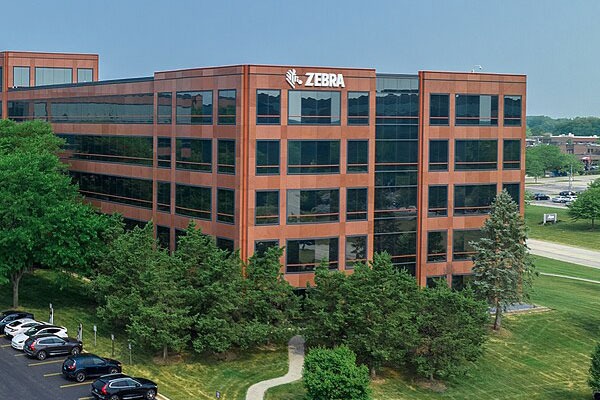
Zebra Technologies has announced its decision to exit robotic operations in warehouse automation. The company's notification to the U.S. Securities and Exchange Commission (SEC) in December revealed the end of Zebra's autonomous mobile robot (AMR) strategy launched with Fetch Robotics, which it acquired for $290 million in 2021. The planned move involves divesting or phasing out the robotics automation unit.
With the Fetch Robotics acquisition, Zebra had added AMR solutions to its portfolio that accompany workers in warehouse operations, reduce walking distances, and accelerate order picking processes. These technologies were positioned under the Symmetry Fulfillment brand within Zebra and received enhancements on both hardware and software fronts. The company released new robot capabilities, software updates, and modular solutions throughout the year that expanded use cases such as detachable cart applications.
Zebra also highlighted field applications of these solutions, citing live deployments at customers such as ODW Logistics as examples. However, despite all these investments, scalability and segmentation challenges in the warehouse robotics market prompted the company to reassess its strategic priorities.
In a statement to Modern Materials Handling, Zebra indicated that the decision is part of a broader strategic refocus. The company stated that exiting the robotics automation business will enable it to allocate resources to higher-growth-potential areas aligned with the goal of digitizing and automating frontline workflows. These areas include mobile computing, printing and barcode solutions, RFID, machine vision, AI, and software-based solutions.
The decision may appear to contradict the general growth trajectory of the warehouse robotics market, yet sector dynamics reveal a more fragmented structure. AMR solutions are widely deployed by major retailers and third-party logistics providers. However, not every robotic solution adapts to every warehouse workflow or customer profile. This situation makes it difficult for technology providers to achieve economies of scale.
According to sector assessments, Zebra's entry into this market occurred at a time when expectations for AMRs were peaking. Interact Analysis Vice President of Research Ash Sharma noted that Zebra paid a high valuation when acquiring Fetch. According to Sharma, the AMR market comprises subsegments, each with different workflow requirements, rather than a single homogeneous structure. The market segment targeted by Fetch technology had a size of only a few hundred million dollars.
Sharma further emphasized that large-scale deployments have fundamentally changed economic expectations and customer demands for AMR suppliers. There are significant differences between working with early adopters and responding to the complex purchasing processes and integration expectations of large-scale enterprises. This new landscape demands from robotics suppliers not merely hardware, but deep integration, high service levels, and long-term scalability.
In this context, Zebra's decision stands out as a preference to focus on areas more aligned with its core competencies rather than a rejection of robotics market potential. Zebra has long maintained a strong position in warehouse and field operations through data capture, visibility, and decision support solutions. Robotic automation has not delivered the expected strategic returns within this portfolio.
In conclusion, Zebra's exit from the warehouse robotics business serves as an important example in the supply chain technology market, demonstrating that growth does not always translate into profitable and sustainable scale. The company's next steps will focus on creating value through software and data-driven solutions.
Key Takeaways
Zebra Technologies is planning to exit the warehouse robotics automation business.
The decision represents a strategic retreat following the acquisition of Fetch Robotics in 2021.
Options for divesting or shutting down the robotics unit are being evaluated.
The company is shifting its focus to RFID, AI, machine vision, and software solutions.
While the AMR market continues to grow, segmentation and scalability challenges are increasing.
Author: SedatOnat.com
We would be delighted to receive your feedback.
Wishing you happy reading.

