

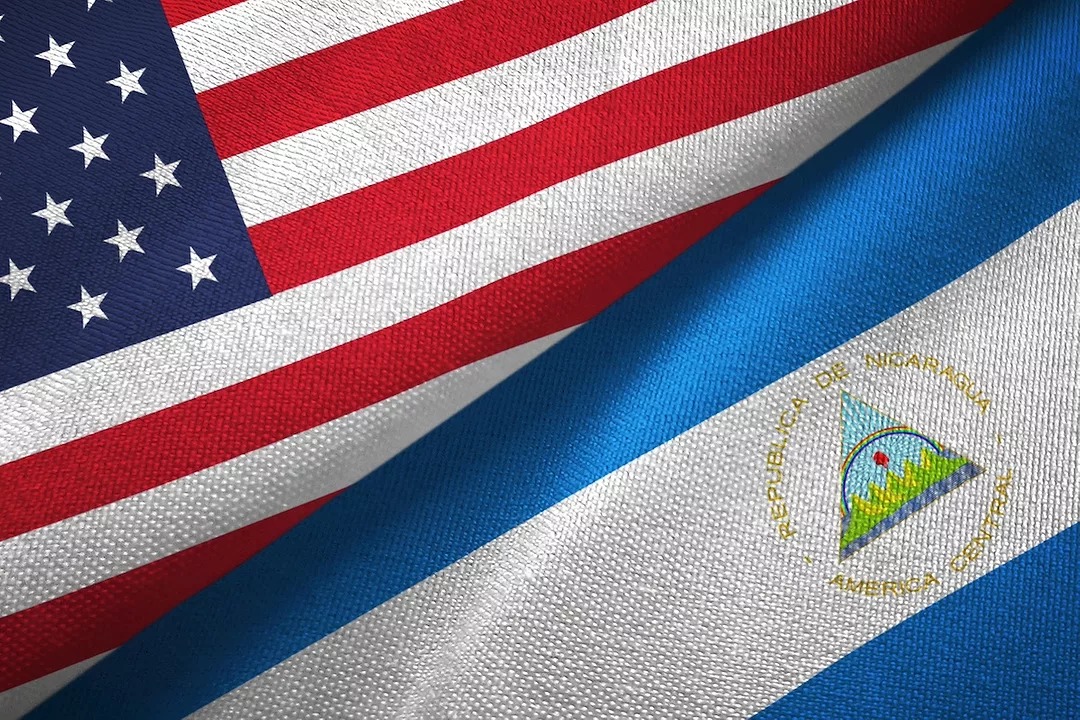
The U.S. Trade Representative (USTR) has announced plans to implement a new and phased tariff regime targeting Nicaragua. The Trump administration revealed that Nicaraguan products will face additional tariffs of up to 15% due to human rights violations and labor standard violations in the country. The decision is based on findings from a formal investigation launched in December 2024 under Section 301.
\nAccording to Newsweek, the new tariffs will take effect gradually rather than all at once. Under the planned schedule:
\n- \n
10% additional tariff as of January 1, 2027,
\n 15% additional tariff as of January 1, 2028
\n
These levies will be imposed on top of existing 18% tariffs currently in force against Nicaragua. As a result, for products falling outside the CAFTA-DR (Dominican Republic–Central America–United States Free Trade Agreement) scope, the total tariff burden will reach significantly higher levels.
\nSection 301 Findings: What Is the Rationale?
\nThe USTR's final report identified that the Nicaraguan government:
\n- \n
exhibits "increasingly pervasive abuses" in child labor and forced labor,
\n human trafficking,
\n workplace abuses,
\n systematic violation of union rights
\n
These practices are argued to constitute not merely domestic legal violations but also disruptions to U.S. trade relationships in a manner that is disruptive.
\nConsequently, Washington is converting its sanctions policy toward Nicaragua from mere diplomatic pressure into a trade policy tool.
\nU.S.–Nicaragua Trade Significance
\nWhile Nicaragua is not a major trade partner for the U.S., it maintains a strategically important supplier position. The country ranks approximately 60th among U.S. import sources. However, the U.S. market is critical for the Nicaraguan economy:
\n- \n
Nicaragua's total exports in 2024: $7.52 billion USD
\n 52% of which went to the U.S.
\n Primary products: apparel, knitwear, and textiles
\n
This picture demonstrates that the additional tariffs imposed by the U.S. will create disproportionately large impact on the Nicaraguan economy.
\nCAFTA-DR Exemptions and Scope
\nThe new tariffs will exclude products covered by protection under CAFTA-DR. However, additional duties will apply in full to products outside the agreement. This situation may make origin and certification processes in textile supply chains increasingly critical.
\nFor U.S. importers, this development means increased costs for supplies sourced from Nicaragua. Consequently, companies may:
\n- \n
consider shifting supplies to alternative CAFTA-DR countries such as Honduras, Guatemala, or the Dominican Republic,
\n or rebalance with supplies from Mexico and Asia.
\n
USTR's Open-Door Policy
\nThe USTR stated it will continue monitoring Nicaragua's progress before the tariffs take effect. If the government:
\n- \n
fails to demonstrate concrete improvements in labor and human rights,
\n accelerated tariff implementation or further rate increases may be considered.
\n
This language indicates that Washington is wielding tariffs as a dynamic pressure tool.
\nSupply Chain and Regional Impact
\nCentral America has become central to nearshoring strategies in recent years. The additional tariffs on Nicaragua could prompt U.S. companies to redraw their regional supply maps. As Nicaragua's appeal in low-cost apparel manufacturing diminishes, opportunity windows open for neighboring countries.
\nKey Takeaways:
\n- \n
The U.S. is preparing to impose phased 15% additional tariffs on Nicaragua.
\n Schedule: 10% (January 1, 2027) → 15% (January 1, 2028).
\n Will be imposed on top of existing 18% tariffs.
\n Rationale: Section 301 investigation findings on human and labor rights violations.
\n 52% of Nicaragua's exports go to the U.S.; textiles are the main product.
\n USTR signals willingness to accelerate or increase tariffs if no progress is made.
\n
----------
\n\n--------------------
\nAuthor: SedatOnat.com
\n--------------------
\n\nWe would be happy to receive your feedback.
\nWishing you happy reading.
\n
