

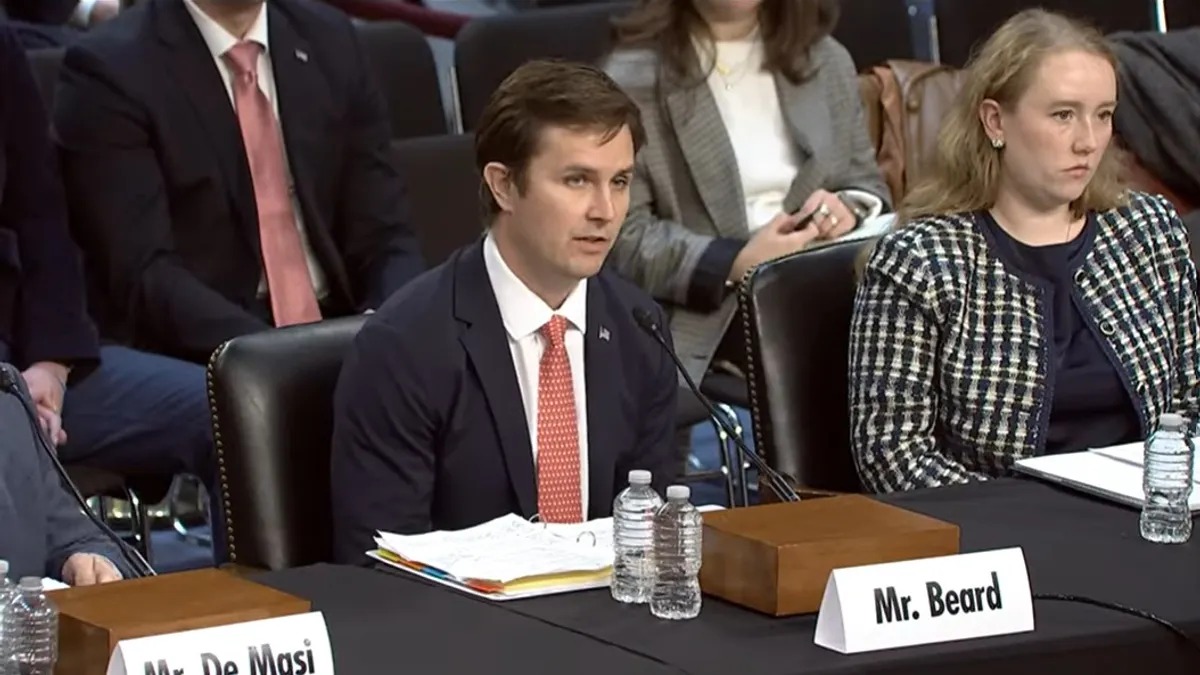
Standard Bots, a U.S.-based robotics startup, saw its CEO Evan Beard tell Congress on November 18 that America faces a systemic competitive disadvantage in advanced robotics manufacturing. Speaking before the Joint Economic Committee, Beard identified the primary challenges for American robot makers as high component costs and the absence of a coordinated national industrial robotics strategy.
Addressing lawmakers, Beard stated that "U.S. quotes are ten times higher than Chinese suppliers," underscoring how dramatically higher sourcing costs from domestic vendors compare to Chinese alternatives. This disparity prevents U.S. manufacturers from competing on price and is driving the robotics market increasingly toward Asia-based firms. The cost gap Beard highlighted, particularly given rising automation demand, leaves American robot makers at a disadvantage in terms of scalability and market reach.
Standard Bots' robotic arms are already in use on production lines at advanced technology institutions including Lockheed Martin, Verizon, and NASA. Beard emphasized that as one of the few robot firms manufacturing in the United States, he bears the responsibility of speaking out: while global leaders such as ABB and Fanuc do manufacture in America, their headquarters structures remain centered in Europe or Asia.
"America's Competitors Are Moving Forward with National Strategy"
Beard contended that other nations—particularly China—are leveraging a combination of national strategy plus subsidies for robotics manufacturing, while the U.S. lags due to the lack of an actionable and funded plan.
Within this context, Beard proposed a four-pronged reform plan to strengthen U.S. robotics competitiveness:
Federal funding-backed loan programs: Provision of low-cost, long-term credit and guarantee programs to manufacturers (modeled on DOE energy credit schemes).
Manufacturing excellence centers: Establishment of national centers offering the real sector hands-on access to advanced manufacturing technologies.
Revamped MEP program: Redesign of the existing Manufacturing Extension Partnership (MEP) to deliver training, automation technology, and workforce development support to manufacturers.
Tariff or ban on Chinese industrial robots: Implementation of a national security-based import control or countervailing tariff system to prevent state-backed Chinese robots from flooding the U.S. market.
According to Beard, the question "If other countries are subsidizing their robots, how do we expect American companies to compete?" should be the focal point of manufacturing policy.
Trump Administration Policies and MEP Debate
Over the past two years, the Trump administration has undertaken several measures aimed at strengthening U.S. manufacturing:
Facility expansion tax incentives were rolled out during the summer months.
A revolving credit program was announced to support small manufacturers.
However, the same administration attempted to cut funding for the Commerce Department's MEP program at the start of 2025. This decision was reversed following pushback from Congress and the industry.
Since 2000, the MEP program has been instrumental in creating or preserving 1.4 million jobs and generating 60 billion USD in new sales, playing a critical role in U.S. manufacturing. Commerce Secretary Lutnick promised in a June hearing to "redesign the program for AI and advanced manufacturing."
Beard noted that a modernized version of MEP could close America's workforce gaps, lead school-industry collaborations, and offer students high-wage job opportunities through robotics curriculum.
National Security and the China Factor
The sharpest warning in Beard's address came with the statement that "inexpensive robots from China will flood the U.S. market." In his view, Chinese robots' cameras, communication systems, and software infrastructure carry potential security risks. The U.S. must therefore reduce its critical manufacturing lines' dependence on foreign technology.
Although China's robot exports to the U.S. are not yet as high as those from Japan or Europe, Beard warned that as market demand rises, Chinese products will quickly become dominant due to their price advantage.
He concluded his remarks with these words:
"America has the talent, the ingenuity and the drive to lead the world in making things, but every month we wait, our manufacturing base slips farther behind."
Key Takeaways:
U.S. robot component costs are 10 times higher than China's; manufacturers face a competitive disadvantage.
Standard Bots CEO emphasized the U.S. lacks a national robotics strategy.
Proposals include: loan programs, MEP overhaul, excellence centers, and tariffs/import restrictions on Chinese robots.
The MEP program contributed to creating 1.4 million jobs; modernization plans are on the agenda.
Chinese robot affordability could pressure the U.S. market in the future.
Author: SedatOnat.com
Wishing you happy reading in advance.

