

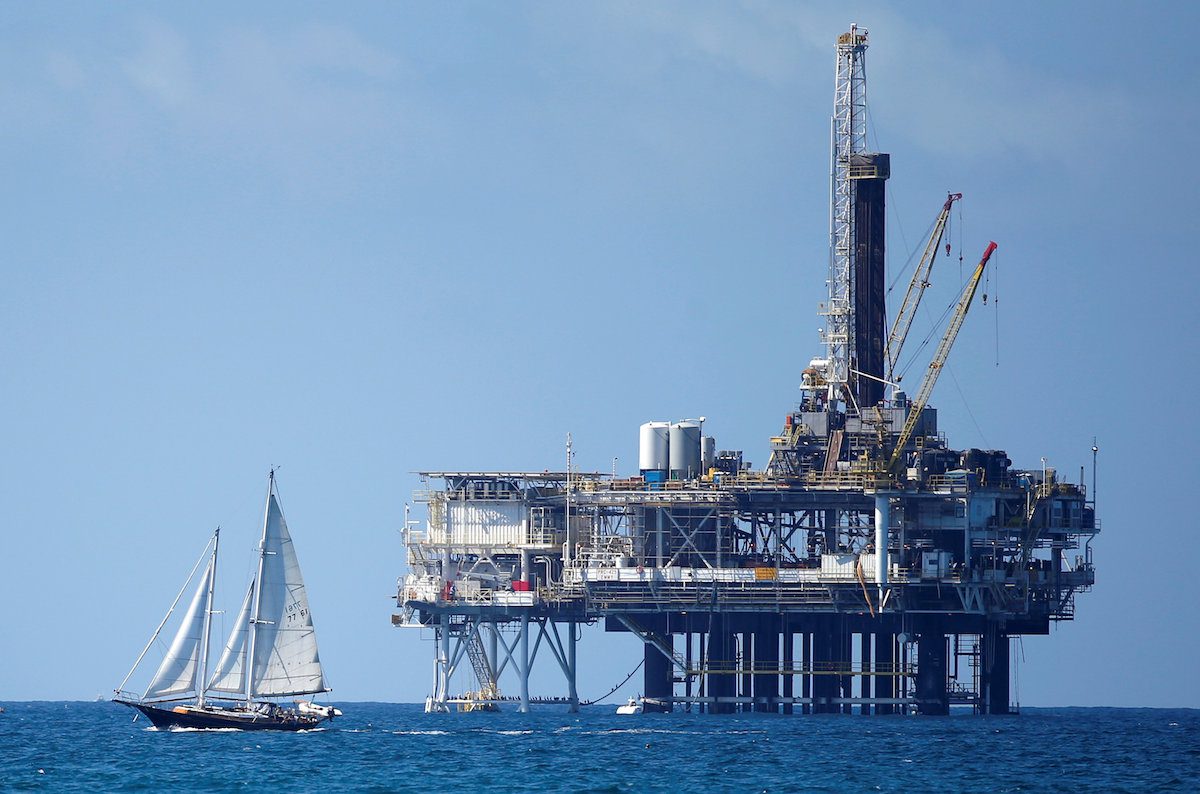
According to documents obtained by Bloomberg, the Trump administration is preparing a plan to open nearly all of the U.S. coastline to offshore oil exploration, despite objections from environmental groups and coastal states.
The draft plan, being prepared by the Department of the Interior, envisions new oil and natural gas license sales spanning from the Atlantic to the Pacific, from Alaska to the Gulf of Mexico.
The plan targets regions that Trump closed off during his 2020 election campaign with promises to protect tourism revenues in Republican states like Florida.
Environmental advocates characterize the initiative as "a step that exposes both ecosystems and coastal economies to the risk of oil spills."
All U.S. Coastlines Become Potential Exploration Areas
The draft offshore oil leasing program prepared by the Trump administration is designed to cover 2026–2031.
According to documents, the plan:
U.S. east and west coasts,
Alaska regions,
Gulf of Mexico areas for oil and gas lease auctions.
Restrictions are still expected in some protected areas:
Northeast Canyons and Seamounts Marine National Monument (off Massachusetts)
Papahānaumokuākea Marine National Monument (off Hawaii)
However, the inclusion of new areas near coral reefs and Arctic ecosystems has raised significant concerns among environmental organizations.
Interior Department: "There Is an Energy Emergency"
A spokesman for the Interior Department did not confirm the plan in response to Bloomberg's questions but issued the following statement:
"The U.S. is facing a national energy emergency. All options are on the table to win the race with China in artificial intelligence and energy."
This statement reveals that the Trump administration views energy production within the framework of strategic competition and security.
New Opening 15 Years After Deepwater Horizon Disaster
This initiative comes at a time when concerns about offshore drilling safety remain fresh following the 2010 Deepwater Horizon explosion.
In the disaster, 11 workers lost their lives, and 4.9 million barrels of oil spilled into the sea — the largest marine pollution event in U.S. history.
Now the Trump administration, citing "energy independence" and "economic growth," wants to expand drilling areas beyond the Gulf of Mexico.
Trump has recently renamed the Gulf of Mexico the "Gulf of America" and described it as "America's energy field."
Environmental Backlash: "Coastal Communities at Risk"
Joseph Gordon of the environmental organization Oceana said the plan "strikes a blow to coastal protection efforts supported by both parties across the country:"
"Trump is ignoring the voices of communities, businesses, and local leaders opposed to offshore drilling.
This action will put coastal economies and marine life at serious risk."
Environmental groups are preparing legal action against the Trump administration over issues including spill risk, climate impacts, and harm to marine ecosystems.
Strong Response from States
According to documents, no state on the east coast indicated it wants to participate in offshore drilling.
States explicitly opposed: Delaware, Maine, Maryland, Massachusetts, New York, North Carolina, Rhode Island, and South Carolina.
Non-responsive: Connecticut, Georgia, Virginia, and New Hampshire.
Florida has not yet taken an official position.
On the west coast, California, Oregon, and Washington have formed a unified front against offshore drilling.
Political and Industrial Realities
Oil companies note that interest in exploration in new regions beyond the Gulf of Mexico is limited.
Data on potential reserves off the East Coast is confined to geological surveys conducted in the 1970s and 1980s.
Nevertheless, the industry states it "supports long-term opportunities for access to new fields."
This draft would replace the current leasing program, which included only three auctions planned for 2024–2029 under the Biden administration.
Political Tension: Contradicting 2020 Promises
During his 2020 election campaign, Trump banned new lease sales off Florida, Georgia, and the Carolinas through 2032.
As a result, the new draft plan represents a policy reversal that contradicts his earlier position.
The Biden administration, meanwhile, banned drilling in those same regions in early 2024, but Trump rescinded that ban with an executive order in January 2025.
Conclusion: Drawing a New Line Between Energy Security and Environmental Risk
The Trump administration's offshore drilling initiative could represent a turning point in U.S. energy policy.
The plan prioritizes increasing energy supply and lowering prices while bringing environmental and political risks in its wake.
However, both widespread state resistance and limited industry interest make the plan's feasibility uncertain.
Nevertheless, the draft clearly demonstrates Trump's determination to make energy production a "national priority."
Key Points:
The Trump administration plans to open nearly all U.S. coastal waters to oil and gas exploration.
The plan is part of a new five-year offshore leasing program covering 2026–2031.
Eight states, including Florida, are explicitly opposed to offshore drilling.
The Interior Department defends the plan on the basis of an "energy emergency."
The plan could pose new environmental risks 15 years after the Deepwater Horizon disaster.
The oil industry indicates interest in fields beyond the Gulf of Mexico is limited.
Environmental organizations are preparing to block the plan through legal means.
The draft represents a reversal of Trump's 2020 promise to ban coastal drilling, signaling a new energy strategy.
We would be delighted if you have any feedback.
Wishing you good reading in advance.

