

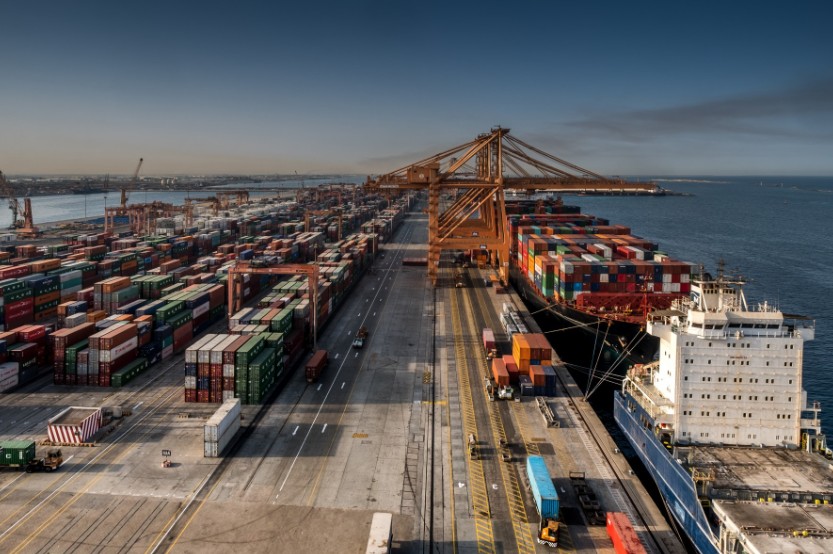
Saudi Arabia is reassessing its investment priorities in response to shifting global economic conditions and geopolitical tensions in the Red Sea. The Riyadh administration is moving away from real estate megaprojects toward logistics and maritime infrastructure, aiming to strengthen the logistics component of its Vision 2030 strategy.
According to experts, this shift represents a pragmatic transformation in the kingdom's investment strategy. Seeking to increase non-oil revenue sources, Saudi Arabia is now allocating more resources to ports, intermodal transport networks, maritime trade, and warehouse infrastructure.
Red Sea risks drive strategic shift
Recent logistics disruptions, maritime security concerns, and restructuring in international shipping routes in the Red Sea have prompted Riyadh to alter its strategic focus.
The Red Sea is home to Saudi Arabia's main trade gateways, including Jeddah Islamic Port and King Abdullah Port. However, escalating geopolitical tensions and disruptions in vessel transits in the region have driven the kingdom toward building more resilient and diversified logistics infrastructure.
New investment direction: Logistics-centered growth
Saudi authorities are repositioning their investment portfolio to focus on maritime infrastructure and supply chain logistics.
This includes:
Expansion of the King Salman Logistics Center,
Development of multimodal transport corridors in the Eastern Region,
Strengthening of NEOM and Oxagon projects with logistics connectivity,
Enhanced integration of Gulf ports with road and rail networks
are being planned.
The goal is to position Saudi Arabia as a logistics hub between the Gulf, Africa, and Asia.
Financial rationalization of investments
Experts note that Riyadh views this strategic shift as necessary not only for security but also for economic sustainability.
High costs and lengthy return periods in real estate projects have prompted the government to focus on infrastructure projects capable of generating faster returns.
The new investment wave will be driven primarily through Saudi Ports Authority (Mawani) and Saudi General Authority of Logistics (SAL). These institutions are launching new incentive programs through private sector partnerships to increase container terminal capacity and accelerate cargo flow.
Vision 2030's logistics pillar accelerates
Under the Vision 2030 framework, Riyadh aims to increase the logistics sector's contribution to GDP to above 10 percent by 2030. To this end, 59 logistics zones across the country are planned.
Additionally, port modernization projects have accelerated through collaboration among companies including Saudi Global Ports, Bahri, Aramco Logistics, and DP World Saudi Arabia.
Furthermore, investments in green port technologies, smart customs solutions, and carbon-reducing transport systems are being prioritized. These initiatives support Saudi Arabia's goal of becoming a sustainable logistics center.
Investor interest growing
According to investment analysts, this transformation could make Saudi Arabia more attractive to international logistics investors. The logistics sector's short-term cash flow generation is viewed as a lower-risk option compared to long-term real estate-focused projects.
Additionally, the global restructuring in maritime transport—particularly congestion at the Suez Canal—has made the idea of developing alternative logistics corridors through the Red Sea more appealing.
Experts note that Riyadh's move aligns with Vision 2030's financial sustainability and inclusive growth objectives and reflects the kingdom's rapid progress toward becoming the Middle East's logistics hub.
Key Takeaways:
Saudi Arabia is redirecting investments from real estate projects toward logistics infrastructure.
Geopolitical risks in the Red Sea and global supply chain disruptions have accelerated the strategic transformation.
New investments: Port expansions, multimodal networks, green transport systems.
Vision 2030 target: Increase logistics sector's contribution to GDP to above 10 percent.
Riyadh aims to become a logistics hub along the Gulf–Africa–Asia axis.
Focus: Short-term returns, sustainable growth, and investment diversification.
Author: SedatOnat.com
We would be delighted to receive your feedback.
Wishing you good reading in advance.

