

Singapore and South Korea Sign Agreement to Establish Green and Digital Maritime Corridor
Singapore and South Korea Sign Agreement to Establish Green and Digital Maritime Corridor
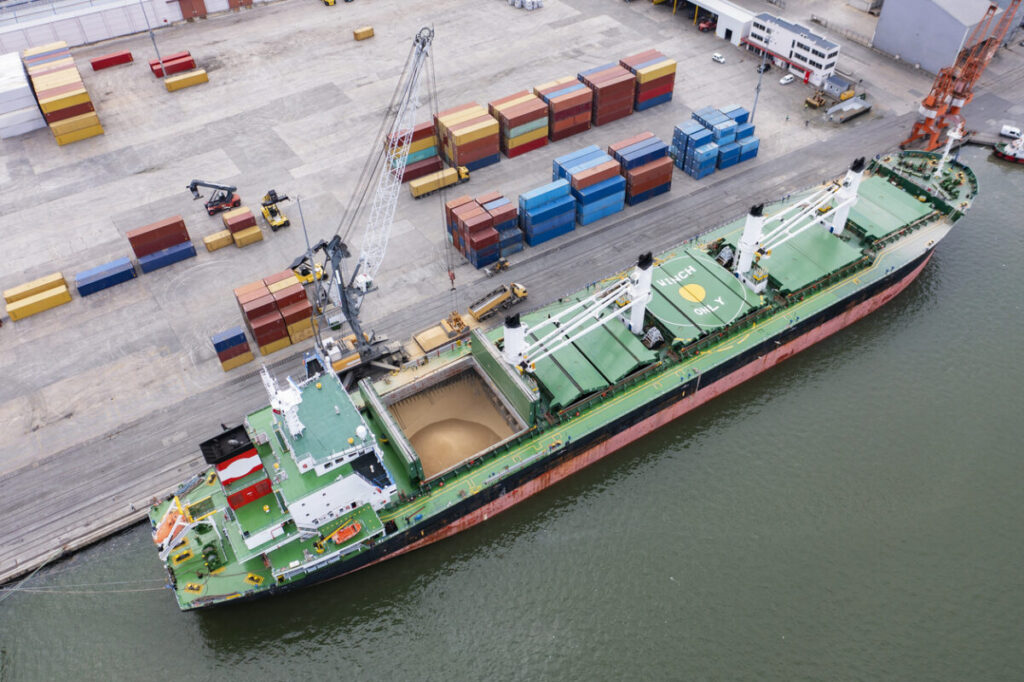
Singapore and South Korea, two of Asia's major maritime hubs, have joined forces to advance the decarbonization and digital transformation of maritime shipping. The relevant ministries of both countries signed a Memorandum of Understanding (MoU) to establish the Singapore–ROK Green and Digital Shipping Corridor (GDSC).
Signing ceremony and parties
The agreement was signed by Singapore's Acting Transport Minister Jeffrey Siow and South Korea's Minister of Oceans and Fisheries Chun Jae Soo.
The ceremony took place in Singapore on November 2, 2025, with the document exchange conducted between Murali Pillai, Senior Minister of State at Singapore's Ministry of Transport, and Minister Chun. The event was witnessed by Singapore Prime Minister Lawrence Wong and South Korean President Lee Jae Myung.
Joint vision for transitioning to zero-carbon fuels
Under the agreement, Singapore's Maritime and Port Authority (MPA) and South Korea's Ministry of Oceans and Fisheries will undertake joint initiatives to promote the use of zero or near-zero greenhouse gas emission fuels (such as ammonia, methanol, LNG, and hydrogen).
This collaboration encompasses:
Development of green fuel bunkering infrastructure,
Harmonization of technical standards and certification protocols,
Technology transfer and knowledge sharing,
Joint research and development and industry testing,
Training and competency programs for maritime professionals.
Digitalization and information sharing take center stage
The GDSC initiative is not limited to eco-friendly fuels; it also aims to accelerate digitalization in the maritime sector.
To this end, the parties will develop projects to facilitate data sharing between port systems, information security in maritime operations, and standardization of digital processes.
Jeffrey Siow emphasized that this initiative represents a strategic step that will shape the future of Asia's maritime sector:
"This partnership demonstrates our shared commitment to building a sustainable and future-ready maritime sector. By advancing clean energy, digital innovation, and talent development, we support both our national priorities and global green maritime goals."
South Korea's emphasis on decarbonization
Chun Jae Soo, South Korea's Minister of Oceans and Fisheries, noted that this collaboration with Singapore will lead Asia's green maritime transformation:
"The Republic of Korea and Singapore are two major maritime partners in Asia. Together, we will take the lead in decarbonizing international maritime shipping. Through this collaboration, by promoting the adoption of green fuels and digital solutions, we will contribute to sustainable growth in the global maritime sector."
Strategic significance: A green bridge between Asia's maritime hubs
Singapore and South Korea, as two nations with some of the world's busiest port networks, occupy leading positions in fuel bunkering, ship repair, and logistics innovation in international transport.
This new corridor will serve as a model for harmonizing green fuel infrastructures across the Asian continent. The ports of both countries will also function in the future as fueling points for alternative fuels such as ammonia and methanol.
According to experts, the GDSC will form the core of Asia's green maritime network in line with the IMO's 2050 net-zero emission targets and the Paris Agreement's climate commitments.
Convergence of digital transformation and green energy
The GDSC will also integrate the digital port infrastructures of Singapore and South Korea.
This will enable vessel traffic, fuel bunkering, and customs processes to be optimized through real-time data sharing; applications such as digital certification and e-document systems will be widely deployed.
According to experts, this integration will both increase efficiency and contribute to reducing the carbon footprint of maritime shipping.
Key Takeaways:
Singapore and South Korea have signed a Memorandum of Understanding (MoU) to establish the Green and Digital Maritime Corridor (GDSC).
The collaboration covers zero or low-carbon fuels, bunkering infrastructure, digitalization, and maritime education.
Parties involved: MPA (Singapore) and ROK Ministry of Oceans and Fisheries.
The GDSC aligns with IMO's 2050 net-zero target and the Paris Climate Agreement.
Jeffrey Siow: "This partnership is an investment in a sustainable and digital maritime future."
Chun Jae Soo: "Asia will lead in green maritime shipping."
The GDSC is viewed as a strategic initiative that will integrate Asia's green port network and digital data infrastructure.
----------
News Link: https://www.porttechnology.org/news/singapore-korea-launch-green-and-digital-maritime-corridor/
--------------------
Author: SedatOnat.com
--------------------
!!! ANNOUNCEMENT !!!
Our book "How to Get ERP?" has been published on Google Play Books.
#What is ERP?
You can freely download and read it from the link https://www.sedatonat.com/erpnasilalinir.
We would be delighted to receive your feedback.
Wishing you happy reading.