

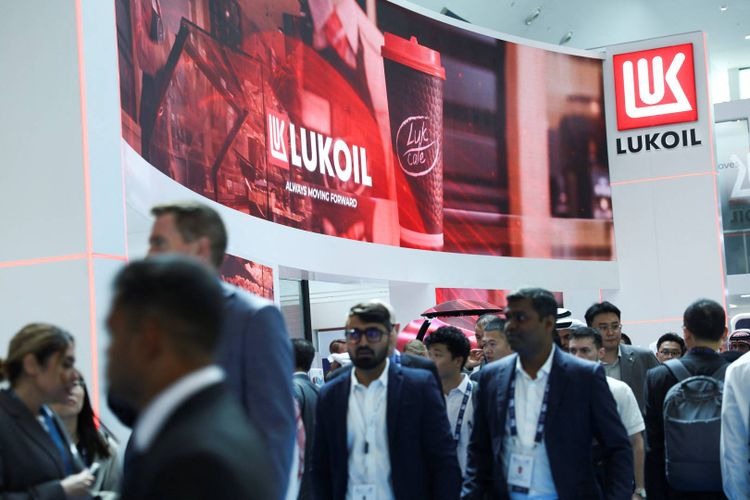
In October 2025, the US and EU announced fresh sanctions against major Russian energy companies, notably Lukoil. The official rhetoric is stern, the list lengthy; yet on the ground, a different picture emerges. While Washington and Brussels keep sanctions targeting Russian oil tight on paper, in practice they are deliberately applying them loosely. The core aim is to curtail Russian oil flows without cutting them entirely, thereby maintaining control over global prices and inflation, while simultaneously sustaining the political message of "imposing sanctions."
At the centre of this grey zone lies a concept frequently cited in 2025's maritime literature: the "Shadow Fleet." This fleet comprises hundreds of tankers, mostly older than 15 years, with questionable technical condition, partially disconnected from Western financial and insurance systems. Their mission: to circumvent the G7 price cap mechanism and transport Russian oil to Asian and other markets.
This mechanism operates through three fundamental elements:
1. False Flag Operations
According to intelligence reports, by late 2025, Russia-linked tankers are rapidly re-registering under obscure flag states (such as Malawi, Eswatini, or barely active "zombie" registries). This obscures the ship's true ownership and operational connections. While official databases show an "African-flagged" tanker, in reality the vessel has become a shadow vehicle transporting Russian oil.
2. "Dark" Logistics – AIS Shutdown and STS Transfers
Shadow tankers frequently disable their AIS navigation transponders. This renders critical information—routes, speed, STS locations—invisible. Vessels typically conduct Ship-to-Ship (STS) transfers in areas such as Greek waters, the Eastern Mediterranean, or the Bay of Bengal. Cargo is offloaded at sea to another tanker; sometimes it is blended with legitimate crude from other sources, creating a new consignment with "obscured origin." This process effectively functions as cargo laundering.
3. Sanction–Enforcement Gap – The Lukoil Paradox
The fact that Lukoil, officially a blocked entity, appeared at the ADIPEC energy conference in Abu Dhabi in November 2025 exemplifies this contradiction. The US is visibly avoiding imposing secondary sanctions on major buyers like India and China that do business with Lukoil. Stricter enforcement would trigger both diplomatic crises and sharp increases in oil prices.
Although the US Treasury has listed some vessels, actual enforcement remains limited. Stopping, inspecting, or seizing vessels requires naval power. Yet navies are already under intense pressure due to drone threats in the Red Sea. Moreover, direct intervention in a tanker operation risks escalating to naval confrontation.
This landscape produces serious collateral damage for "normal" supply chain players:
Security and Insurance Risk: Shadow Fleet vessels are technically weak platforms with poor maintenance. In late autumn 2025, such ships experienced fires, collisions, and groundings in the Black Sea and other sensitive areas. These incidents create strait blockages, environmental pollution, and navigation hazards for legitimate container vessels using nearby routes.
Port & Bunkering Congestion: As shadow tankers concentrate in "friendly" or grey-zone ports, the bunkering zones and anchorages at these locations become overcrowded. This delays compliant vessels using the same areas.
Compliance Burden: Carriers must now screen not only their own vessels, but also bunker sources, STS contacts, and trading partners. Even indirect contact with a dark ship—such as refuelling at the same STS point—can trigger regulatory scrutiny and internal investigations.
Reading all the visuals shared together, a clear framework emerges for 2026 strategy:
Ocean becomes a higher-risk environment: Drone attacks (Red Sea), Shadow Fleet incidents, and complex sanction networks are turning the ocean from "cheap and safe highway" into a hazardous zone.
Response is shaping through "modality shift":
Rail: Barcelona's major rail investment makes inland distribution carbon-free and more reliable.
Air/Land Hub: DHL's Riyadh investment creates air–land corridors that completely bypass the Red Sea.Target Markets: As Africa emerges as a major long-term demand hub, access to these markets is becoming difficult due to current security and infrastructure constraints.
For this reason, 2026 planning still uses maritime shipping for the Africa–Middle East–Europe triangle; however, risk levels are "elevated" and insurance and compliance costs are accepted as "structural."
Key Takeaways:
Although the US/EU formally blocks Russian energy majors, it is not fully cutting oil flows; on the ground, soft sanctions are being applied.
Shadow Fleet comprises aged, risky tankers used to breach the G7 price cap mechanism.
False flags, AIS shutdowns, and STS "cargo laundering" have become standard 2025 operations.
Lukoil's attendance at ADIPEC illustrates the contradiction between sanctions and enforcement.
Shadow ship incidents and port congestion create serious indirect risks for compliant supply chains.
Entering 2026, maritime routes appear risky and expensive, while rail and air–land solutions are increasingly attractive.
Author: SedatOnat.com
We would be happy to receive your feedback.
Wishing you happy reading.

