

New FSB Rules at Russian Ports Driving Delays: Ship Owners Forced to Prepare for Intense Regulatory Pressure
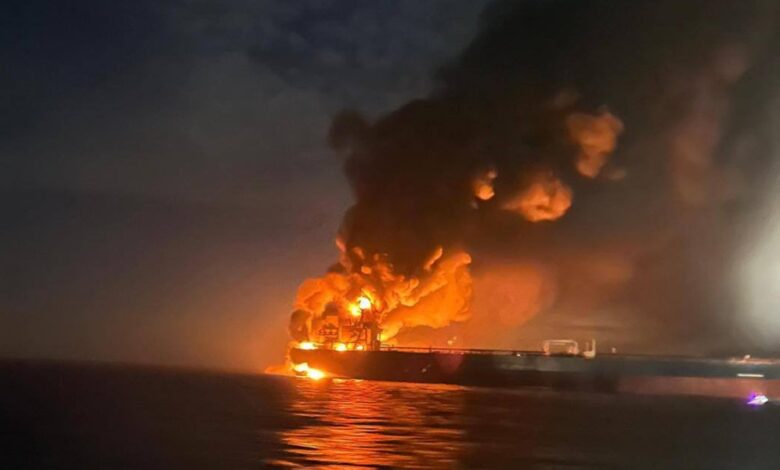
Russia's renewed attacks in the Black Sea and surrounding areas are making ship operations in the region extremely complex, while Moscow's new port-entry procedures for foreign-flagged vessels are creating an additional regulatory burden on supply chains. With the decree taking effect on November 25, 2025, all foreign-flagged vessels seeking entry into Russia must now obtain a port-entry clearance issued by the Federal Security Service (FSB).
This new regime, as underscored in an alert from the American Club dated December 8, is creating significant delays, cost increases, and operational uncertainties for ship owners and charterers.
The Entry Process: Initial Vetting 48 Hours, Full Cycle Up to 53 Hours
Under the new regulation, when a vessel requests entry to a Russian port, port authorities:
Collect information on the ship's last 10 ports of call,
Transmit this information to the FSB within 1 hour,
The FSB then initiates a vetting procedure that can take up to 48 hours to issue an entry decision.
According to the American Club, this process can stretch to 49 hours for the FSB vetting portion alone. Additionally, when accounting for delays in information flow, internal port communication procedures, and operator approvals, the full clearance cycle—excluding underwater inspections—can extend to 53 hours.
This does not even include other operational delays such as anchorage delays, tug availability, and terminal scheduling conflicts.
Mandatory Underwater Inspections: Additional Cost and Timeline Uncertainty
Russia introduced a requirement for underwater hull inspections for all foreign vessels a few weeks ago. These inspections involve scanning for mines, explosive devices, sabotage equipment, or objects that could cause external impact.
Under the new regulation:
Port operators can request underwater inspections.
All costs of this inspection are borne by the shipowner.
When the inspection will be conducted, how long it will take, and how many specialist divers it will require remain uncertain.
As a result, ship owners face challenges not only in terms of time but also regarding cost predictability on voyages to Russia.
Black Sea Risk Environment Tightening
In recent weeks, Black Sea war-risk premiums have risen significantly in the insurance market. According to data from Marsh and Vessel Protect, premiums on some voyages have climbed from 0.25% → 1%. Behind this increase are factors including:
Ukraine's attacks on Russia-linked vessels,
External blast incidents such as the Kairos supertanker case,
Russia's signals of expanding limited retaliation threats,
Operational risks stemming from shadow fleet activity in the Black Sea and Mediterranean
such factors.
Following the Kairos attack and other incidents, Russian President Vladimir Putin declared that "retaliation may not be limited solely to Ukraine-linked vessels and could extend to ships flying the flags of Ukraine-supporting countries." This development is raising the geopolitical risk level in the region further.
Allegations that Ukrainian special forces may have been involved in a tanker operation off Senegal indicate the potential for geographical spillover of the conflict.
Operational Impact: Triple Pressure on Supply Chains
Along with the new FSB regime, carriers planning to call at Russian ports must prepare for a three-dimensional risk matrix:
Regulatory friction: 48–53 hour clearance delays, schedule disruptions.
Financial exposure: Mandatory underwater inspections + rising war-risk insurance premiums.
Geopolitical unpredictability: Russia's potentially expanding retaliation policies.
Laycan flexibility is diminishing in the tanker and bulk segments; container operators are being forced to add buffer time to their Russia services.
The American Club particularly recommends that charterers add provisions covering FSB-delay clauses, underwater inspection cost allocation, and war-risk deviation to their contracts.
Key Points:
FSB clearance is mandatory for all foreign-flagged vessels entering Russia.
The vetting process takes 48–49 hours, with the full cycle extending to 53 hours.
Mandatory underwater hull inspections impose additional costs on ship owners.
Black Sea war-risk insurance premiums are showing increases approaching 250%.
Putin implied that retaliation could extend to vessels flagged by other nations.
Author: SedatOnat.com
We would be delighted to hear your feedback.
Wishing you good reading from now on.

