

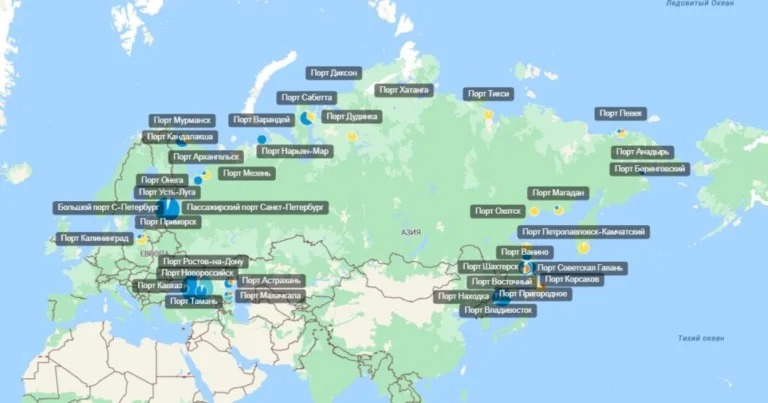
Cargo handling volumes across all Russian sea ports increased by 5.1% in October 2025 compared to the same month last year. According to official data, this growth was achieved thanks to strong performance in energy products, renewed momentum in transit transportation, and expansion in domestic cabotage. Conversely, imports declined noticeably.
Exports remain dominant in cargo mix
In October 2025, 78.7% of Russia's total port cargo volumes consisted of export cargoes.
Exports: +3.9%
Cabotage: +11.8%
Transit: +25.3%
Imports: –13%
This picture reveals that weakness in imports continues due to Western sanctions, while Russia maintains focus on shipping energy and industrial raw materials. Trade flows directed particularly toward Asian markets are also driving increased transit activity.
Energy products account for roughly half of cargo volumes
Russian ports handled approximately 50% of total cargoes from crude oil and petroleum products.
Crude oil share: 31.1%
Petroleum products: 11.5%
This demonstrates Russia's weight in global energy trade is directly reflected in port statistics.
Coal and coke shipments accounted for 22.8% of the total mix. Far East export corridors continue to play a critical role, particularly in coal transportation.
Fastest growth in scrap and LNG
October 2025 saw the highest growth in scrap metal handling.
Scrap handling: +81.4%
This increase is linked to both valuing domestic production surpluses and metal trade directed toward Middle Eastern and Asian markets.
Other notable segments:
LNG (liquefied natural gas): +43.6%
Ferrous metals: +25.3%
These three segments demonstrate that Russia's efforts to diversify its trade structure under sanctions are proving effective.
Sharp decline in certain dry cargo segments
Conversely, many categories contracted:
Other bulk cargoes: –49%
Forest products (timber): –33.1%
Liquid food bulk: –32.5%
These declines are associated with weak demand for European markets, reshaping of logistics flows, and production changes in certain sectors.
Regional distribution: Black Sea basin leads
In October 2025, cargo volume distribution by basin was as follows:
Azov–Black Sea basin: 32.8%
Baltic: 28.6%
Far East: 27.3%
Arctic: 10.3%
Caspian: 1%
The Azov–Black Sea basin's leadership reflects Russia's increasing reliance on southern corridors. The Baltic basin's 28.6% share shows cargo flows have not entirely disappeared despite European sanctions. The Far East basin's robust performance signals rising flows toward Chinese and Asian markets.
Overall assessment
Russia's October 2025 port data reveal the country is strengthening its export and transit-oriented trade structure, while weakness persists on the import side. As energy products and metal cargoes form the backbone of port performance, the regional distribution confirms Russia's trade orientation continues shifting from west to east.
Key Points:
Total cargo volume: 5.1% increase
Exports dominant with 78.7% share
Transit shipments increased 25.3%
Scrap cargoes: +81.4%
LNG shipments: +43.6%
Imports fell 13%
Largest basin: Azov–Black Sea (32.8%)
Author: SedatOnat.com
We would be delighted to receive your feedback.
Wishing you happy reading.

