

US President Donald Trump announced "the most comprehensive energy sanctions in history" targeting Russia's two energy giants Rosneft and Lukoil.
Trump characterized these measures—aimed at forcing Moscow to the negotiating table over the Ukraine war—as "tremendous sanctions."
The sanctions have the potential to deeply impact not only the Russian economy but also global oil shipping and the tanker market.
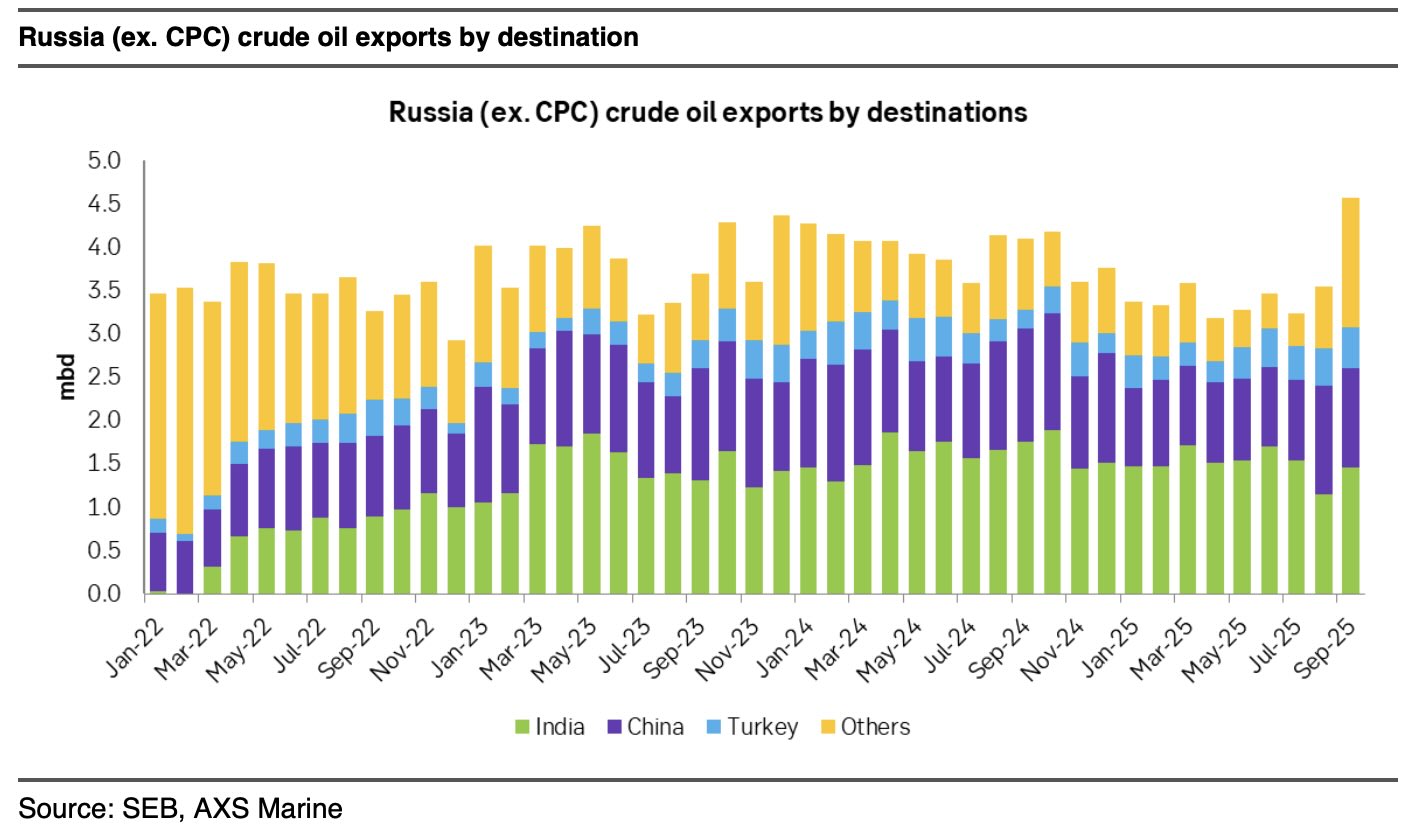
According to Bloomberg data, the sanctions are expected to result in an almost complete halt to crude oil supplies from Russia to India—which could reshape tanker routes.
Scope of Sanctions: Severe Restrictions on Energy Flows
The new sanctions are regarded as the broadest energy sanctions implemented since Trump's return to the White House.
The measures block Rosneft, Lukoil, and dozens of their affiliated subsidiaries from access to US banks and dollar transactions.
US Treasury Secretary Scott Bessent explained the rationale for the sanctions in the following terms:
"Putin continues to ignore the meaninglessness of this war.
We are imposing sanctions on Russia's two largest oil companies that finance the Kremlin's war machine.
We are prepared to take further steps if necessary."
Trump, meanwhile, made the following statement during a White House meeting with NATO Secretary General Mark Rutte:
"These are very major sanctions. We're applying them against two major oil companies.
We hope the war ends soon."
Additionally, Trump cancelled a planned meeting with Russian President Vladimir Putin in Budapest due to "a lack of progress in negotiations."
Impact on India and Global Energy Flows
The most pronounced effect of the sanctions will be felt on India, one of Russia's largest oil buyers.
Bloomberg reported that crude oil shipments from Russia to India are expected to plummet to near-zero within a short time.
This situation will force India to turn to alternative sources such as the Atlantic Basin and the Middle East (MEG).
According to analysis by Swedish bank SEB, this shift will create new opportunities for the tanker sector in terms of "long-haul" shipping:
"India's shift to new supply sources will increase demand for compliant tankers.
This will revitalize the transport of Atlantic oil to Asia, supporting the west-east price arbitrage."
Experts emphasize that this development will be net positive for the tanker fleet, since Russia-based short-haul voyages will be replaced by longer routes.
Market Reaction: Oil Prices and Geopolitical Impact
Rystad Energy's geopolitical analysis director Jorge Leon noted that the US's new sanctions represent "an unprecedented escalation in Washington's pressure campaign against Moscow".
According to Leon, the sharp rise in oil prices following this decision reflects market fears of severe disruptions in Russian exports:
"These sanctions could lead to significant declines in Russian crude oil exports, particularly flows to India.
Moreover, combined with recent attacks on Russian oil infrastructure, the risk of production shutdowns has increased."
The sanctions could trigger forced shut-ins in Russian oil production.
Coordinated Moves from Europe and the UK
Following the US, the European Union is preparing to approve its 19th sanctions package today.
This package includes:
Four Chinese companies accused of circumventing Russian oil export sanctions,
Two independent refineries and a Chinese trading house,
One non-energy sanctions violation entity.
Additionally, the EU plans to gradually ban Russian LNG imports beginning in January 2027.
Among the new measures are steps targeting Russia's "shadow fleet".
The EU's External Action Service (EEAS) draft declaration proposes a "pre-authorised boarding" mechanism for vessels carrying Russian oil.
Last week, the UK government also tightened its energy sanctions by targeting:
Rosneft and Lukoil,
Four Chinese oil terminals,
44 tankers belonging to Moscow's shadow fleet, and
Seven LNG vessels.
Global Tanker Fleet: Record Rise in Sanctioned Vessels
According to data from maritime analytics firm Kpler, the number of sanctioned vessels has risen from 350 in September 2020 to 1,700 in September 2025.
Recently, US, UK, and EU sanctions have increasingly overlapped, and coordination has strengthened.
This development creates a new market opportunity for "compliant vessels," while freight rates on non-sanctioned routes could increase.
Conclusion: Global Tanker Maps Being Redrawn
The Trump administration's latest sanctions not only limit Russian energy revenues but also reshape the geography of global tanker trade.
With major buyers like India changing course, long routes stretching from the Atlantic to Asia could become the new norm.
However, disruptions in Russian oil production, price volatility, and uncertainty in energy supply point to a new period of imbalance in global markets.
Key Points:
US President Trump has imposed sweeping sanctions on Russia's largest oil producers Rosneft and Lukoil.
The sanctions block access to US banks and dollar-based transactions.
India's Russian oil imports could fall to near-zero in the near term.
SEB Bank forecasts that India's new supply routes will create long-distance tanker demand for the shipping sector.
Rystad Energy indicates that the sanctions could trigger sharp declines in Russian oil exports and production shutdowns.
The EU is preparing to ban Russian LNG starting in 2027.
The number of sanctioned vessels has risen from 350 since 2020 to 1,700.
According to experts, this development will lead to a redefinition of routes and price dynamics in the tanker sector.

