

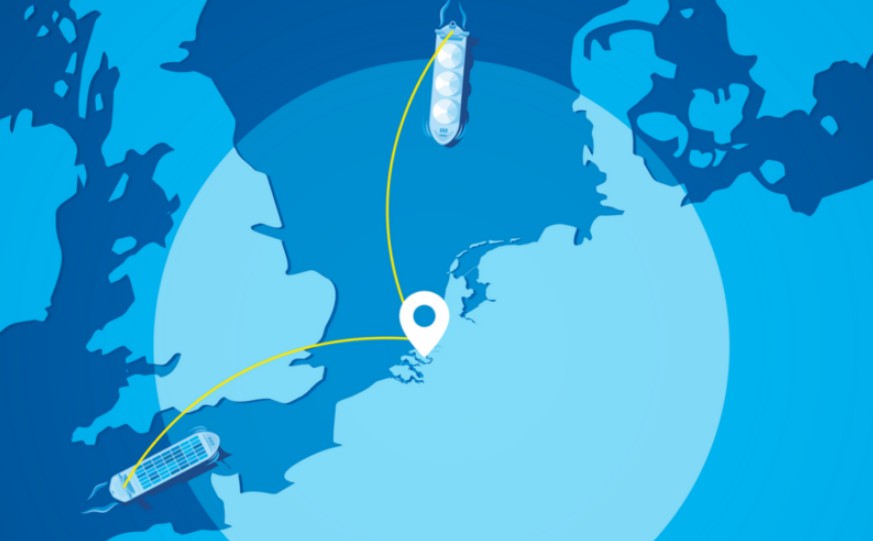
The Port of Rotterdam has implemented a new "Geofence" system to optimize vessel movements and increase the efficiency of port operations. The innovative system was announced as a key component of the first phase of the "Just-in-Time sailing" project, which aims to reduce CO2 emissions and enhance the effectiveness of vessel movements.
Since mid-October, terminal planners and shipping agents have been receiving instant email notifications when a vessel crosses an imaginary boundary—referred to as a "geofence"—and enters the inland navigation "Port-passage Planning Area (PPA)." This geofence is positioned at a distance of 240 nautical miles around the Maascenter buoy. When vessels cross this line, they receive their "Actual Time of Arrival (ATA)" information for arrival at the PPA. This enables more precise arrival scheduling and reduces waiting times.
According to Port of Rotterdam authorities, the Just-in-Time sailing concept offers significant advantages in terms of both ecological footprint and inland navigation operational costs. A study conducted in 2022 showed that using Just-In-Time arrivals during the final 12 hours of the voyage could reduce container ship fuel consumption and associated carbon dioxide emissions by 4.23 percent. This research was conducted by the "Global Industry Alliance to Support Low Carbon Shipping (Low Carbon GIA)" as part of "GreenVoyage2050," a joint initiative of the International Maritime Organization (IMO) and Norway.
The implementation of the geofence system was carried out through the joint efforts of various stakeholders within the port, including terminal operators, shipping agents, and maritime service providers. This collaboration aims to improve information reliability and thereby contribute to the port's more efficient and sustainable operations. Additionally, the system enables more effective planning and coordination of port operations.
The Port of Rotterdam is undertaking other sustainability and efficiency-focused initiatives as well. For example, it conducts portable shore power tests for ocean-going vessels, enabling ships to meet their energy needs in a more environmentally friendly manner while waiting in the port. It also stands out for its efforts to ensure continuity of container flow.
In conclusion, the Port of Rotterdam's new Geofence system and Just-in-Time sailing project make a significant contribution toward the goals of increasing efficiency in maritime transport and reducing environmental impact. The adoption of such innovative applications by other ports and the maritime industry could help achieve a more sustainable maritime transport sector on a global scale.
Key Points:
Port of Rotterdam has launched the new "Geofence" system to optimize vessel movements.
The system was implemented as part of the first phase of the "Just-in-Time sailing" project.
Geofence is positioned at 240 nautical miles around the Maascenter buoy.
Vessels receive "Actual Time of Arrival (ATA)" information when crossing the geofence line.
Just-in-Time sailing can reduce fuel consumption and CO2 emissions by 4.23 percent.
The research was conducted by the "Global Industry Alliance to Support Low Carbon Shipping (Low Carbon GIA)" as part of the "GreenVoyage2050" project.
The system was developed through collaboration between terminal operators, shipping agents, and maritime service providers.
The goal is to improve the efficiency and sustainability of port operations.
We would be delighted to hear your feedback.
Wishing you happy reading.

