

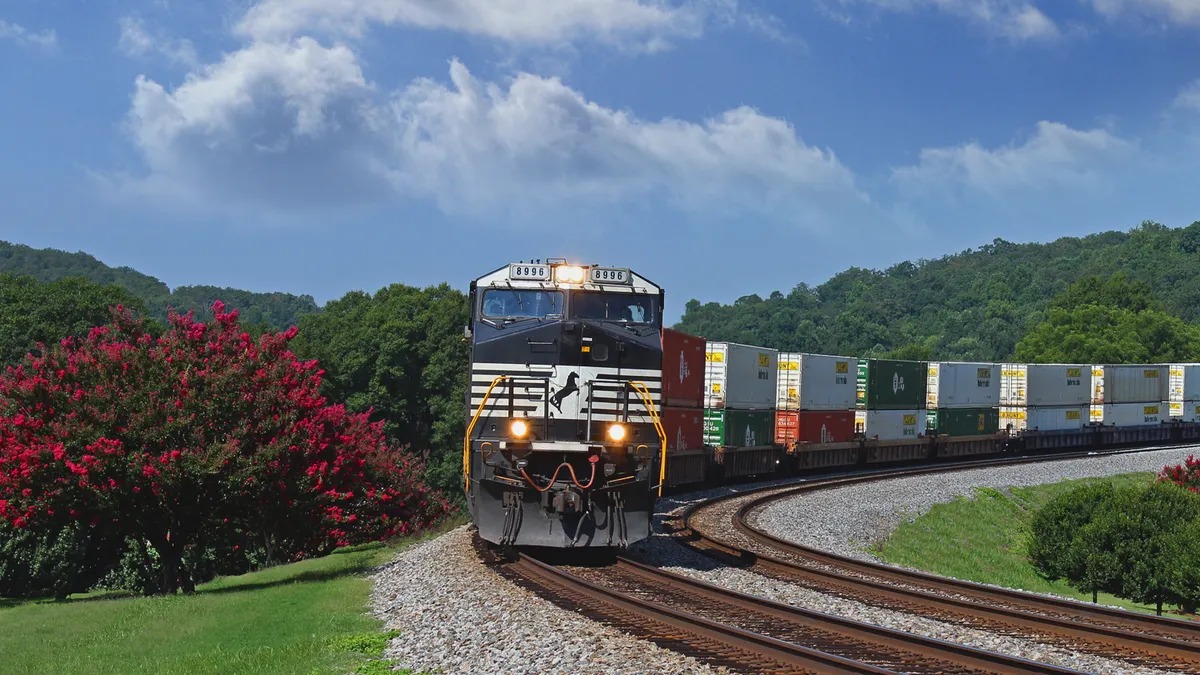
The planned merger between Union Pacific (UP) and Norfolk Southern (NS), two of the largest railroad operators in the United States, is poised to affect not only rail transportation but also the trucking and intermodal ecosystem directly. According to industry assessments reported by Trucking Dive, the merger—approved by shareholders of both companies on November 14—presents a complex picture that could create both opportunities and losses for road transportation.
Valued at approximately 85 billion USD, the merger aims to consolidate a railroad network spanning 50,000 miles across 43 states and 100 ports under a single system. An integration of this scale could create the first truly coast-to-coast railroad backbone in the United States. This situation is creating competitive pressure, particularly for the long-haul OTR (over-the-road) trucking segment.
Long-Haul Trucking Under Pressure
Industry experts predict that the merger could cause some volumes to shift from trucks to rail, particularly in the long-haul trucking segment. Under UP's newly announced service, five trains weekly will operate on the California Inland Empire–Chicago route with a three-day transit time. The company contends that this service is 20% faster than current intermodal solutions and can compete directly with team driver truck operations.
This development represents potential volume loss for truck fleets engaged in long-distance transportation. Liberty Baugher, International Logistics Director at Sunset Transportation, notes that firms focused on OTR transportation could be negatively affected by this shift.
Opportunities in Drayage and Last-Mile Delivery
Conversely, the merger is creating significant opportunities in the drayage and final-mile delivery segments. According to Baugher, no matter how advanced rail transportation becomes, the last mile between intermodal terminals and customer locations still must be handled by trucks.
"Someone still needs to handle those final mile deliveries," a statement that captures this reality.
Particularly small and local drayage companies operating near railroad terminals could benefit directly from the merger. Anthony Apa Jr., President of Mark-it Express, notes that his company expects "significant productivity gains" in this area. The firm specializes in last-mile services for intermodal containers.
Chicago Effect and Regional Shifts
Chicago emerges as one of the regions where the merger's effects will be most pronounced. The city stands as one of the most critical junction points in the U.S. railroad network. With the new transcontinental route in place, "rubber tire moves" (short-distance truck transfers) between different rainyards within Chicago could be reduced.
Dean Croke, Chief Analyst at DAT Freight & Analytics, views this development not negatively but as a systemic improvement:
"Everybody wants to avoid rubber tire moves across town."
However, Croke also emphasizes that on a broader scale, some warehousing hubs could be affected. Cities such as Kansas City, Memphis, and Phoenix could experience truckload volume losses as shipments bypass them via direct rail transport.
Intermodal Has Its Own Challenges
Despite merger expectations, the intermodal market is still experiencing a weak period. According to Association of American Railroads data, intermodal volumes showed a 4.9% year-over-year decline in the week of November 8. The FTR Intermodal Competitive Index forecasts reaching bottom in January 2026 and remaining in negative territory through fall 2026. This indicates that intermodal currently is not competitive against OTR trucking.
Mike Kucharski, Vice President of JKC Trucking, notes that depressed truck rates have narrowed the price gap with intermodal:
"Trucking rates are so cheap, they're competing with intermodal rates."
For this reason, many shippers prefer trucking when prices equalize because it is faster and more flexible.
Monopoly Concerns and Strategic Preparation
One of the biggest concerns about the merger is reduced competition. Apa argues that the merger has a "monopolistic feel," and that with the consolidation of Class 1 railroads, shipper options could narrow.
Nevertheless, many trucking companies are already analyzing the merger's impact and preparing new terminal locations, service diversification, and scale expansion plans. The goal is to be in a complementary role rather than on the losing side when a potential transcontinental railroad route enters service.
Overall Assessment
The Union Pacific–Norfolk Southern merger does not present a clear "winner–loser" picture for the trucking industry. While pressure emerges in long-haul OTR transportation, new opportunities arise in drayage, intermodal support, and last-mile services. The trucking industry has begun interpreting this transformation as a strategic adaptation process rather than a threat.
Key Points:
The UP–NS merger is valued at 85 billion USD and creates a 50,000-mile network.
Long-haul OTR trucking could experience volume losses.
Drayage and final-mile transportation demand could increase.
Chicago and the Midwest region are among the most affected areas.
Intermodal volumes remain weak; price advantage favors trucking.
Trucking companies are planning new terminals and scale expansion.
Author: SedatOnat.com
We would be delighted to hear your feedback.
Wishing you happy reading.

