

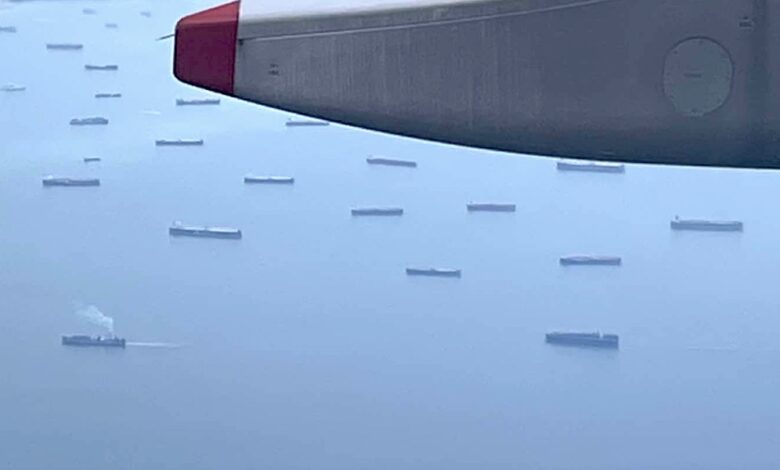
A new study conducted by UCL Energy Institute in London and UMAS, a consultancy firm specializing in reducing the carbon footprint of maritime shipping, analyzed vessel movements between 2018 and 2022. The study found that optimizing port arrivals by accounting for port congestion and waiting times could reduce voyage emissions by up to 25% for certain vessel types.
\nAccording to the research, the average potential emissions savings for container ships and dry bulk carriers is approximately 10%, while for gas carriers and oil tankers this figure reaches 16%, and for chemical tankers it can reach nearly 25%. The study identified that these types of vessels spend 4-6% of their operational time—approximately 15-22 days per year—anchoring outside ports waiting, similar to being delayed.
\nFurthermore, the research revealed that smaller vessels typically experience longer waiting times, though this varies by vessel type. At the root of waiting times are common operational practices such as first-come, first-served scheduling and the "sail-fast-then-wait" approach. This situation is exacerbated by systemic issues including port congestion, inadequate data standardization, inflexible charter parties, and limited coordination among the numerous stakeholders involved in loading and unloading operations.
\nDr. Tristan Smith, Professor of Energy and Transport at UCL Energy Institute, stated: "The International Maritime Organization (IMO) set ambitious greenhouse gas reduction targets in 2023. Reaching these targets requires unlocking all efficiency opportunities, including operations around ports and voyage optimization. This will only be possible if the Carbon Intensity Indicator remains a holistic metric that encompasses all emissions and incentivizes ship owners, charter owners, and port stakeholders to overcome long-standing market barriers and failures."
\nThe study emphasizes how critical port optimization is for reducing carbon emissions in maritime shipping. Reducing waiting times at ports has the potential to directly lower fuel consumption and thus greenhouse gas emissions from vessels. In this context, it is important for port authorities and ship operators to work in collaboration to develop more efficient operational processes.
\nAdditionally, steps such as increasing data standardization and making charter parties more flexible could contribute to minimizing vessel waiting times. Such improvements not only provide environmental benefits but also offer economic advantages by reducing operational costs.
\nIn conclusion, this study conducted by UCL Energy Institute and UMAS demonstrates how effective port optimization can be in enhancing sustainability in maritime shipping. These findings are regarded as an important step toward a greener and more efficient future in the maritime sector.
\nKey Points:
\n- \n
Study period: 2018-2022
\n Emissions savings potential: Container ships and dry bulk carriers: 10%
- Gas carriers and oil tankers: 16%
- Chemical tankers: 25% \n Vessel waiting times: 4-6% of operational time, 15-22 days per year
\n Causes of waiting times: First-come, first-served scheduling
- Sail-fast-then-wait approach
- Port congestion
- Inadequate data standardization
- Inflexible charter parties
- Limited stakeholder coordination \n Recommendations: Optimization of port operations
- Increased data standardization
- Greater flexibility in charter parties
- Strengthened coordination among stakeholders
\n
---
\n-------------------
\n
