

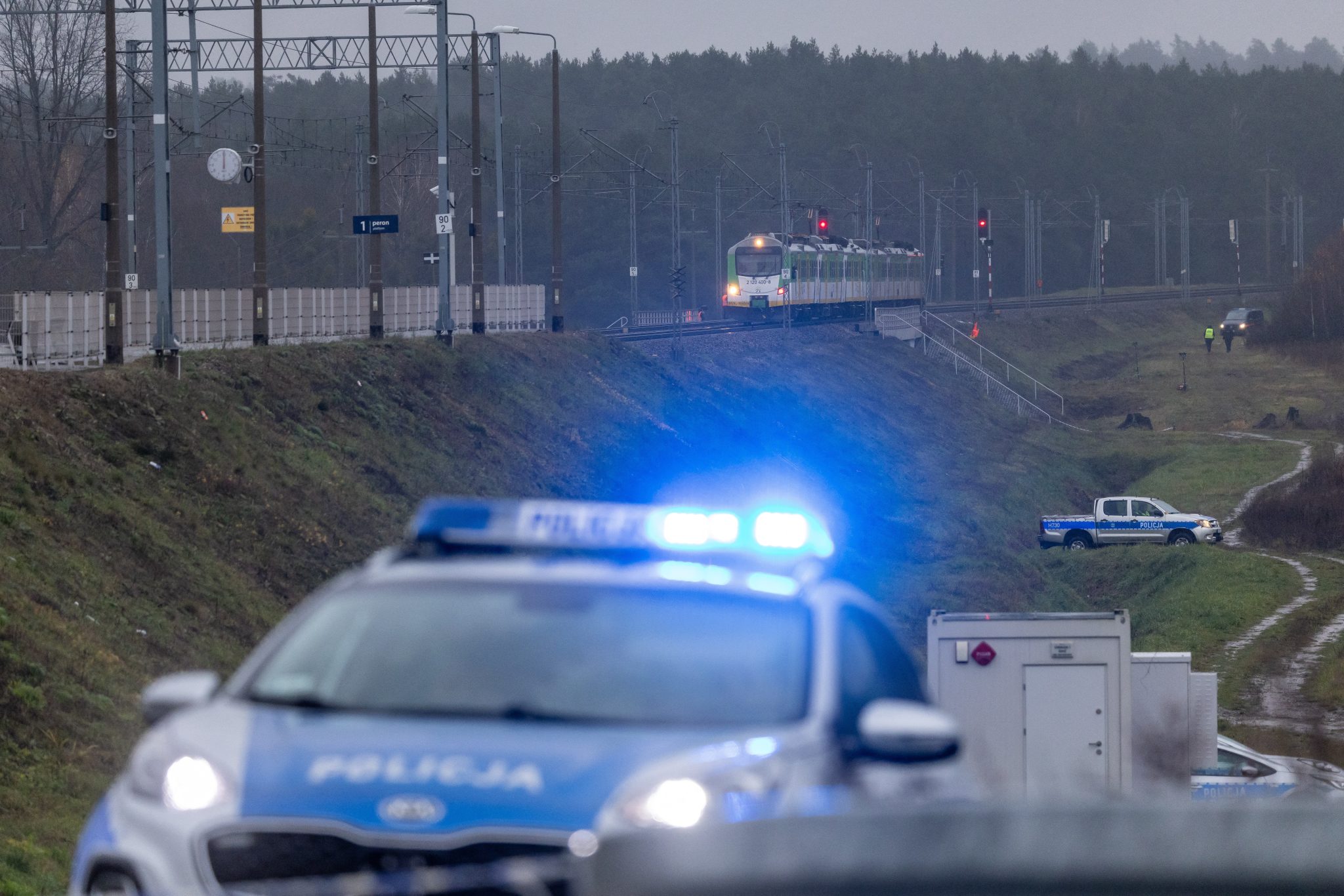
Polish Prime Minister Donald Tusk announced that his government has definitively established that Russia was behind an explosion on a critical railway line in the country's east on Sunday. Tusk said the identities of those who carried out the attack have been determined, and that two Ukrainian citizens have long been working on behalf of Russian intelligence. The incident occurred on railway line No.7, one of the most strategic corridors used for shipments of weapons, fuel, and humanitarian aid to Ukraine.
Speaking before the Sejm, Tusk stated: "This is no longer an assumption; we are certain of the identities of those who carried out the attack. Camera footage clearly shows the perpetrators of the sabotage. It is known that these two individuals have long been connected with Russian intelligence." Polish security services determined that the two suspects entered the country via Belarus and fled back to Belarus after the attack.
According to officials, one of the suspects had previously been convicted of sabotage offences in Ukraine. This information has heightened concerns that the incident may be part of broader Russian hybrid operations.
Poland's swift response: Military moves to rail lines
Following the attack, the Polish government increased security levels along the eastern corridor. Prime Minister Tusk and Defence Minister Władysław Kosiniak-Kamysz announced that the military will be directly deployed to protect critical infrastructure in the country's east.
The following infrastructure will be under 24/7 surveillance:
bridges,
viaducts,
tunnels,
main stations,
switches,
critical signalling equipment.
Under this framework, Territorial Defence Forces and Railway Security Guard are conducting joint patrols.
Tusk characterised the sabotage as "one of the most serious attacks on Polish state security since Russia's comprehensive invasion attempt of Ukraine." He said that Russia-linked sabotage attempts have increased across Europe, with their objectives being to "create chaos and stoke anti-Ukraine sentiment."
How the attack unfolded
The incident on Line No.7—the corridor running from Warsaw through Lublin to the Ukrainian border—came to light at 06:40 when a PKP Intercity locomotive driver reported abnormal vibrations on the track.
This information was immediately relayed to the traffic control centre in Dęblin, and the following train was halted. Poland's Transport Minister Dariusz Klimczak said the line sustained damage near Puławy and Dęblin, with repair work ongoing.
This route, which sees 115 trains daily, is known as the EU–NATO's most critical logistics corridor for military equipment and humanitarian aid to Ukraine. The attack is assessed to have been deliberately aimed at derailing a train.
Experts: "Complete protection of rail infrastructure is impossible"
Speaking to Polsat News, retired Armed Forces Inspectorate Chief General Jarosław Kraszewski stressed that the attack was logistically simple and feasible:
"Railways form an extensive network. Providing complete protection is practically impossible. For this reason, a well-prepared sabotage operation can unfortunately be carried out easily."
According to the General, Poland must be prepared not only on the eastern lines but nationwide for similar attempts.
Strategic significance
The attack is a warning not only for Poland but for all of NATO and the EU. Because:
Poland is the primary transit country for military and humanitarian aid to Ukraine,
Hybrid threats in Eastern Europe are increasing,
Russia's sabotage capacity within Europe is expanding,
Rail infrastructure is critical to war logistics.
For this reason, Poland's move is regarded as a necessary security upgrade in both military and civilian logistics sectors.
Key Takeaways:
The saboteurs: Two Ukrainian citizens working on behalf of Russian intelligence.
The blast occurred on Line No.7, used for critical military shipments to Ukraine.
Poland has deployed troops to eastern lines.
The incident is among Poland's most serious security breaches in recent years.
Because railways are extensive, complete protection is nearly impossible; further attacks are expected.
Author: SedatOnat.com
We would be delighted to hear your feedback.
Wishing you happy reading.

