

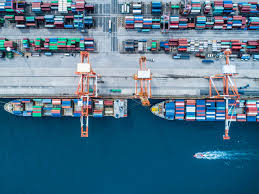
Retailers are accelerating their imports amid uncertainty over the Trump administration's trade policy stance. According to the National Retail Federation (NRF) and Hackett Associates' Global Port Tracker report, cargo volumes at U.S. ports are expected to remain at elevated levels over the next three months.
In January, U.S. ports recorded a year-over-year increase of 13.4%. February is projected to see a 6.1% increase, while March is expected to reach 10.8%. Jonathan Gold, the NRF's vice president of supply chain and customs policy, noted that retailers continue to bring in as much goods as possible before tariff increases take effect.
President Donald Trump raised import tariffs on Chinese goods by 20% and announced that reciprocal tariffs would begin on April 2. This development is viewed as the primary driver prompting importers to advance their shipments. Despite recent uncertainty surrounding tariffs on imports from Canada and Mexico, it is noted that most goods from these countries are transported by road or rail, so port volumes will not be directly affected.
Another Trump administration initiative could also impact import volumes. In February, the United States Trade Representative (USTR) proposed charging fees of up to 1.5 million dollars for vessels built in China to dock at U.S. ports. This proposal is currently under public comment. Ben Hackett, founder of Hackett Associates, noted that a significant portion of the global container fleet is built in China, and this situation would shift additional costs to cargo owners and ultimately consumers.
If the USTR proposal is implemented, the use of larger vessels could increase and shipment consolidation could be achieved, avoiding stops at multiple U.S. ports. This situation could reduce activity at smaller ports. Hackett stated that ports managed the uptick in import volume in the fourth quarter of 2024 without major disruptions, but this would create additional pressure on the supply chain and could harm the country's smaller ports.
While import increases are expected in the near term, volumes are forecast to decline in June and July. However, this decline would stem from imports pulled forward in advance of the strikes at East and Gulf Coast ports in the fall.
Key Takeaways:
Retailers are accelerating imports ahead of rising tariffs.
Significant increases in import volumes at U.S. ports are expected in February and March.
The Trump administration's proposal to impose additional fees on vessels built in China could impact the supply chain.
Fluctuations in import volumes are anticipated in the coming months.

