

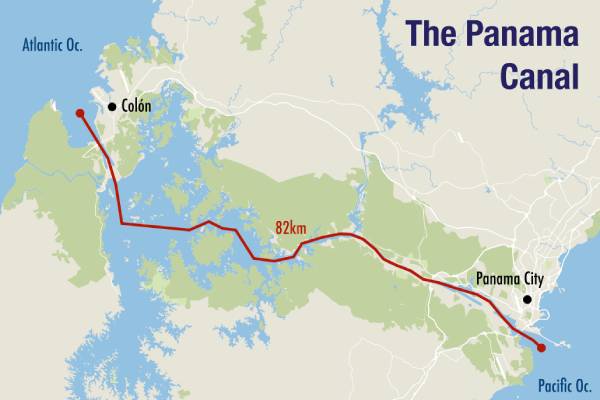
President-elect Donald Trump's recent statements about regaining U.S. control over the Panama Canal could have significant implications for global supply chains, in addition to the political and diplomatic debate surrounding the issue.
The Strategic Importance of the Panama Canal
The Panama Canal is a critical waterway that facilitates maritime shipping between the Atlantic and Pacific Oceans, with approximately 4 percent of global trade passing through it. The U.S. is the canal's largest user and it holds vital importance for American commerce.
Potential Supply Chain Disruptions
An attempt by the U.S. to reassert control over the canal could trigger various supply chain disruptions:
Operational Uncertainty: A change in control could create uncertainty in canal operations, negatively affecting planning and reliability for vessel transits. This could translate into delays and increased costs for shipping companies.
Geopolitical Tensions: Such a move could strain U.S.-Panama relations and draw other countries with interests in the canal into the process. Geopolitical instability could lead to higher shipping insurance premiums and increased costs as alternative routes are adopted.
Shifting Trade Routes: In case of instability, shipping companies may opt for alternative routes such as the Suez Canal or Cape of Good Hope, which would increase travel times and fuel consumption.
Economic Implications
The canal is of major significance for both Panama and U.S. economies:
Panama's Economy: The canal is a significant source of revenue for Panama. A change in control could have serious negative effects on the country's economy and regional stability.
U.S. Trade: As the primary user of the canal, the U.S. currently benefits from efficient and cost-effective transits under existing arrangements. A shift in this dynamic could increase operational costs for American importers and exporters.
Industry Perspectives
Industry experts are voicing concerns about possible impacts:
Shipping Companies: These firms that rely on the canal for efficient routes could be forced to adopt longer and more costly alternatives due to disruptions.
Manufacturers and Retailers: Those dependent on timely deliveries could face problems with production schedules and inventory management due to potential delays.
Conclusion
While the idea of reasserting control over the Panama Canal may resonate in some political circles, its impacts on supply chains could be far-reaching. Disruptions in canal operations, heightened geopolitical tensions, and economic instability could negatively affect global trade as well as the economies of the U.S. and Panama. To mitigate these risks, supply chain stakeholders must closely monitor developments and prepare for potential scenarios.
Key Points:
Operational Uncertainty: A change in control could create uncertainties in canal operations.
Geopolitical Tensions: The U.S. move could trigger tensions in international relations.
Shifting Trade Routes: The use of alternative routes could increase costs.
Impacts on Panama's Economy: Control of the canal is critical to Panama's economic interests.
Impacts on U.S. Trade: Changes to existing arrangements could adversely affect American trade.
Industry Concerns: Shipping companies and retailers are concerned about potential disruptions.
Your feedback would make us happy.
We wish you happy reading from the outset.

