

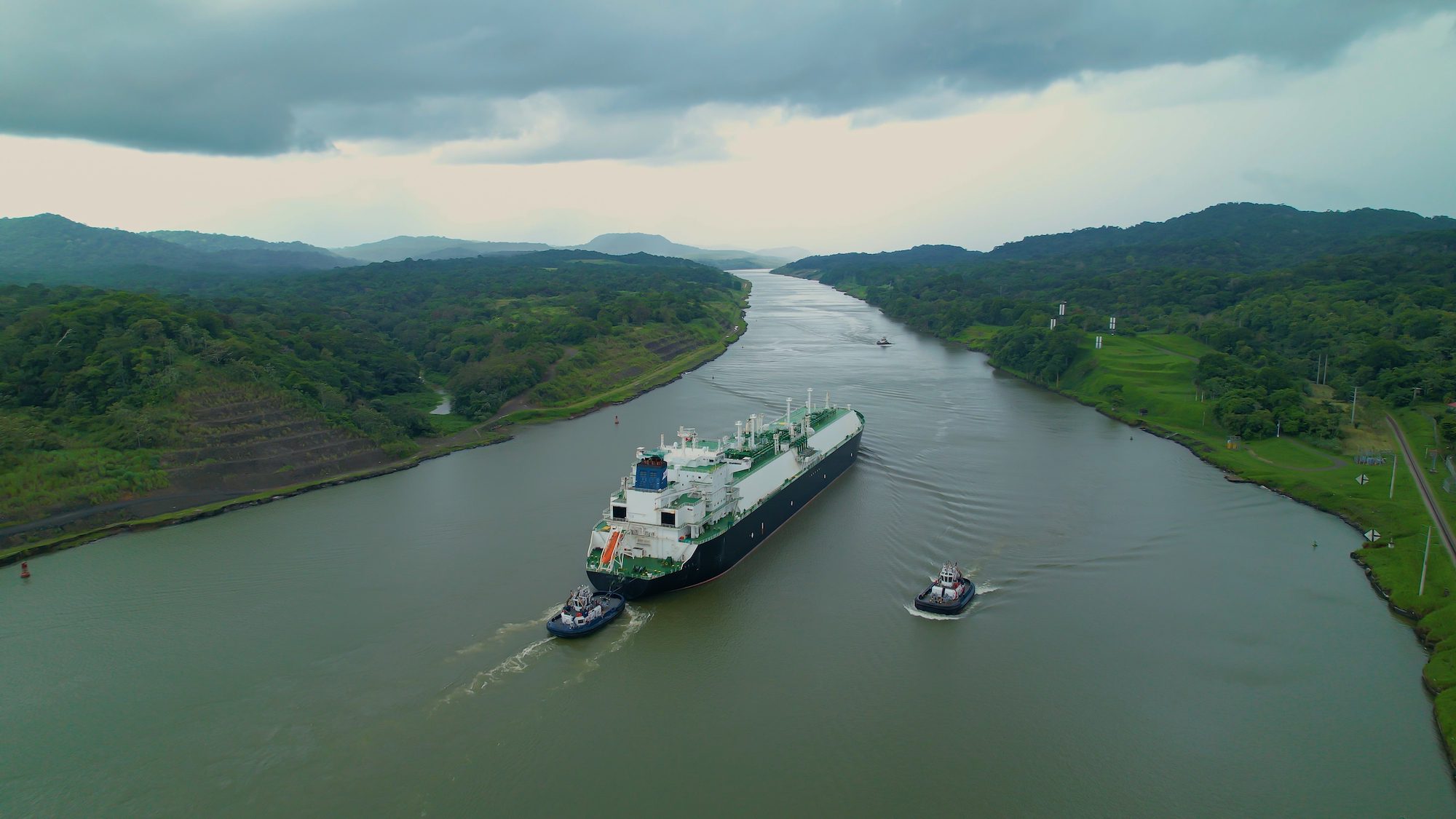
The El Zaino and La Arenosa river valleys in western Panama are home to hundreds of families who depend on agriculture, fishing, and livestock for their livelihoods. Yet these regions could be submerged under water due to a massive artificial reservoir that the state-owned Panama Canal wants to build to ensure its sustainability in the face of climate change. Tres Hermanas, a town complete with two schools, churches, and a health clinic, would be among dozens of settlements that could disappear within the next six years if the state's $1.6 billion ambitious project moves forward. While some town residents refuse to relocate, others facing forced displacement are demanding fair compensation. Should they remain dissatisfied, past experiences show that public opposition could jeopardize the entire project.
The Rio Indio dam project, first proposed two decades ago, has gained greater urgency in the past decade due to mounting extreme weather events and severe drought experienced last year. This drought restricted ship traffic on the canal and increased the project's importance. The Panama Canal constitutes 3.1 percent of the Central American nation's gross domestic product. This waterway, which facilitates passage for up to 14,000 ships annually, contributes 2.5 percent to global maritime trade and is critical for the United States' imports and exports from Asia, including automobiles, commercial goods, and commodities such as liquefied natural gas (LNG) via container vessels.
Ilya Espino de Marotta, deputy administrator of the Panama Canal, told Reuters in an October interview, "The Rio Indio reservoir project will be the most comprehensive solution against droughts that are increasingly common on a 50-year horizon." The project must pass through a lengthy approval process including public consultation, cabinet discussion, and final approval by the National Assembly. President Jose Mulino stated that the debate would be completed next year, but the shipping sector harbors some concerns following recent delays and suspension of major projects, such as Canada-based First Quantum Minerals' controversial mining contract, which was invalidated by the Constitutional Court following broad public opposition.
While the number of people forced to relocate due to the dam is relatively small, they are supported by an activist group called Countrymen Coordinator for Life, which played a significant role in blocking First Quantum's mining contract. Cesar Petit, senior economist at BancTrust & Co, noted that there is political consensus in Panama on the dam project, but the government must create a credible compensation plan for people who will be displaced and affected. Jose Icaza, minister of canal affairs, stated that the government understands the residents' "concerns and worries" and will work directly to meet their needs as the construction project progresses.
The Panama Canal Authority aims to build a massive dam measuring 840 meters long and 80.5 meters high to secure fresh water for the canal's locks. The reservoir's 1.25 billion cubic meters of water will allow 15 additional daily ship transits during dry season and provide drinking water to Panama's population of 4.5 million. Unlike the Suez Canal, the Panama Canal operates with three lock sets dependent on fresh water, enabling vessels to transit between the Pacific and Atlantic oceans.
If approved, the dam is expected to be completed by 2030 or 2031. However, time is running short: last year was the third driest year in the waterway's 110-year history. Meteorologists project that Panama will face increasingly severe droughts and faster water evaporation due to rising temperatures in the future. A ruling by the Supreme Court in July granted canal authorities the ability to expand their land holdings by nearly twofold, which could be used to secure water sources and build the dam.
According to initial surveys, the project will require the relocation of approximately 2,260 people and will partially affect at least 2,000 others in the reservoir area. A census is expected in January for a more accurate count. As part of the country's infrastructure work, construction of a bridge capable of carrying heavy equipment is planned in the Tres Hermanas area. Panama's Ministry of Public Works stated that the bridge will be used for vehicle and pedestrian crossings of the Rio Indio.
According to three lawyers and activists from community groups, the Rio Indio plan will have "high environmental impact" due to deforestation and loss of biodiversity in areas such as Capira. The project, with a social component budget of 400 million dollars, has caused divisions among residents, particularly on relocation issues. While some are willing to sell their land and relocate, others are fighting against the project.
Ecologically, Professor LeRoy Poff, a water ecology expert from Colorado State University, noted that the Rio Indio project will cause downstream damage to fish and forests and will have greater negative impacts due to human displacement and livelihood loss. Alternatively, a plan for water transfer from an existing reservoir fed by the Bayano River was evaluated but rejected due to location and cost considerations. However, this alternative could create different complications as it would require negotiations with AES Panama.
Icaza, minister of canal affairs, emphasized that the Rio Indio project is essential for the canal's survival and the "most feasible option." Espino stated that he believes both projects will be necessary in the long term. Noting that climate change is degrading natural navigation channels, Espino said the El Niño weather phenomenon repeats every three years and is consuming Panama's water resources more rapidly. With the next El Niño expected in 2027 and the dam project anticipated to be completed by 2030, canal authorities have modified their reservation model in preparation for the next drought, calling on shippers to consolidate cargo and working on water recycling measures.
In recent years, residential expansion near the waterway has intensified competition between the canal and surrounding communities for freshwater sources. Raisa Banfield, an environmentalist based in Panama, said, "The Canal exists and should operate as efficiently as possible." However, she noted that there needs to be a balance: "The question is… how much are we willing to sacrifice to continue allowing ships to pass, more ships and larger ships?"
Key Points:
Project Cost: $1.6 billion.
Relocation: Approximately 2,260 people directly affected, 2,000 partially affected.
Reservoir Capacity: 1.25 billion cubic meters of water.
Completion Date: 2030 or 2031.
Economic Contribution: The canal accounts for 3.1 percent of Panama's GDP.
Public Opposition: Groups such as Countrymen Coordinator for Life could block the project.
Alternative Plan: Water transfer from the Bayano River, but requires negotiations.
Environmental Impacts: Deforestation and loss of biodiversity.
Government Plan: A credible compensation plan for those displaced needs to be established.
Climate Change: Rising drought and water resource depletion are increasing the project's urgency.

