

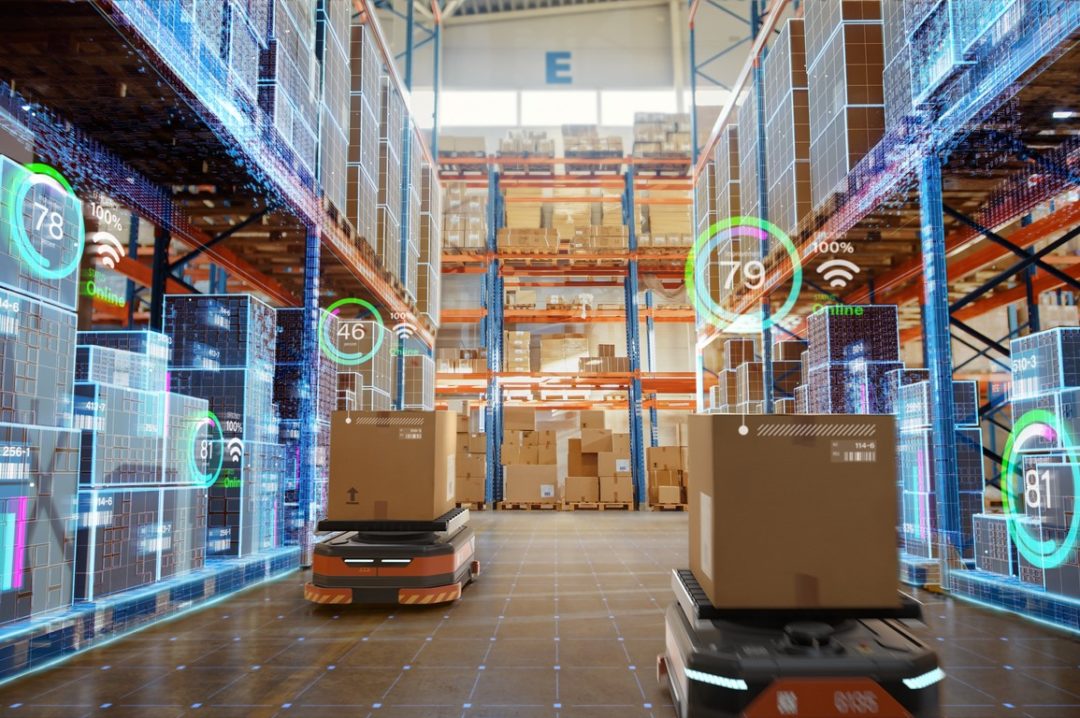
In recent years, warehouse operations have undergone significant transformation. Traditional warehouses struggle to cope with today's volatile demand, channel diversity, and labor risks. This article examines five key challenges facing warehouses and how automation offers solutions to these problems.
\nThe first challenge is seasonal demand and scalability. As supply chains face uncertain and unpredictable seasonal fluctuations, traditional warehouses struggle to scale their operations according to demand variations. Fixed shelving and storage systems make it difficult to quickly adapt to changes in inventory needs. This situation often leads to warehouses leasing more space than necessary. Automated Storage and Retrieval Systems (ASRS) maximize storage space utilization through a flexible bin system. The system can dynamically and incrementally increase or decrease space usage based on demand and automatically reorganize bin locations to make faster-moving products more easily accessible. These features promote flexibility and scalability while improving warehouse efficiency.
\nThe second challenge is product placement and inventory organization. Traditional warehouses struggle to adapt to changes in product mix and velocity. Warehouse managers analyze historical sales data and future orders to identify fast- and slow-moving products. However, without real-time data analysis, optimizing product placement becomes impossible, leading to inefficiencies such as increased picking times and high error rates. Advanced technologies rely on real-time data to understand the relative velocities of stored products and enable operators to analyze data across customizable date ranges suited to their operations. These analyses can be performed dynamically—for example, understanding whether certain products move faster on weekends than weekdays or whether price discounts increase velocity—and products can be repositioned accordingly.
\nThe third challenge is order picking and fulfillment efficiency. In manual picking methods, workers push wheeled carts from location to location to collect products and record information with devices such as radio frequency scanners. Research shows that workers spend 53 percent of their time traveling within the warehouse and searching for products, which makes the process slow and inefficient. Advanced systems like goods-to-person warehouse operations eliminate this dead time by bringing products to picking points, improving order picking and fulfillment efficiency. Automation not only makes picking operations more efficient but also increases labor productivity and reduces labor costs.
\nThe fourth challenge is omnichannel fulfillment. Fulfilling diverse orders from different channels under one roof has become a necessity for today's warehouse operators. With the rise of e-commerce, warehouses no longer simply move large quantities of products; they also pick individual items. Automation enables blending B2B and B2C models, reducing inefficiencies and offering the ability to handle more volume. The system allows operators to pick both cases and individual units of a specific product to meet both retail and e-commerce orders, directing picking operations to the relevant shipping areas.
\nThe fifth challenge is workforce recruitment and retention. Manual warehouses struggle to attract skilled and motivated workers. Warehouse jobs can be monotonous, which lowers job satisfaction and leads to high employee turnover. Research shows that warehouse operators face costs of between $3,500 and $10,000 per employee turnover. Automation makes the job more enjoyable and rewarding by offering benefits such as eliminating long walking times within the warehouse and reducing worker fatigue. Additionally, automation introduces gamification elements such as robots providing workers with automatic and immediate feedback about their performance, which appeals to younger workers and increases job satisfaction.
\nKey Points:
\n- \n
ASRS systems dynamically optimize warehouse space.
\n Real-time data analysis improves efficiency in product placement.
\n Goods-to-person systems reduce worker dead time by 53 percent.
\n Automation enables efficient management of B2B and B2C orders simultaneously.
\n Automation reduces labor costs while improving worker satisfaction.
\n Modular ASRS solutions like AutoStore help warehouses become flexible and scalable.
\n AutoStore customers can consolidate warehouse space by four times, reducing a 10,000 square meter area to 2,500 square meters.
\n Automation can reduce order picking time by 50 percent.
\n
---
\n-------------------
\n\nWe would be delighted to receive your feedback.
\nWishing you happy reading.

