

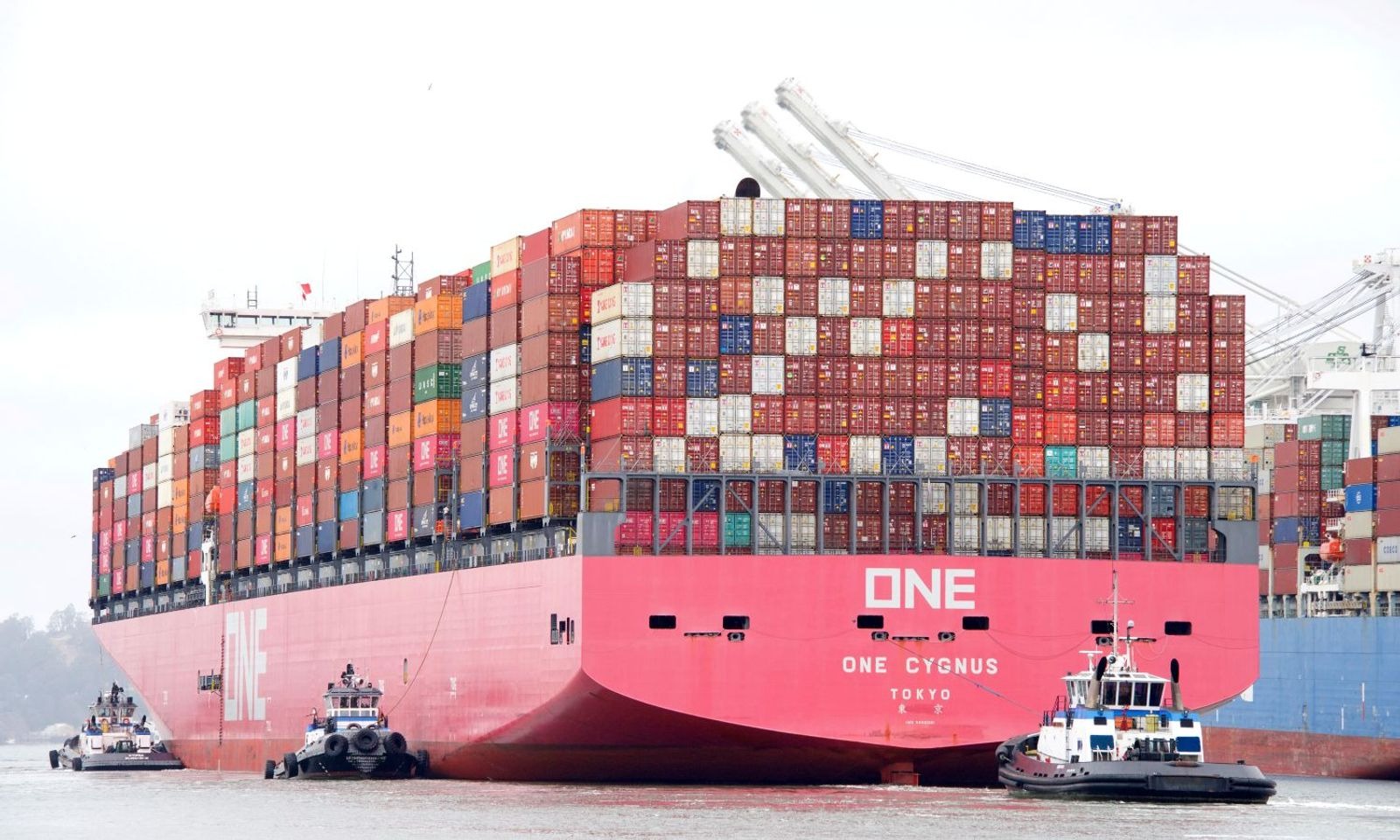
Ocean Network Express (ONE), a leading global container shipping player, is preparing a limited and cautious return to Red Sea-related transportation activities that it has suspended for an extended period. The company confirmed that it will begin offering capacity again on the Red Sea–China route under a slot charter agreement signed with three regional carriers, primarily Regional Container Lines (RCL) based in Thailand.
According to a notification sent to customers by ONE, the agreement in question enters into effect on January 15, 2026. The maiden voyage will be operated by the SSF Dream, a vessel with a capacity of 3,534 TEU, departing from Shanghai. While the company avoided sharing details on how many slots it will utilize under this service, it specifically emphasized that it made no comment regarding capacity allocations.
This step represents the first concrete action taken by ONE toward Red Sea operations after approximately two years of suspension. The company previously operated three separate services related to the Red Sea. However, these services were suspended on security grounds following missile and unmanned aerial vehicle attacks originating from Yemen and carried out by Houthi elements. These attacks forced not only ONE, but also a significant portion of the global maritime shipping sector, to reassess their strategies toward the Red Sea and Suez transits.
ONE's return is taking place through the slot charter model rather than restarting its own direct service. This choice indicates that the company does not view security risks in the region as completely eliminated, yet cannot ignore market demand pressures. The slot charter model enables carriers to maintain a presence on specific trade lanes while limiting operational risks and fixed costs.
Central to the agreement is RCL, which launched the service it named Red Sea–China Service (RCS) last month. ONE's participation in this service enhances the route's commercial appeal and capacity diversity. Simultaneously, this development is seen as an important signal that major global carriers are beginning to return to the Red Sea region through indirect and flexible models.
The Red Sea route stands out as one of the most critical sea lanes for Asia–Europe trade. As many carriers diverted to the Cape of Good Hope route due to security risks, transit times lengthened, fuel costs increased, and global freight rate equilibrium was significantly impacted. In this context, ONE's limited return to the Red Sea is being closely monitored by market participants.
However, the prevailing approach across the sector is shaping toward taking controlled and gradual steps rather than a full-scale return. Insurance costs, vessel security, crew risk, and geopolitical uncertainty continue to be decisive factors in carriers' decision-making processes. ONE's reluctance to share capacity details is also viewed as a reflection of this cautious stance.
The fact that ONE is headquartered in Singapore and has a strong Asia–Europe network indicates that the company maintains long-term strategic interest in this route. However, the current step is primarily aimed at maintaining market presence and offering customers alternative routing options. This return through slot charter demonstrates that the company is limiting its risk appetite while not wanting to completely miss out on commercial opportunities.
In the broader context, ONE's return to the Red Sea route shows that normalization signals in global container shipping remain fragile. Carriers closely monitor even the smallest changes in security conditions, structuring their operations around flexible and reversible models. The ONE example clearly demonstrates how critical flexible capacity management and partnerships have become in maritime transportation in this new era.
Key Points
ONE is returning to the Red Sea route through a slot charter model.
The agreement covers RCL and two regional carriers.
The maiden voyage is planned for January 15, 2026, departing from Shanghai.
ONE is not sharing capacity allocation details.
The return is taking place in a cautious and limited manner due to security risks.
Author: SedatOnat.com

