

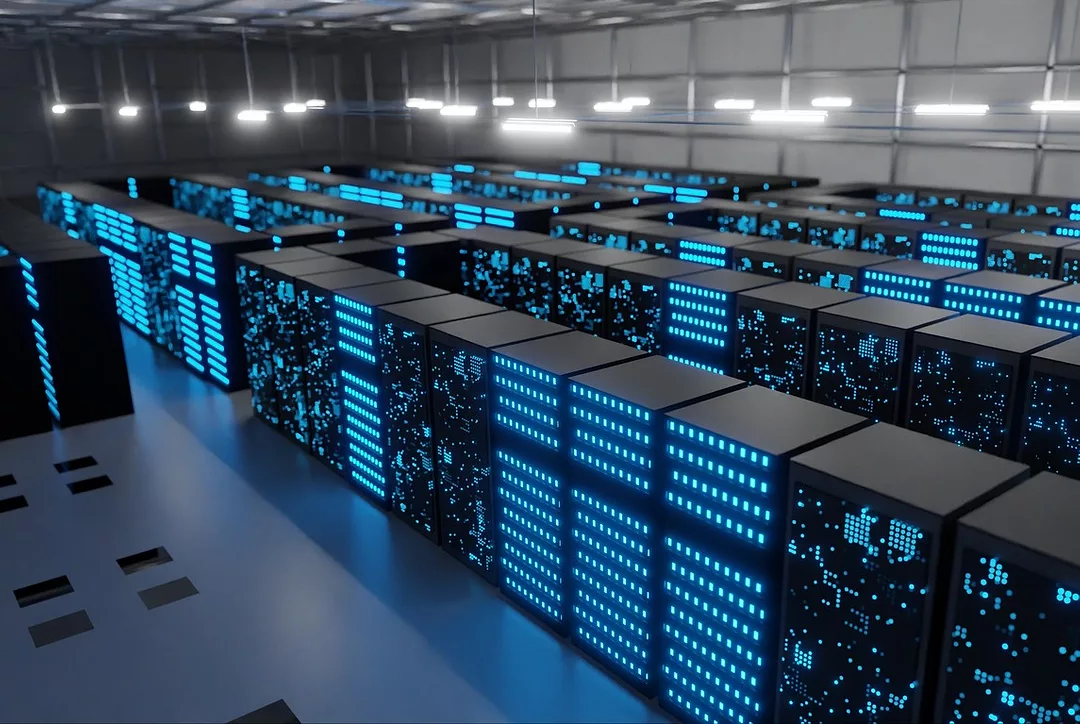
NVIDIA's major deal with OpenAI involves planning a $100 billion investment in data center infrastructure, pushing global artificial intelligence compute capacity to a new scale. This investment extends far beyond GPU procurement; it also encompasses HGX platforms, NVLink/NVSwitch interconnects, InfiniBand/Ethernet backbone, HBM memory supply, and liquid cooling systems and other energy and thermal infrastructure. The goal is to deliver the highest possible performance and efficiency in AI model training and inference processes.
From a supply chain perspective, this scale requires global-level coordination in areas such as foundry capacity planning, packaging technologies (particularly CoWoS), and supply diversification (for example, across TSMC and Samsung ecosystems). Additionally, modular data center designs enable such large-scale investments to be deployed more rapidly.
In network infrastructure, RoCE and InfiniBand technologies are selected based on workload type. Fabric topologies such as Dragonfly and fat-tree are optimized to balance latency with bandwidth. This ensures uninterrupted data flow during massive model training operations.
On the energy side, transformer substations, microgrid solutions, and renewable energy integration take center stage. Demand response programs maintain grid balance while improving energy efficiency. This is of critical importance, particularly for GPU clusters requiring high power consumption.
At the software layer, components such as CUDA, Triton Inference Server, NeMo, NIM, and GPUDirect Storage maximize model training and inference performance; DCGM and other telemetry tools provide system observability and operational stability. On the operational side, capacity reservation, long-term HBM supply agreements, lead time management, and spare parts strategies come to the forefront.
In conclusion, this massive investment reinforces trends toward vertical integration and capacity assurance in the AI supply chain. Deepening coordination among model developers, cloud providers, and semiconductor manufacturers will be one of the most critical factors determining the sustainability and scalability of AI infrastructure in the future.
Key Points:
Investment encompasses GPU, network, and energy infrastructure.
HBM and packaging capacity represent bottlenecks.
Fabric topology determines the latency/bandwidth balance.
The software stack plays a critical role in efficiency.
Vertical integration and capacity assurance are emerging priorities.
Your feedback would make us happy.
Happy reading to you in advance.

