

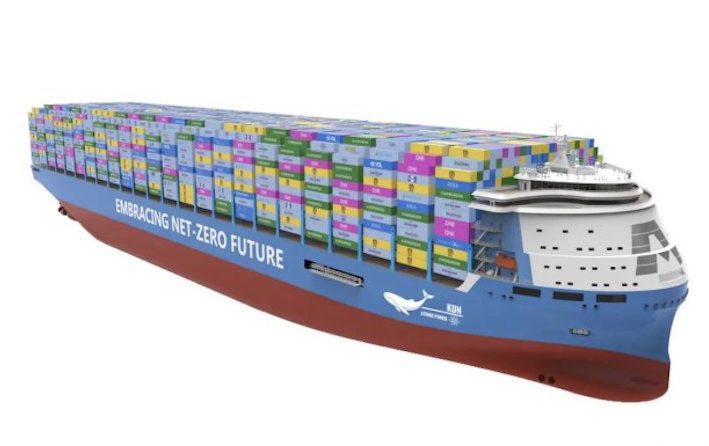
Seaspan Corporation has sparked a compelling debate in the global maritime sector with the publication of a new evaluation report on nuclear-powered container ships. The study, prepared by Lloyd's Register and LucidCatalyst, demonstrates that small modular reactors (SMR) can be technically, economically and regulatorily feasible for integration into container fleets. According to the report, nuclear propulsion not only eliminates emissions; it also creates cost advantages on a scale that could fundamentally transform freight economics.
The analysis shows that a nuclear-powered vessel could deliver annual savings of approximately $68 million. Of this, $50 million would come from the elimination of bunker fuel costs, and $18 million from the removal of carbon penalties. The report emphasizes that nuclear propulsion will create a striking transformation not only in emissions but also in the largest line items of ship operating costs.
The study's modeling is noteworthy, based on a 15,000 TEU capacity nuclear-powered ship example. A vessel equipped with nuclear propulsion and traveling at 25 knots is calculated to offer 39% higher speed compared to conventional ships. This speed advantage enables the annual number of voyages to increase from 5 to 6.3; additionally, the removal of fuel tanks and associated systems yields an extra 5% container capacity. As a result, a total annual transport capacity increase of 38% is projected for the vessel.
A significant section of the report focuses on the necessity of a requirements-led supply chain model for nuclear-powered ships. The study notes that if the industry commits to procuring more than 1,000 reactor units over a 10–15 year period, SMR manufacturing costs could fall to the $750–1,000/kW band and remain well below conventional nuclear plant costs. This scalable model would be designed to allow reactor servicing in dry dock processes parallel to ship maintenance cycles. Each reactor is said to be capable of operating for approximately five years without refueling; this makes vessels independent of global bunkering networks.
An intensive R&D program is expected to bring nuclear propulsion systems to commercial maturity within four years. The cost structure at this stage targets total system cost < $4,000/kW and fuel cost < $50/MWh. A market of 40–90 GW by 2050 is projected; this scale suggests that a nuclear-powered fleet could command a significant share of global container shipping.
The report emphasizes that building a competitive and sustainable nuclear supply chain requires a multi-layered supplier ecosystem that supports price and performance competition without vendor lock-in. Furthermore, innovative reactor leasing and fuel-leasing models are noted as potentially easing ship owners' management of high upfront costs.
This study forms the first step of a three-phase program. The next phase will encompass concept design, regulatory process preparation, and technical engagement with shipyards, port authorities and nuclear regulators. In the final phase, a comprehensive implementation roadmap, risk management, certification processes and investment planning will be detailed.
Seaspan CTO Peter Jackson stated that the convergence of nuclear propulsion's operational, economic and environmental advantages could open a new era in container shipping, while LucidCatalyst Managing Partner Eric Ingersoll emphasized the technology's competitive edge with the words: "Nuclear propulsion transforms shipping economics, not just emissions".
Key Points:
SMR technology can enable nuclear ships to achieve annual savings of $68 million.
Bunker fuel costs and carbon penalties are entirely eliminated.
Nuclear ships deliver 39% higher speed and 38% greater annual transport capacity.
Orders for 1,000+ reactors can drive costs down to the $750–1,000/kW level.
Reactors are designed to operate for 5 years without refueling.
An intensive 4-year program is considered sufficient for commercial maturity.
A market of 40–90 GW could emerge by 2050.
The study forms the first component of a three-phase nuclear propulsion integration program.
Author: SedatOnat.com
We would be delighted to hear your feedback.
We wish you pleasant reading.

