

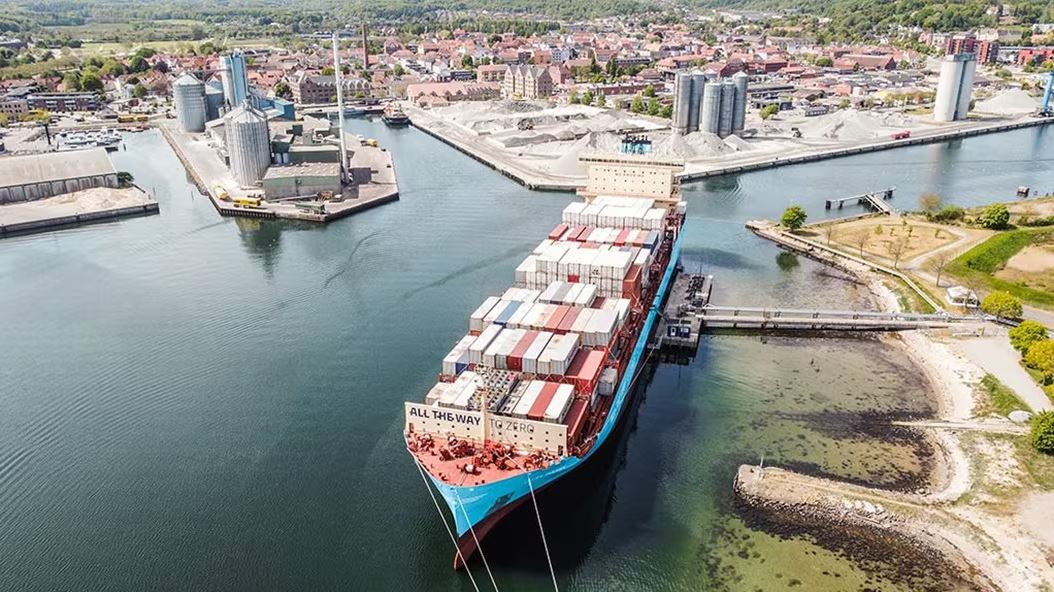
Maersk has announced that it is accelerating work on alternative fuel technologies as part of its carbon reduction strategy and has commenced a new 50/50 ethanol–methanol blend trial on the Laura Mærsk. This move follows successful initial tests conducted in October–November using a 10% ethanol – 90% e-methanol (E10) mixture. The first trial aimed to determine whether ethanol could be safely used on a dual-fuel methanol engine. Maersk confirmed that the tests showed no adverse effects on engine performance.
Laura Mærsk began service in 2023 as the world's first container ship operating on the methanol dual-fuel concept. The vessel was initially designed to use only methanol-derived fuels. However, the chemical similarity between ethanol and methanol makes dual-fuel alcohol operation technically feasible from an engineering perspective. For this reason, the initial E10 test included comparative analysis of critical parameters such as ignition, burn efficiency, lubricity, and corrosiveness against methanol-only fuel.
Following these results, Maersk announced that it has progressed to higher-ratio blends and will now test a 50/50 ethanol–methanol mixture. The company's long-term goal is also to trial 100% ethanol usage. This represents an unexplored frontier in the sector and is a natural continuation of Maersk's strategy to expand its alternative fuel portfolio.
Emma Mazhari, Head of Maersk Energy Markets, articulated the fundamental motivation behind the company's approach as follows:
"Multiple fuel pathways are essential for the shipping industry to meet its climate ambitions."
According to Mazhari, increasing the ethanol ratio helps understand the effects on motor combustion characteristics, evaluate the supply chain, and establish the benchmarks necessary for production scaling.
The ethanol type currently used is anhydrous ethanol, which is blended with petrol in many countries. Global production is met 80% by the United States and Brazil. For this reason, the trials also constitute an assessment of global ethanol supply feasibility.
Maersk currently uses bio-methanol, e-methanol, and biodiesel; from 2027 onwards, as dual-fuel LNG vessels join the fleet, LNG and liquefied biomethane options will also feature in the fuel portfolio. The company adopted a strategic policy in 2021 to order only dual-fuel capable vessels. As of 2025, Maersk's fleet will comprise 19 dual-fuel vessels.
The significance of these trials for the sector stands out in several areas:
1. Fuel Optionality Is Expanding
The ability of methanol engines to operate not only on methanol but also with ethanol blends can offer vessel operators a broader fuel supply matrix in the future. This capability can provide operational flexibility during periods when green methanol production is inadequate.
2. Deepening of Alternative Fuel Supply Chain
Should 100% ethanol trials succeed, new logistics solutions such as ethanol-based green corridors could come onto the agenda for the shipping sector. Furthermore, excess ethanol production in certain countries could lower regional fuel costs.
3. Validation of Engine Technologies
Results from the E10 test demonstrate that ethanol blends have no adverse effects on engine wear, seals, fuel pump, and combustion chamber performance. Such validation work can accelerate motor manufacturers' development of alcohol-compatible engines in the future.
4. Multiple-Fuel Strategy Can Spread Across the Sector
Maersk's move is not only significant for its own fleet but also serves as a reference point for other major carriers. Given the high volume of current methanol-fuelled vessel orders, such trials could strengthen the "fuel diversification" trend across the sector.
In conclusion, Maersk's ethanol–methanol dual-fuel trial on the Laura Mærsk represents a strategic step in scaling alternative fuels and supporting global maritime carbon reduction targets through a realistic approach. If the tests progress as expected, ethanol-inclusive fuel pathways could become more visible in the shipping sector during the 2026–2028 period.
Key Takeaways:
Maersk is starting to test a 50/50 ethanol–methanol fuel blend.
The initial E10 test (10% ethanol) concluded successfully; a 100% ethanol trial is also planned.
The similar chemical properties of ethanol and methanol offer advantages for dual-fuel alcohol operation.
80% of global ethanol supply comes from the United States and Brazil.
Maersk's fleet will reach 19 dual-fuel vessels by 2025.
Author: SedatOnat.com
We would be delighted to receive your feedback.
We wish you happy reading in advance.

