

Louisiana, the historic center of American shipbuilding, is reviving its maritime legacy while opening a new chapter in global competition through artificial intelligence-powered autonomous vessels and advanced manufacturing. Greater New Orleans, Inc. President Michael Hecht describes this transformation as "where Louisiana's history and future converge".
Hecht emphasizes that projects across the state represent not merely economic recovery but an integrated transformation spanning defense, aerospace, and energy sectors. For instance, the partnership between Metal Shark (Jeanerette, Louisiana) and HavocAI (Rhode Island) manufactures AI-integrated unmanned surface vehicles for the U.S. Navy. According to Hecht, these projects demonstrate that "Louisiana is reasserting itself as a center for defense technology."
Next-generation icebreakers and port investments
One of the most notable developments is Houma-based Bollinger Shipyards' contract to construct four new Arctic icebreakers for the U.S. Coast Guard. Announced on October 10, this 6 billion-dollar project is part of the Arctic Security Cutter program involving 11 vessels under U.S.–Finland partnership. Hecht notes the project will create "up to 600 local jobs" and "strengthen NATO's Arctic defense capacity".
In parallel, St. Bernard Parish is constructing a 1.8 billion-dollar new container terminal. This terminal will allow neo-post-Panamax vessels that cannot fit under bridges to pass directly into the New Orleans River sub-region.
National maritime strategy: Maritime Action Plan (MAP)
Louisiana's developments are being evaluated within the framework of the "Maritime Action Plan (MAP)" initiated by executive order on April 9, 2025 by the Trump administration. The plan, expected to be completed by November 5, 2025, aims to revive the U.S. maritime share from 5% of global ship production in the 1970s to today's 0.2%.
White House objectives include:
Making U.S. flag vessels and U.S.-built ships competitive in international markets,
Rebuilding maritime industry production infrastructure,
Developing and preserving skilled maritime workforce,
Establishing permanent federal funding mechanisms.
Within this strategy, new port fees are being applied to Chinese-built and foreign-operated vessels entering U.S. ports. China has countered with similar tariffs. Atlantic Container Line will be affected to the tune of 34 million dollars annually from these fees.
Transformation focused on advanced technology
According to Hecht, the U.S. maritime industry can regain competitiveness not through massive container vessels but through producing mid-sized, high-technology vessels:
"America's advantage lies in small but technologically advanced vessels. Competing with China, South Korea, and Japan in giant ships is not realistic," Hecht states.
Thus Louisiana's future is being shaped around autonomous systems, military vessels, and platforms serving the aerospace sector.
New investments: Saronic and Port Alpha
In April, Texas-based Saronic announced a 250 million-dollar investment plan after acquiring the historic shipyard in Franklin, Louisiana. The company plans to manufacture autonomous surface vehicles ("water drones") for military and commercial clients. This investment will create 500 new jobs.
Saronic's long-term goal is to establish Port Alpha, a "next-generation autonomous vessel manufacturing hub" to begin construction in 2026. This facility, with multi-billion dollar investment and serial production capacity, is expected to give the U.S. competitive advantage in the global autonomous surface vehicle market.
Shipyards serving the aerospace industry
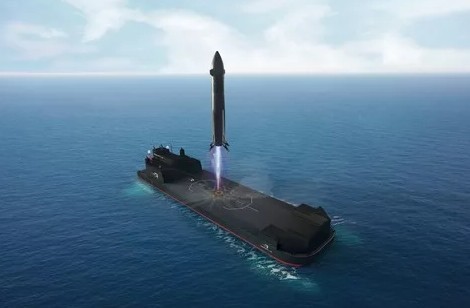
Louisiana shipyards are now operating not only in maritime but also in space logistics. Bollinger Shipyards is producing a rocket landing platform for Rocket Lab and collaborating on joint projects with firms like United Launch Alliance and Space Perspective. Hecht describes this transformation as "industrial evolution from ship to spacecraft".
Historical continuity and innovation
During World War II, Louisiana left its mark on maritime history through Higgins Industries' landing craft, followed later by Textron's hovercraft projects. According to Hecht, today's technology investments represent a continuation of this legacy:
"The Louisiana shipbuilding industry has always been defined by innovation. Today, this innovation is occurring faster and more comprehensively than before."
Key Points:
Louisiana is experiencing technology-driven rebirth in shipbuilding.
Metal Shark and HavocAI are developing autonomous AI-powered vessels for the U.S. Navy.
Bollinger Shipyards will create 600 jobs through its 6 billion-dollar icebreaker project.
Saronic is targeting autonomous vessel production with a 250 million-dollar investment and the Port Alpha project.
Maritime Action Plan aims to rebuild U.S. maritime production capacity.
Louisiana shipyards now serve defense, energy, and aerospace sectors.
Hecht: "Louisiana's future lies in small but high-technology vessels."
Author: SedatOnat.com

