

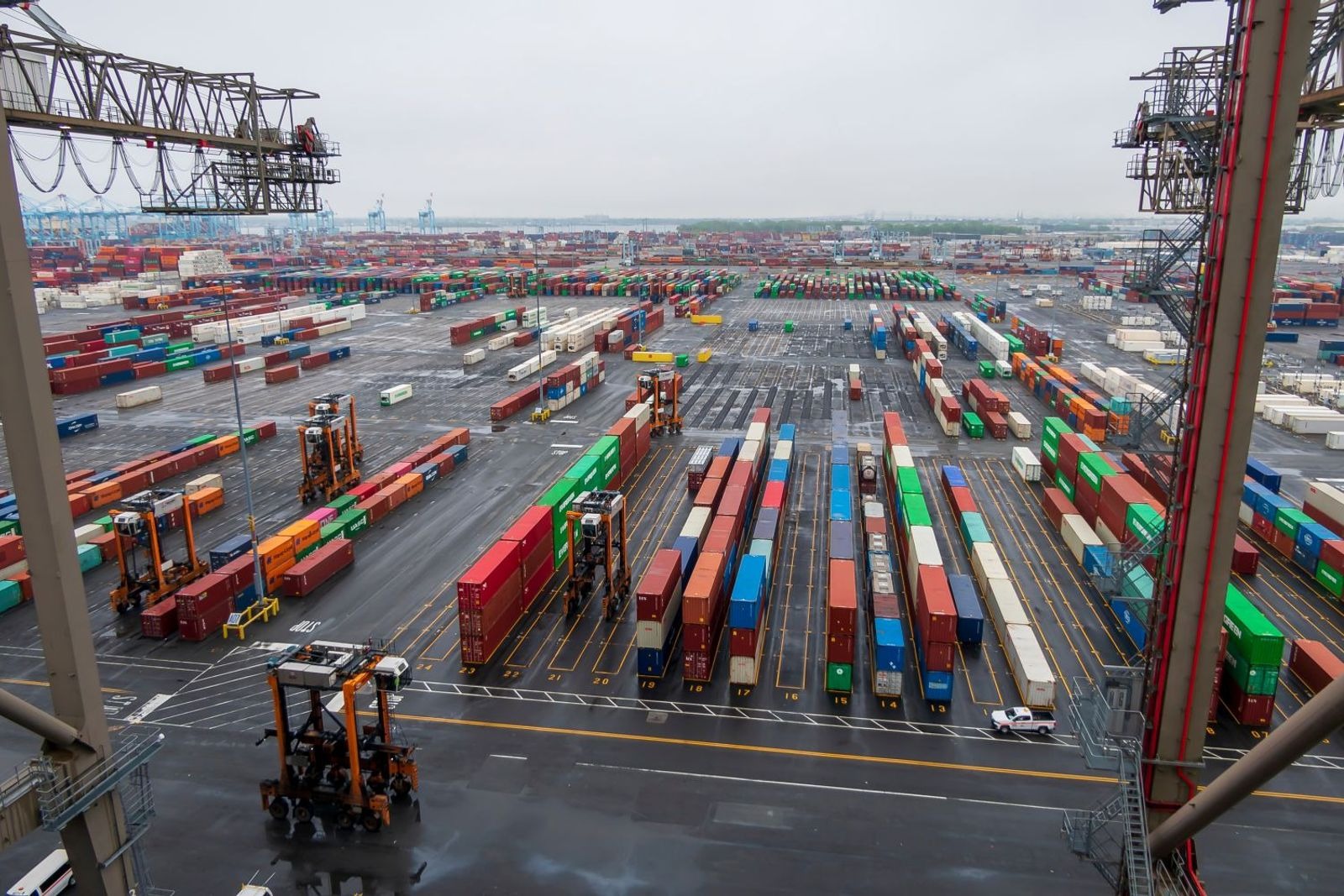
U.S. container ports are drawing important lessons from the 2021–22 cargo congestion period that followed the pandemic and severely strained global supply chains. Port authorities are emphasizing that data sharing practices played a critical role in preventing a recurrence of those bottlenecks. However, according to industry representatives, despite current progress, far stronger collaboration will be needed to manage the next major cargo surge smoothly.
Officials speaking at the Journal of Commerce Port Performance webcast noted that participation in data-sharing initiatives is increasing at ports including the Northwest Seaport Alliance (NWSA), Port of Long Beach, South Carolina Ports Authority, and Port Authority of New York and New Jersey. In particular, ocean carriers sharing cargo information at earlier stages enables terminal planning and field operations to run in a more predictable manner.
Port Authority of New York and New Jersey Port Director Beth Rooney noted that ports are receiving more support from partners on data sharing compared to the past. Nevertheless, some supply chain stakeholders remain hesitant because shared data is treated as proprietary information. According to Rooney, this approach limits the overall efficiency of port operations and increases bottleneck risk across the system.
Officials recalled that one of the primary causes of congestion during the pandemic was insufficient visibility into when and in what volumes cargo would arrive at ports. The absence of advance shipment data created cascading problems in terminal capacity, berth planning, yard management, and intermodal connections. Today, early data sharing is partially mitigating these risks.
However, speakers cautioned that current data-sharing levels may be insufficient for future major surges. A new spike in global trade, geopolitical developments, or rotational shipping shifts could once again confront ports with sudden cargo increases. In such a scenario, not only ports but also marine terminals, container lines, rail operators, and truckers must all be part of the same data ecosystem.
Particularly on the container shipping side, early and standardized sharing of data on vessel arrival times, cargo distribution, and empty container positions is critically important. Port managers emphasize that delayed or incomplete information weakens operational decision-making processes. As data sharing increases, berth allocation, crane scheduling, and gate operations run more smoothly.
Officials also noted that data sharing is not merely a technological matter but requires a cultural transformation as well. Some stakeholders, it was noted, still operate with an "information is power" mentality. Yet in the port ecosystem, information generates value as it is shared, and resilience increases across the system.
From the perspective of North American ports, data sharing also matters for public authorities and regulators. Monitoring port performance, directing capacity investments appropriately, and preparing for crisis scenarios are possible only through healthy data flows.
In conclusion, U.S. container ports are making progress on data sharing; however, to smoothly handle the next major cargo surge, they must move beyond current collaboration levels. Port officials are making clear that the key to preventing future congestion lies in more transparent, earlier, and more comprehensive data sharing practices.
Key Takeaways
U.S. ports are drawing lessons from the 2021–22 cargo congestion period
Progress is being made in data sharing with ocean carriers
Some stakeholders remain reluctant due to proprietary information concerns
Advance shipment data plays a critical role in operational planning
Current collaboration levels are seen as insufficient for future cargo waves
More comprehensive data sharing enhances resilience at ports
Author: SedatOnat.com

